Newsom's redistricting move divides California Democrats
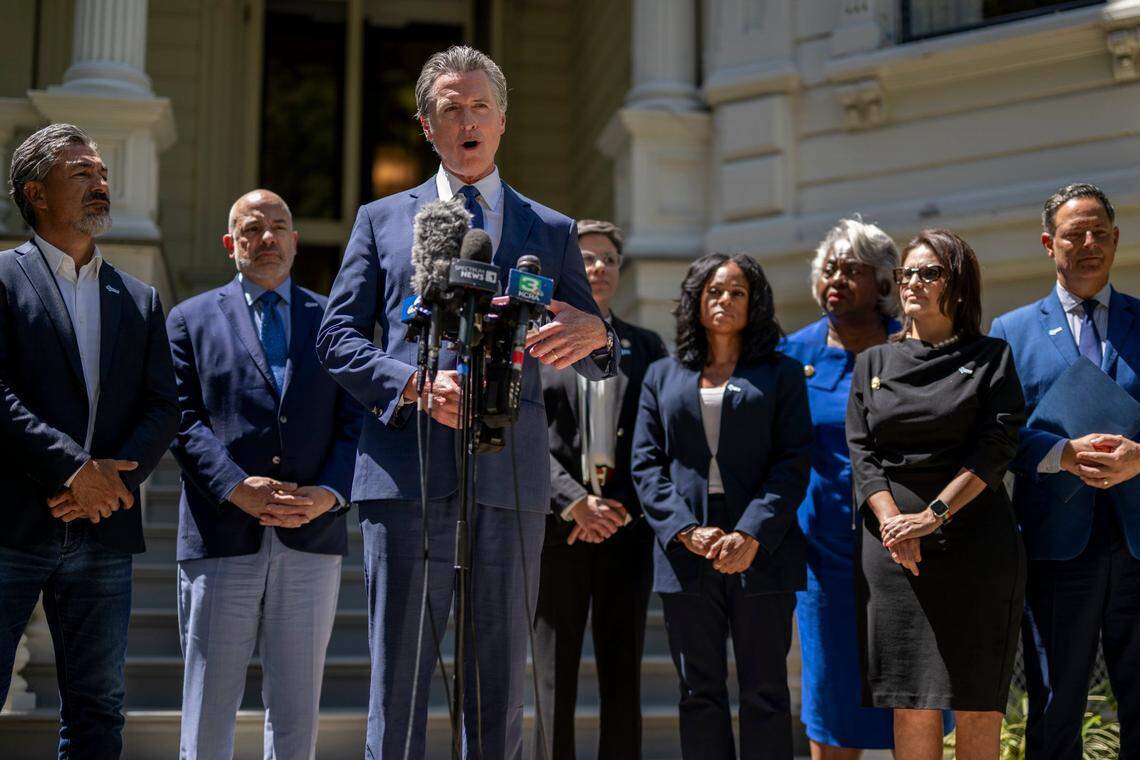
California's Political Dilemma: Redistricting Amid Rising Tensions
As California state lawmakers concluded their summer recess, Governor Gavin Newsom left them with a complex political challenge. He introduced a mid-decade redistricting proposal aimed at countering similar efforts in Texas. This move has sparked intense debate among Democrats and Republicans alike, highlighting the growing tensions around the future of fair representation in the state.
Newsom recently met with Texas Democratic lawmakers and expressed his intention to explore new district maps. He also mentioned the possibility of calling a special election ahead of the 2026 midterms and being prepared to draft a ballot initiative or take legal action if necessary. However, the legislative process remains uncertain, as the Democratic members have not yet formally convened to discuss the proposal. Opinions within the caucus are divided on how and whether to proceed.
Speaker Robert Rivas showed openness to collaborating with Newsom on this issue. In a statement, he criticized former President Donald Trump and Texas Governor Greg Abbott for attempting to change the rules of the game. Rivas emphasized the importance of protecting democracy and ensuring that the government remains fair and representative of the people.
Despite this support, there is significant internal conflict among progressive members of the Legislature. Assemblymember Corey Jackson argued that Democrats must be more proactive in defending their positions, stating, "I will support Newsom if we have to go to war." However, many Democrats remain uneasy about altering California’s well-regarded redistricting processes. Organizations like Common Cause California have labeled the idea as “a dangerous move” that could destabilize the country during an already polarized time.
Assemblymember Alex Lee, who chairs the Progressive Caucus, called the proposal “crazy and foolish.” Patricia Sinay, a member of California’s Citizen Redistricting Commission, echoed concerns about voter trust, stating that such actions could harm democracy rather than strengthen it.
Exploring Options
Lawmakers have several potential paths forward. They could pass a law temporarily delegating redistricting authority back to the Legislature, then approve a new congressional map. Alternatively, they might place a measure on the ballot, with Newsom possibly calling a special election later this year to seek voter approval on either a new map or shifting line-drawing power back to the Legislature.
Sources close to the discussions indicate that nothing has been decided yet, and decisions may not come until lawmakers return from recess on August 18. Assemblymember Gail Pellerin, chair of the Assembly Committee on Elections, admitted she hasn’t been directly involved in these discussions, adding that she is hearing “lots of ideas.”
Pellerin raised concerns about the pressure such a move would place on election officials, especially with a special election in the fall and the deadline for congressional candidates to file by December 11.
A Broader Strategy
Newsom framed the redistricting effort as a critical response to Republican strategies, particularly after Trump urged Texas Republicans to secure additional seats to maintain their majority in next year’s midterms. Texas Governor Greg Abbott responded by calling a special legislative session to redraw maps.
For Newsom, who is reportedly considering a 2028 presidential run, redistricting represents a Hail Mary attempt to preserve democracy as Trump consolidates power. Democratic leaders, including Governors JB Pritzker and Kathy Hochul, have supported redistricting as a strategy to counter Republicans in the midterms. A major PAC supporting House Democrats has even launched a $20 million fund to counteract Texas redistricting.
House Minority Leader Hakeem Jeffries is expected to visit California soon to discuss redistricting, though his office has not provided comment. Newsom emphasized the stakes, stating, “Everything is at stake if we're not successful in taking back the House of Representatives.”
Opposition and Concerns
California Republicans have strongly opposed Newsom’s proposal. Assembly Minority Leader James Gallagher called it “a shady gerrymander effort,” while Assemblymember David Tangipa described it as a “race to the bottom.” Tangipa criticized the hypocrisy of the state considering such a move when it previously forced Fresno County to adopt citizen-led redistricting.
He also raised concerns about the cost and time pressures associated with the proposal, suggesting that Californians are more focused on issues like rebuilding Los Angeles and addressing high utility bills.
Legal Uncertainties
Newsom has stated that his administration is exploring various options, with legal advisors confident that asking voters to approve redistricting later this year would withstand scrutiny. However, the legality of such a move remains unclear.
In 2008, voters approved transferring redistricting oversight to the Citizen Redistricting Commission, an independent body responsible for drawing district boundaries. Newsom argues that the state Constitution does not specify what the commission can do between census counts, opening the door for the Legislature and Governor’s Office to intervene.
“It's a novel legal question,” Newsom said, emphasizing that it is being explored. Whether this approach will succeed remains to be seen, but the debate over redistricting continues to shape the political landscape in California and beyond.

Post a Comment for "Newsom's redistricting move divides California Democrats"
Post a Comment