New Yorkers Battle Big Battery Plants with EPA Chief Lee Zeldin's Support
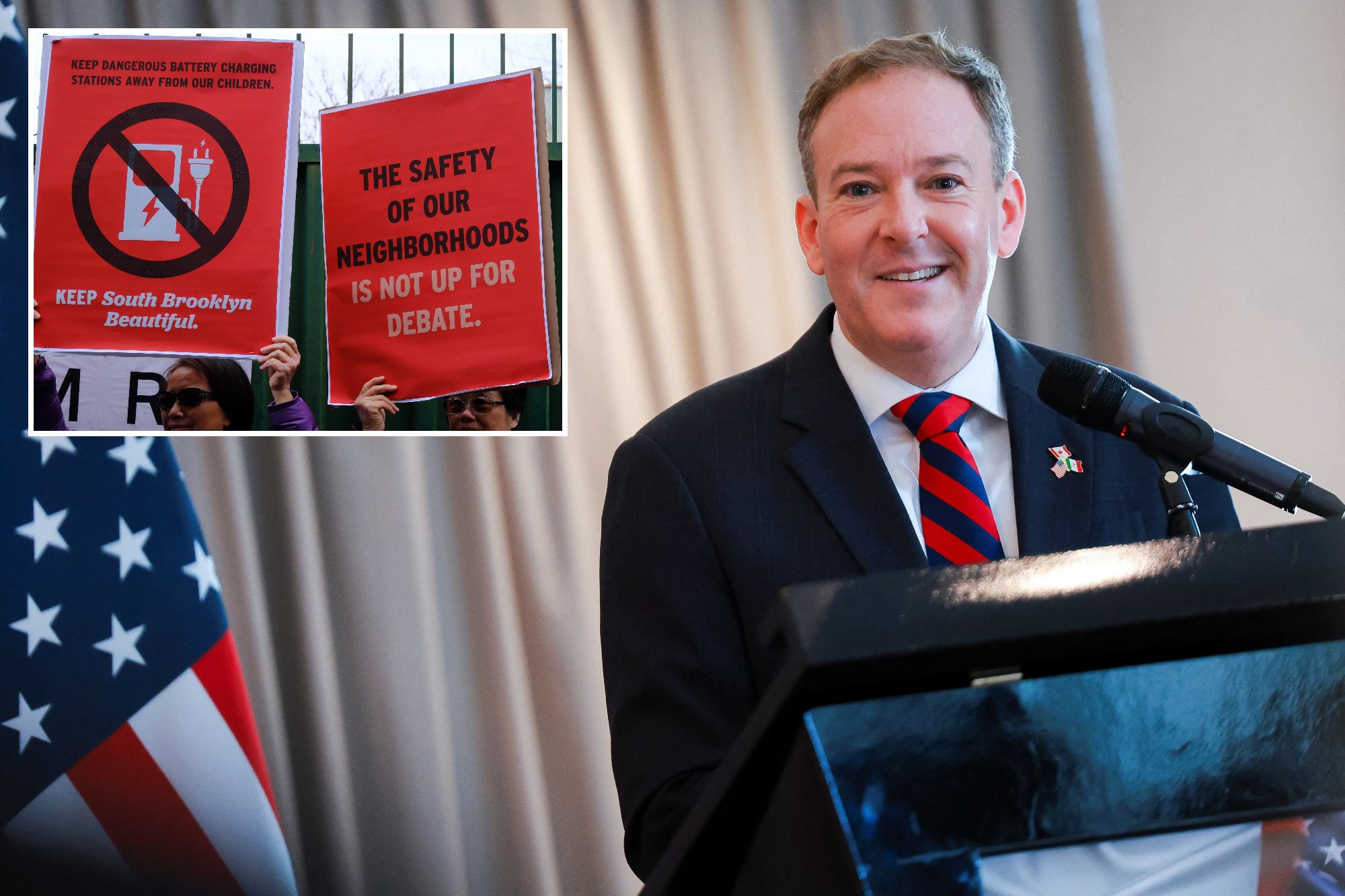
New York Residents Oppose Battery Energy Storage Systems, Gaining Support from EPA Administrator
New Yorkers who are resisting the establishment of large-scale battery energy storage systems (BESS) in their communities now have a new and influential ally: U.S. Environmental Protection Agency (EPA) Administrator Lee Zeldin. A former congressman from Long Island, Zeldin is set to hold a press conference in Hauppauge on Monday to address concerns about the environmental risks associated with BESS, particularly when they catch fire. While he has not outright opposed these systems, Zeldin will be introducing new EPA guidance aimed at helping local governments and communities assess the environmental impacts of such facilities.
Zeldin emphasized that labeling a technology as “green energy” does not automatically mean it is free of environmental consequences. As a 2022 Republican candidate for governor, he criticized the ambitious and, in his view, unrealistic green energy goals set by Governor Kathy Hochul and state Democrats. These policies have sparked significant backlash, especially in areas like Staten Island, Queens, the Hudson Valley, and upstate New York, where residents are pushing back against the rapid expansion of battery storage plants.
“Residents are looking across the country where dangerous lithium battery fires at BESS facilities have caused widespread damage, and they are concerned with New York’s partisan push to fill yet another of its delusional ‘green’ goals, which the state itself admits it cannot meet,” Zeldin said. He argued that many New Yorkers, particularly in New York City and on Long Island, do not want these facilities built in their neighborhoods.
New York has set aggressive targets to reduce greenhouse gas emissions by 40% by 2030 and achieve 100% zero-carbon electricity by 2040 under the Climate Leadership and Community Protection Act of 2019. To meet these goals, the state is rapidly expanding battery energy storage systems. However, Zeldin has taken issue with what he calls “wacky” state policies that aim to phase out reliable energy sources like natural gas. He pointed to recent measures that ban safe extraction of natural gas, gas hook-ups on new buildings, and even gas stoves, arguing that these actions prioritize climate change agendas over public safety.
Zeldin also cited incidents in California and Hawaii to highlight the dangers posed by BESS facilities to both communities and first responders. His stance has drawn criticism from Governor Hochul’s office, which described his opposition to clean energy programs as bizarre. A spokesperson for Hochul stated that Zeldin’s efforts to roll back environmental protections would harm New Yorkers and undermine national energy independence.
“Lee Zeldin’s job is to protect the environment, but he has been doing anything but that,” said Ken Lovett, senior communications advisor for Hochul. He argued that Zeldin’s approach risks leaving New York behind economically and increasing costs for residents.
Despite the controversy, New York has implemented some of the strictest regulations in the country for battery energy storage facilities. The state has approved over 6,000 projects since 2019, creating 440 megawatts of capacity, with 1.3 gigawatts already under contract. The goal is to reach six gigawatts by 2030.
New York has also passed two laws that give the state government the power to override local opposition to major renewable projects, including battery storage facilities of 25 megawatts or larger. However, the Hauppauge facility is not subject to this override, and residents there remain deeply concerned.
Concerns include potential toxic emissions released during a fire, as well as contaminated water containing hydrofluoric acid and other pollutants that could be discharged into the Nissequogue River and groundwater. These issues have led to widespread community dissatisfaction, with many residents calling for stricter oversight and greater transparency.
As the debate over battery energy storage continues, the role of figures like Zeldin highlights the growing tension between environmental goals and public safety, as well as the political divisions shaping the future of energy policy in New York.

Post a Comment for "New Yorkers Battle Big Battery Plants with EPA Chief Lee Zeldin's Support"
Post a Comment