New Tool Reveals Rising Antibiotic Resistance in Environmental Bacteria
A New Approach to Combating Antibiotic Resistance
Each year, multidrug-resistant bacteria are responsible for the deaths of approximately five million people worldwide. These resistant germs are evolving at a pace that outstrips the ability of scientists to develop new treatments. This alarming trend has prompted researchers to seek innovative solutions to stay ahead of the growing threat.
A recent breakthrough has introduced a platform designed to identify drug resistance genes already present in the environment before they become a clinical concern. This system links the identification of these genes directly to the development of antibiotics that can evade resistance. The findings, published in the Proceedings of the National Academy of Sciences (PNAS), highlight the potential of using metagenomic surveys of the "resistome" as an early warning system for future resistance challenges.
Understanding the Resistome
The resistome refers to the collection of all resistance genes present in the microbial world. By studying this vast reservoir, scientists can gain insights into potential threats that may emerge in human medicine. According to James Peek, lead author of the study and a research associate at Rockefeller University, this approach allows scientists to predict the types of resistance that could become problematic in the future. The goal is to extend the clinical lifespan of antibiotics by proactively designing them to withstand emerging resistance mechanisms.
Antibiotic development often involves an endless cycle of discovering new compounds to replace those that have become ineffective. However, current methods struggle to anticipate novel resistance threats accurately. Brady's Laboratory of Genetically Encoded Small Molecules at Rockefeller University believes there is a better way forward. They recognize that bacteria in nature have been engaged in an evolutionary battle with antibiotics for millennia, creating a rich pool of resistance mechanisms.
Discovering New Resistance Mechanisms
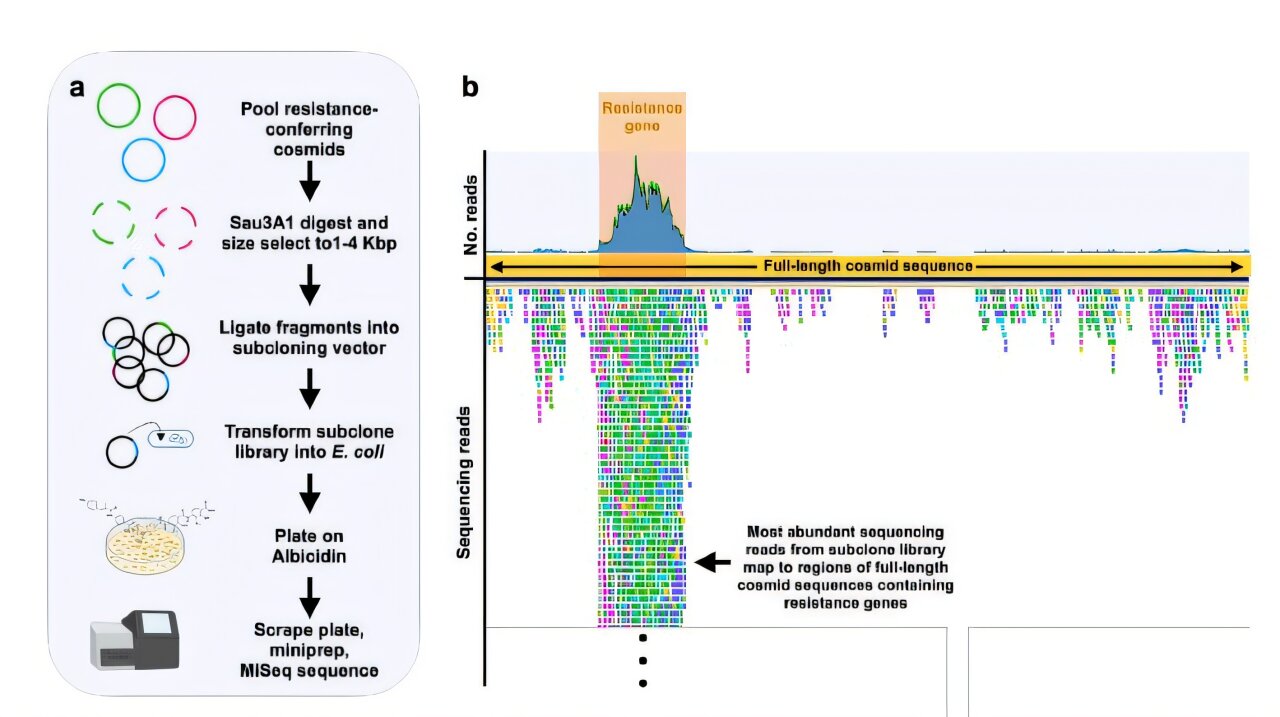
In their study, the team focused on albicidin, a promising antibiotic candidate. Using 3.5 terabase pairs of microbial DNA extracted from soil—equivalent to about 700,000 bacterial genomes—they created a metagenomic library and introduced it into E. coli, a model bacterial host. This allowed them to screen for albicidin resistance genes effectively.
Bacteria that survived exposure to albicidin were isolated, and their resistance genes were sequenced. The screening process identified eight classes of resistance genes, each of which was analyzed to understand how they disable the antibiotic. The results revealed several unique and unexpected mechanisms, demonstrating the effectiveness of the model in uncovering unknown resistance strategies.
Optimizing Antibiotics for Resistance
To counter these resistance mechanisms, the researchers examined natural structural variants of albicidin. These variants may have evolved in the ongoing battle between soil microbes to bypass resistance. Each variant tested had a distinct vulnerability profile against different resistance types, revealing chemical features that contributed to their effectiveness.
Based on this information, the team began prioritizing drug leads. One variant, known as congener 10, showed particular promise due to its structural differences compared to albicidin. It remained effective against the most common resistance types, making it a strong candidate for further development.
Future Implications
The team demonstrated that their method can guide the design of new antibiotics by engineering versions of albicidin that combine the most protective features. This approach ensures that the resulting compounds remain potent even against formidable resistance proteins.
James Peek emphasizes that the method is fast and efficient, suggesting that pharmaceutical companies could easily integrate it into their standard drug development pipeline. In the short term, the team plans to apply their screening platform to other antibiotics developed in the Brady lab. By identifying and addressing environmental vulnerabilities early, they hope to create candidates with longer clinical lifespans and reduced chances of being undermined by resistance.
Sean Brady, the principal investigator, praises Peek’s approach as simple and broadly applicable. He believes that integrating this method into antibiotic discovery pipelines holds real promise for increasing the likelihood that new antibiotics will avoid rapid resistance upon entering the clinic. He hopes others will recognize its value and adopt it as a standard component in their antibiotic development efforts.

Post a Comment for "New Tool Reveals Rising Antibiotic Resistance in Environmental Bacteria"
Post a Comment