New Moons Around Saturn Spark Ring Formation Questions
Recent Discoveries and Their Impact on Understanding Saturn’s Rings
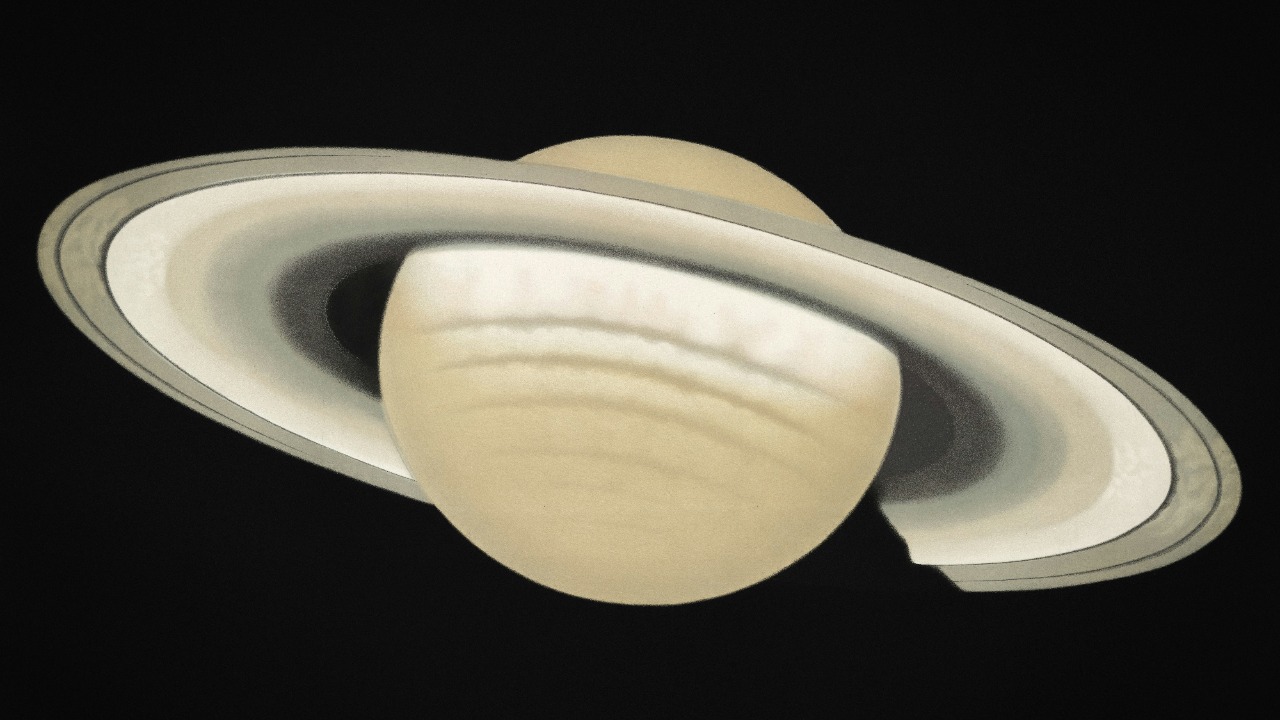
New discoveries of moons orbiting Saturn have reignited interest in the processes that shape the planet's famous ring system. These findings challenge long-standing astronomical theories and prompt scientists to reconsider how these natural satellites interact with or influence the rings. The implications of these discoveries extend beyond Saturn, offering broader insights into the formation and evolution of planetary rings.
The Discovery of New Moons
Advancements in astronomical technology have enabled researchers to identify numerous new moons around Saturn, significantly expanding our knowledge of its satellite system. A total of 62 new moons have been discovered, bringing Saturn’s moon count to 145—surpassing Jupiter’s. Most of these newly found moons are small and irregular in shape, detected using powerful telescopes and improved observational techniques. This highlights the progress in space exploration capabilities and the ongoing quest to understand celestial bodies.
The significance of these discoveries lies in their potential to reshape our understanding of Saturn’s gravitational dynamics. Scientists are now analyzing how these moons integrate into the existing satellite hierarchy, which is essential for grasping the complex interactions within the system. These moons may provide crucial clues about the mechanisms that govern the formation and stability of planetary rings, potentially leading to revised models of celestial mechanics.
Theories of Ring Formation
For centuries, Saturn’s rings have captivated astronomers. Traditional theories suggest that the rings formed from icy and rocky debris orbiting the planet. According to these models, the rings may have originated from comets, asteroids, or larger celestial bodies that were torn apart by Saturn’s gravitational forces. This process could have resulted in the accumulation of particles that eventually formed the rings we see today.
However, recent studies have cast doubt on these established theories. Some researchers propose that the rings may have formed from ancient moons that were destroyed by Saturn’s gravitational pull. This hypothesis suggests that the remnants of these moons contributed to the ring system, offering a fresh perspective on their origin. A recent study challenges traditional views and suggests that the rings could be much younger than previously believed, potentially revolutionizing our understanding of ring formation processes.
Interactions Between Moons and Rings
The gravitational interactions between Saturn’s moons and its rings play a critical role in shaping the structure and stability of the ring system. Simulations and observations indicate that the gravitational pull of the moons can create waves and gaps within the rings, influencing their overall dynamics. As moons orbit Saturn, their varying gravitational forces can lead to complex interactions that affect the distribution and density of ring particles.
Additionally, the potential for material exchange between the rings and moons adds another layer of complexity to this celestial interaction. Particles from the rings may be captured by the moons, while material from the moons could be ejected into the rings. This exchange can result in significant changes to both the rings and the moons over time. Understanding these interactions is essential for unraveling the mysteries of Saturn’s ring system and how it has evolved over millions of years.
The Role of the James Webb Space Telescope
The James Webb Space Telescope (JWST) is transforming our understanding of Saturn’s moons and rings with its advanced observational capabilities. By providing high-resolution images and detailed spectroscopic data, the JWST is uncovering new insights into the composition and dynamics of these celestial bodies. Its ability to observe in the infrared spectrum allows scientists to analyze the chemical makeup of Saturn’s rings and moons, shedding light on their formation and evolution.
One significant finding from the JWST is the detection of carbon dioxide on Saturn’s icy moons. This discovery has profound implications for understanding the composition and origin of the rings. The presence of carbon dioxide suggests that the rings may have formed from materials rich in organic compounds, possibly indicating complex chemical processes at play. As the JWST continues its observations, it is expected to reveal even more about the intricate relationships between Saturn’s moons and rings, guiding future research efforts.
Future Research Directions
Despite recent advancements, many questions remain regarding the formation and evolution of Saturn’s rings and moons. Key areas of inquiry include understanding the origins of the rings, the processes driving their interactions with the moons, and the long-term stability of Saturn’s satellite system. Addressing these questions will require a combination of observational data, theoretical models, and advanced simulations.
Upcoming missions and studies aim to further explore the mysteries of Saturn’s ring system. Space agencies are planning missions that will deploy next-generation telescopes and probes to examine Saturn and its moons in greater detail. These missions will build on the findings from the JWST and other telescopes, providing valuable data to refine existing models and develop new theories. Ongoing research will continue to deepen our understanding of one of the most fascinating aspects of our solar system.

Post a Comment for "New Moons Around Saturn Spark Ring Formation Questions"
Post a Comment