New Mexico's National Guard Deployed to Tackle Crime Crisis
National Guard Deployment in New Mexico: A Different Approach to Public Safety
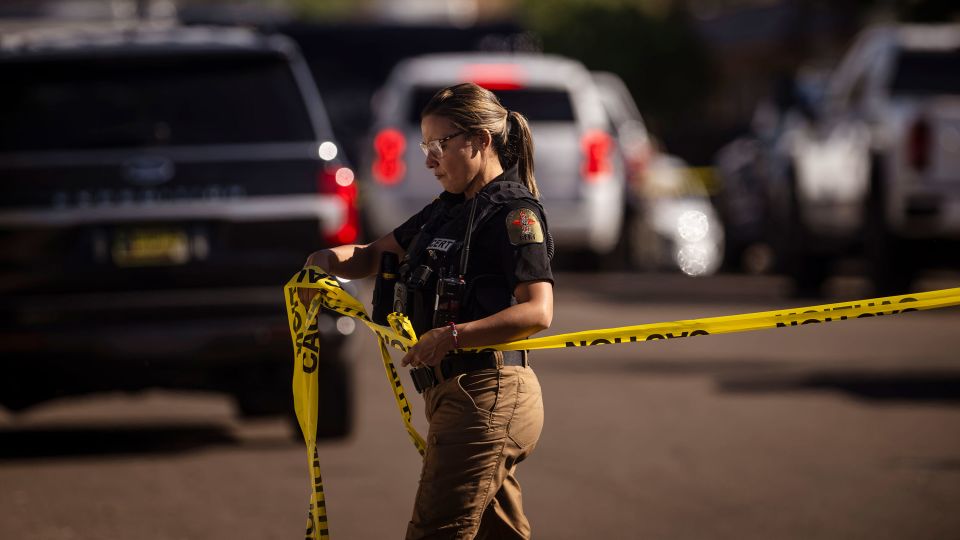
In Albuquerque, the most populous city in New Mexico, the National Guard is taking on roles that go beyond their traditional duties. Troops are listening to police dispatch calls, monitoring traffic cameras, and helping to secure crime scenes. These tasks are not typically part of a National Guard member’s responsibilities, yet they have become part of the current mission.
The deployment comes as part of efforts by the state to address a surge in crime. Unlike recent federal actions in Washington, D.C., and Los Angeles, where troops were seen in military fatigues during protests, the New Mexico National Guard is operating in a more subdued manner. The troops are wearing polo shirts and are under the command of Governor Michelle Lujan Grisham, a Democrat.
Last week, the governor declared a state of emergency in several areas of the state, including Rio Arriba County, the city of Española, and surrounding pueblos. This declaration allows her to mobilize additional troops if needed. The decision was made at the request of local governments, according to the governor.
The initial deployment of 60 to 70 National Guard members in Albuquerque came after an emergency request from the city’s police department. Officials cited the fentanyl epidemic and rising violent juvenile crime as critical issues that required immediate action. The goal is to help local police deal with a “significant surge” in violent crime, drug trafficking, and public safety threats that have overwhelmed local resources.
The National Guard is focused on non-law enforcement tasks. They are not armed, will not make arrests, detain anyone, use force, or engage in immigration-related activities. Police Chief Harold Medina emphasized that the Guard’s role is clearly defined and focused on support without enforcement.
Despite the deployment, there has been limited feedback on its effectiveness. HAWXTECH reached out to the Albuquerque Police Department and the New Mexico National Guard but did not receive a response. However, some officials believe the initiative has already shown positive results. Last month, city officials reported “success with targeted resources” in the downtown area. Shootings this year have decreased by 20% compared to 2024, according to a city news release.
A Contrast in Approaches
Governor Grisham has criticized previous deployments of National Guard troops by former President Donald Trump, calling them “executive overreach.” She highlighted the difference between her approach and Trump’s, noting that her deployment was based on direct requests from local communities. In contrast, Trump’s actions in Washington, D.C., and Los Angeles were seen as attempts to bypass local leadership.
Trump has suggested he might take similar actions in other major cities, even those led by Democrats. This has raised concerns about the potential misuse of the National Guard for political purposes rather than public safety.
On the West Coast, legal challenges continue over the president’s deployment of troops to Los Angeles amid protests over immigration enforcement. The visual contrast between the National Guard in New Mexico and those in LA and D.C. highlights different approaches and intentions.
California Governor Gavin Newsom called the federal intervention “purposely inflammatory,” while Washington, D.C.’s Attorney General Brian Schwalb described it as unnecessary. He pointed out that violent crime in the district had reached 30-year lows last year.
Trump has indicated he may consider similar actions in Chicago, New York, and Los Angeles due to their crime rates. However, it remains unclear what specific steps he plans to take.
Legal and Ethical Concerns
The use of the National Guard for domestic law enforcement raises significant legal and ethical questions. Jeffrey Swartz, a former National Guard member and professor emeritus, called it a “dangerous precedent” for the federal government to deploy troops for local policing matters. Historically, the National Guard has been used for crowd control, protecting federal property, and responding to natural disasters.
A key legal issue is whether the deployment violates the Posse Comitatus Act, a 19th-century law that prohibits the use of the U.S. military for domestic law enforcement. California courts are currently addressing this issue in a case brought by Governor Newsom. The trial concluded recently, but a ruling has not yet been announced.
David Shapiro, a lecturer at John Jay College of Criminal Justice, noted that the act’s language is short and vague, leading to ongoing debates. According to Swartz, National Guard members are not trained for law enforcement duties and often feel uncomfortable being placed in situations where they might have to use force against fellow citizens.
“These people are citizen soldiers, not full-time. They have jobs. They have families,” Swartz said. “They signed up to protect the country against external threats, not internal ones.”
As the debate over the use of the National Guard continues, the situation in New Mexico serves as a reminder of the importance of clear guidelines and community collaboration in addressing public safety challenges.

Post a Comment for "New Mexico's National Guard Deployed to Tackle Crime Crisis"
Post a Comment