New Dinosaur Out-Bites Velociraptor With Powerful Jaw
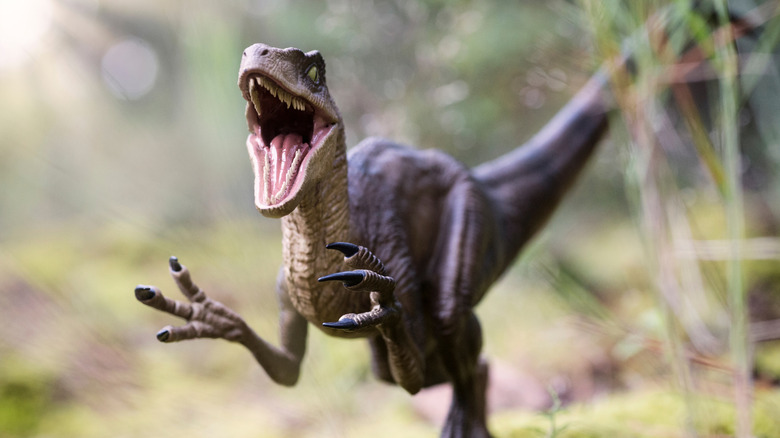
Uncovering a New Dromaeosaur: The Shri Rapax
While popular media has long painted a vivid picture of raptors, especially through films like Jurassic Park, the real-world creatures that roamed the Earth millions of years ago are often quite different from what we see on screen. The velociraptor, for example, is frequently depicted as a highly intelligent and dangerous predator capable of opening doors and hunting in packs. However, scientific research suggests that this portrayal is far from accurate.
The actual velociraptor was much smaller than its cinematic counterpart and likely did not exhibit the same level of social behavior or physical characteristics. Instead, it belonged to a broader group of dinosaurs known as dromaeosaurs, which includes other species such as the deinonychus and the utahraptor. These creatures were all part of a family of theropod dinosaurs that lived during the Cretaceous period, around 75 to 100 million years ago.
Recent discoveries have expanded our understanding of these ancient predators. Scientists have uncovered new raptor-like skeletons in unexpected locations, shedding light on the diversity and evolution of dromaeosaurs. One of the most recent breakthroughs comes from a new study published in Historical Biology, which introduces a previously unknown member of the dromaeosaur family: the Shri rapax.
A Unique Discovery
The Shri rapax was discovered before 2010, when it was excavated from the Gobi Desert in Mongolia. Unfortunately, the fossil was stolen by fossil poachers and eventually ended up on the black market. This is not an uncommon story, as the demand for rare fossils has led to widespread illegal trade and even the creation of forgeries that mimic genuine specimens.
Despite the challenges, the skeleton of Shri rapax eventually found its way into the hands of Eldonia, a French fossil company. One of the company’s owners had parts of the skeleton scanned, including the skull. However, the head and neck later disappeared, and they remain missing to this day. Fortunately, the rest of the skeleton was returned to Mongolia, where it can now be studied in its rightful home.
The scans of the skull provided valuable insights into the anatomy of Shri rapax. Researchers used the data to create a new cast of the skull, allowing them to analyze its features in greater detail. What sets Shri rapax apart from other dromaeosaurs is its sharper claws and a stronger bite, which may have been due to a shorter snout and stouter hands. These physical traits suggest that Shri rapax was a more powerful predator compared to its relatives, such as the velociraptor.
Physical Characteristics and Lifestyle
Based on the fossil evidence, Shri rapax was roughly the size of a turkey, measuring about six feet in length. It lived over 71 million years ago, during the late Cretaceous period. While its exact behavior remains a subject of debate among scientists, the anatomical features of the skeleton provide clues about how it might have hunted and interacted with its environment.
The presence of strong claws and a robust jaw structure indicates that Shri rapax was well-equipped for capturing and subduing prey. However, unlike some modern depictions, there is no conclusive evidence that it hunted in groups. Instead, it may have been a solitary hunter, relying on its physical attributes to survive in a competitive ecosystem.
The Importance of Fossil Conservation
The journey of Shri rapax from the Gobi Desert to the black market and back to Mongolia highlights the challenges of fossil conservation. Illegal trading not only deprives scientists of critical data but also risks the loss of irreplaceable pieces of natural history. The return of the Shri rapax skeleton to Mongolia is a positive step toward protecting and studying these ancient remains.
As researchers continue to uncover new species and refine their understanding of prehistoric life, discoveries like Shri rapax remind us of the vast and complex world that once existed. Each new find adds another piece to the puzzle, helping us better understand the evolution of life on Earth.

Post a Comment for "New Dinosaur Out-Bites Velociraptor With Powerful Jaw"
Post a Comment