Nashville Zoo's New Leopard Babies: Music City Leads in Conservation
A New Addition to the Nashville Zoo: Meet Gemma, the Clouded Leopard Cub
At the Nashville Zoo, a small but powerful high-pitched roar echoed through the veterinarian’s office. This sound came from four-week-old Gemma, a clouded leopard cub, as she prepared for her mid-morning meal. Despite her tiny size—just six pounds—Gemma is already showing signs of the strength and agility that will define her adult life. When fully grown, she could weigh between 30 to 35 pounds, with male clouded leopards reaching up to 65 pounds. These nocturnal predators are capable of taking down large prey like wild boars.
For now, Gemma is about the size of a jar of Nutella, and she appears perfectly content as she takes a bottle of milk from 15-year zoo veterinarian Heather Schwartz, the director of animal health at the Nashville Zoo. Schwartz has been closely involved in the care of the cubs, ensuring they receive round-the-clock attention. "The veterinary team is going to take care of them 24/7," she said. "So it's feeding, late nights, early mornings, and just double-checking on them, making sure they're okay."
Some of the zoo’s visitors on August 14 were lucky enough to witness the cubs’ feeding. Gemma, the newest addition to the zoo, will eat five times a day as she grows over the next 18 months. In a week, she will begin to try turkey baby food and then ground meat as her teeth start to come in. After her bottle, Gemma was clearly tired and took a nap next to her blue lamb stuffed animal.
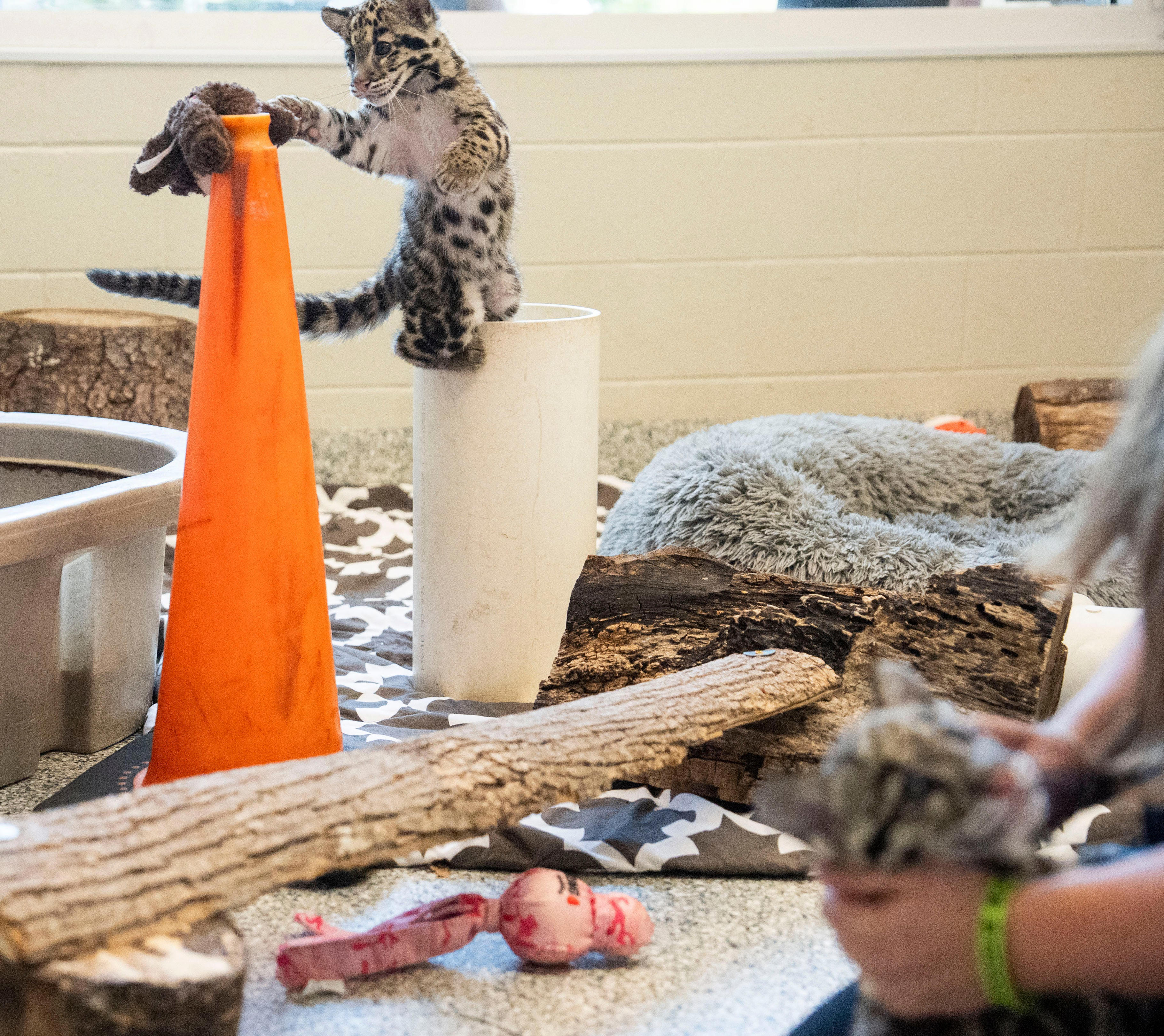
In the room next door, two other clouded leopard cubs, Joker and Quinn, were busy honing their running and jumping skills in a small play area filled with toys, a traffic cone, and small tree branches. The cubs were named after DC Comics characters Joker and Harley Quinn. They arrived at the zoo from Kansas in July and are being paired for mating to help grow the endangered population.
By introducing the cubs together at a young age, Schwartz believes this approach can increase the success rate of mating from 20% to 40% to a remarkable 95%. This improvement has made the Nashville Zoo a leader in leopard habitation. "We have the most clouded leopards of any institution in the country, and we dedicate space for them and have multiple breeding pairs within the zoo," Schwartz explained.
The amur leopards are the newest attraction at the Nashville Zoo as part of the Leopard Forest exhibit. The opening of Leopard Forest in June 2023 attracted 22,000 guests, the highest attendance for an attraction opening in the zoo's history. The leopards are part of the zoo's conservation efforts through a Species Survival Plan, which helps zoos and aquariums maintain captive populations.
The amur leopard is considered critically endangered by the World Wildlife Federation, with fewer than 100 left in the wild. The Nashville Zoo’s efforts extend beyond leopards, including the protection of species native to Africa such as leopards, colobus monkeys, De Brazza's monkeys, klipspringers, and Masai giraffes.
Although the Nashville Zoo has become a hub for leopards, cubs will eventually be moved to other zoos as part of the broader conservation strategy. The zoo continues to play a vital role in the preservation of these magnificent animals, ensuring their survival for future generations.

Post a Comment for "Nashville Zoo's New Leopard Babies: Music City Leads in Conservation"
Post a Comment