Napa Valley Winery Charges $250 for Tastings—Here's the Reason
A Unique Approach to Wine Tasting
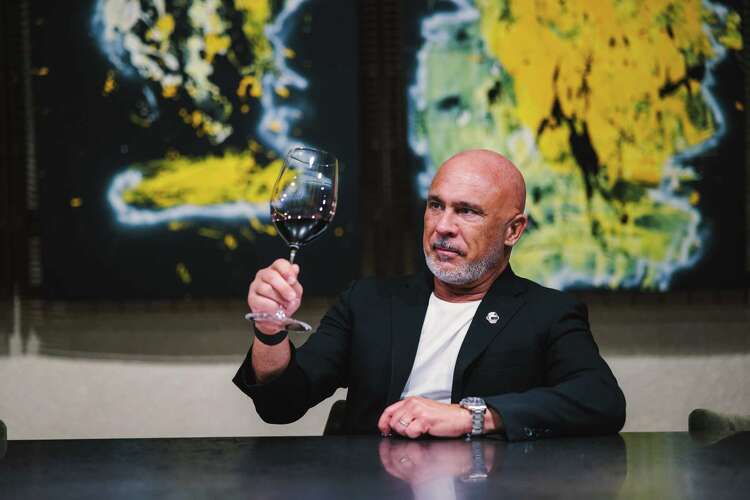
Patrice Breton, the vintner behind Vice Versa winery in Calistoga, acknowledges that charging $250 for a wine tasting might seem steep. However, he stands by this price point, believing it reflects the quality and experience offered. At his newly opened winery, visitors can expect to taste at least $1,000 worth of wine during their visit. The four-glass flight is designed as a "crescendo in terms of intensity," featuring wines like the $575 Magnificent Seven, a Cabernet Sauvignon sourced from renowned vineyards such as To Kalon, Dr. Crane, and Las Piedras. This is followed by the $350 Les Cousins, a 50-50 blend of Napa Valley and Paso Robles Cabernet, created in collaboration with Paso winery L'Aventure.
Breton hopes that customers will not only enjoy the tasting but also make purchases. He offers to waive the tasting fee if guests buy at least three bottles of Vice Versa. His permit allows for a maximum of 10 visitors per day, so he aims to ensure each visit is meaningful and valuable.
Sales and Industry Trends
Since its opening last month, Vice Versa has been experiencing high demand, with sales up approximately 30% this year. This growth contrasts sharply with the overall U.S. wine industry, where retail sales have declined by 6% year over year as of April, according to Wine Business Analytics. Small-scale, high-end wines are performing better than lower-priced options, and companies that rely more on direct-to-consumer sales—like those facilitated by a tasting room—are better insulated from the current crisis in the wine distribution tier.
A New Chapter for Vice Versa
The Calistoga winery marks the culmination of a long journey for Breton, who has operated Vice Versa since 2003 as a virtual brand without a physical facility or vineyards. Like many upscale Napa brands, he sources fruit from some of the most prestigious sites, particularly those owned by grower Andy Beckstoffer, and works with a renowned winemaking consultant, Philippe Melka.
Now, with a physical presence, Breton hopes to distinguish Vice Versa among the Napa elite. The 5,000-square-foot steel and concrete structure features an outdoor crushpad lined with stainless tanks and concrete cylinders. The fireproof materials result in a relatively low insurance bill of $1,000 a month, a significant saving for a rural winery. The indoor areas are primarily located within underground caves, with an arched doorway leading to a minimalist tasting room featuring a single long, black table.
Art and Innovation
Chaotic paintings by Brazilian artist Bruno Leonardo Franklin de Melo adorn the tasting room walls, reflecting Breton's inspiration from his time as a bass player in a punk band. Despite the vibrant colors, the space remains quiet due to a $1 million cooling system that operates silently. Breton also plans to project black and white films like "Casablanca" or "Seven Samurai" without sound, adding to the unique ambiance.
The design of the winery was initially planned by architect Howard Backen, who passed away in 2024. Breton opted for a different aesthetic, enlisting San Francisco architects Olle Lundberg and Lev Bereznycky. The initial construction quote of $18 million escalated to about $40 million after the 2020 wildfires, prompting Breton to delay the second floor.
From Software to Winemaking
Breton's journey into the world of wine began after he built a successful career in software. He founded Mediagrif Interactive Technologies in 1996, an early player in Canada's tech industry. By the early 2000s, he had grown the company to over 450 employees with annual revenue exceeding $76 million. However, the demanding nature of his work left him exhausted, prompting a shift in focus.
His passion for wine led him to California, where he found the opportunity to innovate and create. Winemaker Paul Hobbs mentored him, helping secure fruit for his first vintage in 2003. The initial release of Vice Versa generated buzz on critic Robert Parker's forum and sold out quickly.
Crafting the Perfect Wine
Breton describes his desired wine style as "pliant," emphasizing texture and a silky finish. The wines, advised by Philippe Melka, are smooth and supple, with generous fruit-forward flavors. All wines are decanted for up to nine hours before serving to enhance their silkiness.
Breton invested $3 million of his personal funds into Vice Versa, taking 10 years to break even. In 2013, he moved to Napa Valley full-time, believing that building the brand first was more cost-effective than purchasing a winery upfront. His Calistoga property includes 5.5 acres of 30-year-old Cabernet Sauvignon and rare Lagrein vines, which he plans to replant with more Cabernet and Cabernet Franc.
Future Plans and Growth
Vice Versa is permitted to produce up to 10,000 cases annually, but Breton plans to maintain a current output of 5,000 cases. After nearly two decades of custom crushing, he looks forward to greater control over grape quality in 2025. Meanwhile, he is scouting for additional vineyards to further enhance his grape sourcing.
"I've got my eye on something," Breton said, noting that many wineries and vineyards are closing or selling, making it an opportune time for acquisition.
Visiting Vice Versa
Vice Versa Wines offers tastings for $250 by appointment, open daily from 10 a.m. to 5 p.m. Located at 3475 Hwy. 128 in Calistoga, the winery can be contacted at 707-968-5620 or via their website at viceversawine.com.

Post a Comment for "Napa Valley Winery Charges $250 for Tastings—Here's the Reason"
Post a Comment