Mystery Solved: US Engineers Make Melting Ice Move Itself in Energy Breakthrough
Nature-Inspired Engineering and the Mystery of Moving Ice
Nature has always been a source of inspiration for engineers and scientists. One fascinating example of this is the work conducted by Professor Jonathan Boreyko and his team at Virginia Tech. Their research, which began with a simple observation in the lab, led to a remarkable discovery: a specially designed surface can cause an ice disc to launch itself forward during the melting process.
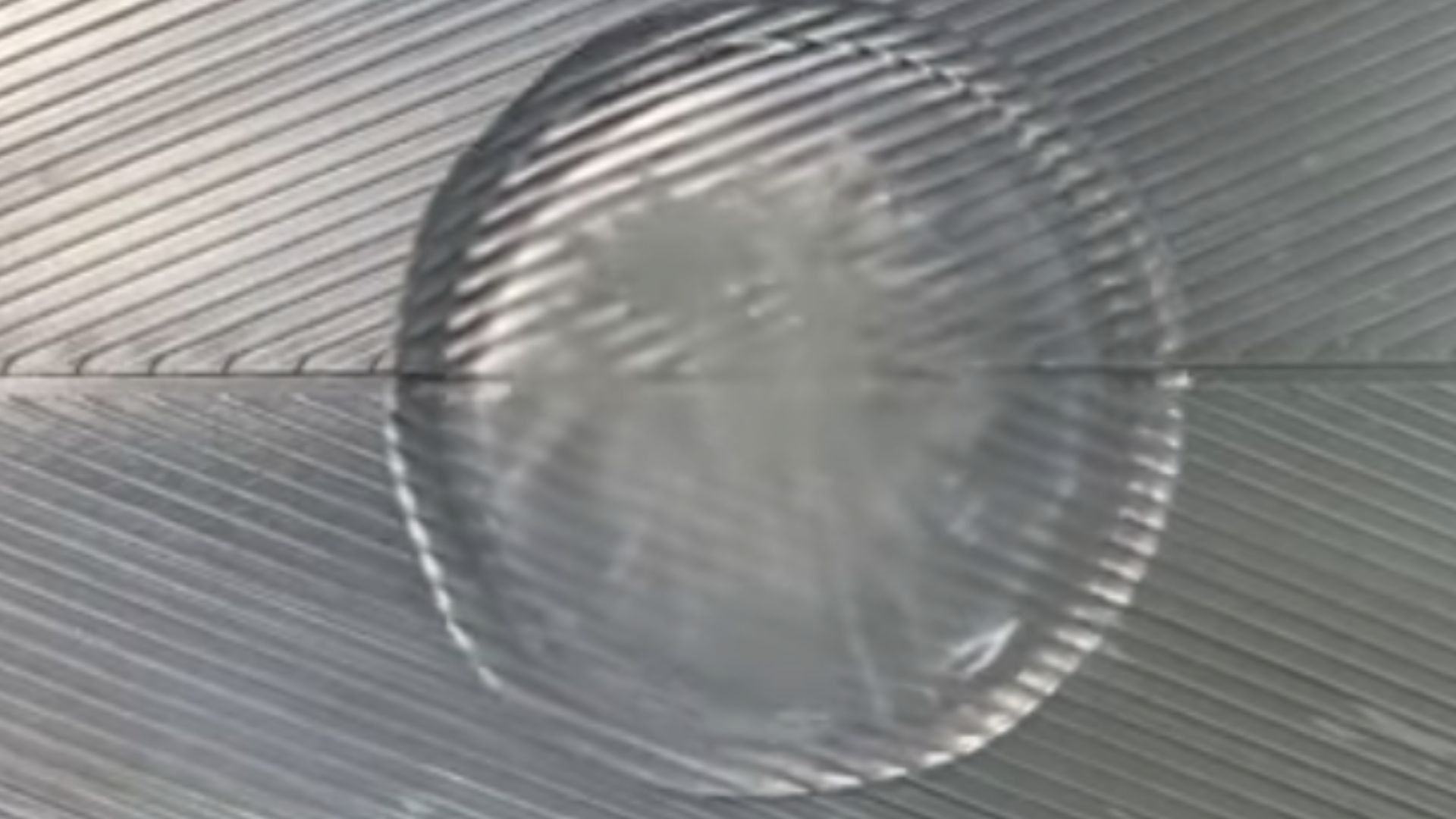
The experiment involved placing a disc of ice on a metal plate. Initially, as the ice melted, it formed a puddle and remained stubbornly attached to the surface. After a minute of what seemed like inactivity, the ice suddenly moved across the surface as if propelled by an invisible force. This unexpected behavior sparked further investigation into the mechanics behind it.
Inspiration from a Natural Phenomenon
The team drew inspiration from a natural mystery known as the "sailing stones" found at Racetrack Playa in Death Valley. These large boulders leave long tracks on the flat, dry ground, seemingly moving on their own. For years, the phenomenon remained unexplained, with some even attributing it to supernatural forces.
In 2014, Professor Richard Norris from the Scripps Institute of Oceanography solved the mystery. He discovered that a combination of rain, hard ground, ice formation, and wind was responsible for the movement of the rocks. When rainwater pooled on the impermeable ground, it froze as temperatures dropped. As the ice melted, it formed ice rafts that drifted in the wind, pushing the rocks along the surface.
Boreyko’s team aimed to build upon this natural mechanism by creating a surface that could propel melting ice without relying on external forces like wind.
Designing a Surface for Directional Movement
To achieve this, the researchers etched asymmetric, arrowhead-shaped grooves onto aluminum plates using a herringbone pattern. These grooves were designed to control the direction of meltwater flow. According to Ph.D. student Jack Tapocik, “This directional flow of meltwater carried the ice disk along with it. A good analogy is tubing on a river except here, the directional channels cause the flow instead of gravity.”
This innovative approach allowed the team to manipulate the movement of ice in a controlled manner, opening up new possibilities for applications in various fields.
Unexpected Discoveries and the Slingshot Effect
During their experiments, the team made an unexpected discovery when they coated the grooved plates with a water-repellent spray. Instead of speeding up the movement of the ice, the coating caused the ice disc to stick firmly to the surface. This led to the development of what the researchers call the “slingshot effect.”
The ice adheres to the ridges of the waterproof surface because excess water is squeezed out. Even though the meltwater continues to flow through the channels, the ice can no longer glide on top of it. The key to the slingshot effect lies in the formation of a puddle on one side of the ice, which creates a mismatch in surface tension. This imbalance dislodges the ice, causing it to shoot across the surface.
Compared to the slow-moving sailing stones of Death Valley, Boreyko’s surfaces can propel ice much faster, making them the “fastest ice on Earth.”
Potential Applications and Future Implications
Professor Boreyko sees the potential for this unique propulsion mechanism in energy harvesting. The team believes that the slingshot effect could also be used in anti-icing systems, self-cleaning surfaces, and power-free microfluidic transport.
Their groundbreaking research has now been published in ACS Applied Materials & Interfaces, highlighting the significance of their findings in the field of materials science and engineering. This study not only demonstrates the power of nature-inspired design but also opens the door to future innovations that could have wide-ranging applications in technology and environmental sustainability.

Post a Comment for "Mystery Solved: US Engineers Make Melting Ice Move Itself in Energy Breakthrough"
Post a Comment