Merz and Macron Avoided Trade War with Trump
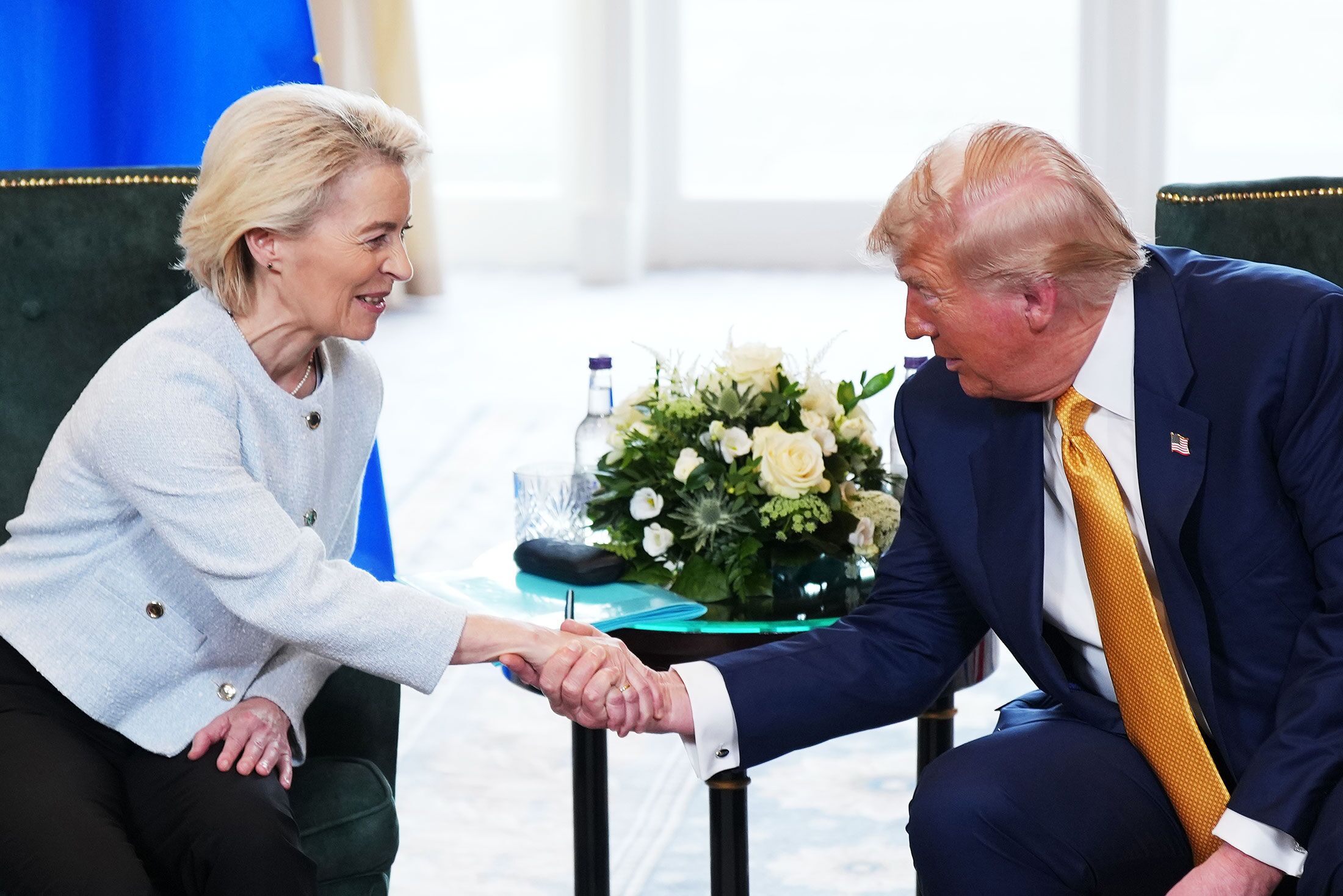
The EU's Trade Deal with the US: A Compromise Born from Internal Struggles
The European Union’s recent trade agreement with the United States has sparked a wave of internal reflection among officials who were involved in the negotiations. According to insiders, the deal that was ultimately reached was considered the least-bad option available to the bloc. While the European Commission is officially responsible for handling trade matters, the final outcome of the agreement between Commission President Ursula von der Leyen and former U.S. President Donald Trump was significantly influenced by national governments.
One of the key challenges faced by EU negotiators was the reluctance of member states—particularly Germany and France—to risk economic pain in order to push back against Trump’s demands. This hesitation led to a compromise that many view as suboptimal. Von der Leyen herself acknowledged the deal as “the best we could get,” but it fell short of the original goal of achieving a mutually beneficial and balanced agreement.
A Divided Approach
Throughout the negotiations, EU envoys were presented with two options: accept the 15% tariffs on most European imports or retaliate. However, the decision to retaliate came with significant risks. Officials were warned that any retaliation would require the EU to act as a unified bloc and be prepared to absorb the economic consequences. Unfortunately, the EU lacked both unity and strategic clarity, which weakened its position during the talks.
This lack of cohesion is not new. The EU has long struggled with internal divisions when it comes to trade policy. Boosting competitiveness, enhancing the single market, and completing trade deals are central to the bloc’s response to U.S. tariffs. Yet, these goals require member states to work together effectively—a challenge they often fail to meet.
The Role of National Interests
National interests have played a dominant role in shaping the EU’s approach to trade negotiations. Rather than forging a strong, unified European position, European capitals focused on protecting their own industries and minimizing short-term economic pain. This self-centered approach has often come at the expense of a broader, more strategic vision.
Germany and France, in particular, have been cautious due to political pressures. Both leaders, Chancellor Friedrich Merz and President Emmanuel Macron, face threats from right-wing populists who could exploit any economic downturn. Additionally, there are concerns about the EU’s reliance on the U.S. for security, especially regarding support for Ukraine in its conflict with Russia.
Despite public posturing, EU officials worked behind the scenes to appease the U.S. For example, France pushed for the use of the EU’s anti-coercion instrument, which would have allowed the bloc to target U.S. tech firms and services. Meanwhile, Germany insisted that all options were open. However, these efforts ultimately weakened the EU’s negotiating position.
The Impact of Internal Pressures
The EU’s strategy to deter the U.S. from increasing tariffs was based on two lists of U.S. goods worth nearly $100 billion that would be targeted in response. However, under pressure from member states, the commission agreed to pause work on the first list. Some officials believed this move would generate goodwill and lead to a better outcome, while others argued it only weakened the EU’s hand.
This pattern of internal compromise has been evident in previous negotiations as well. When the EU was dealing with steel tariffs under the Biden administration, it removed all countermeasures while the U.S. kept some of its tariffs in place. Similar warnings from trade officials were ignored, highlighting a recurring issue within the bloc.
The Cost of Compromise
In the current round of negotiations, EU officials faced intense pressure from member states to remove items from the list of goods targeted for retaliation. Many of these requests were driven by national concerns rather than a desire to create a cohesive European strategy. For instance, France sought to protect its wine industry, fearing that Trump might respond with tariffs on Champagne and wine.
Berlin also took a similar approach, with Merz calling for a quick and simple deal. He criticized EU officials for getting bogged down in details and emphasized the need to protect German automakers. One proposed plan involved offering tariff relief to car companies in exchange for investments in the U.S., which could have jeopardized European jobs and investments.
The Road Ahead
While the deal with the U.S. has been finalized, it has not resolved the underlying issues within the EU. The bloc must address its lack of unity and strategic direction if it is to effectively navigate future trade disputes. As French Trade Minister Laurent Saint-Martin noted, Europe must not accept the status quo and must continue to seek improvements in its trade relations.
The path forward will require member states to prioritize collective interests over individual gains. Only then can the EU emerge as a stronger, more strategic player on the global stage.

Post a Comment for "Merz and Macron Avoided Trade War with Trump"
Post a Comment