Mental Time Travel Reclaims Lost Memories, Study Reveals
The Science Behind Forgotten Memories
Recent research has begun to challenge the long-held belief that forgotten memories are truly lost. Scientists now suggest that these memories may not be as inaccessible as previously thought, especially when certain contextual cues are reintroduced. This concept highlights the strong relationship between memory and the environment in which it was first formed. By recalling specific sensory details—such as smells, sounds, or emotions experienced during the original event—it becomes possible to retrieve otherwise elusive memories.
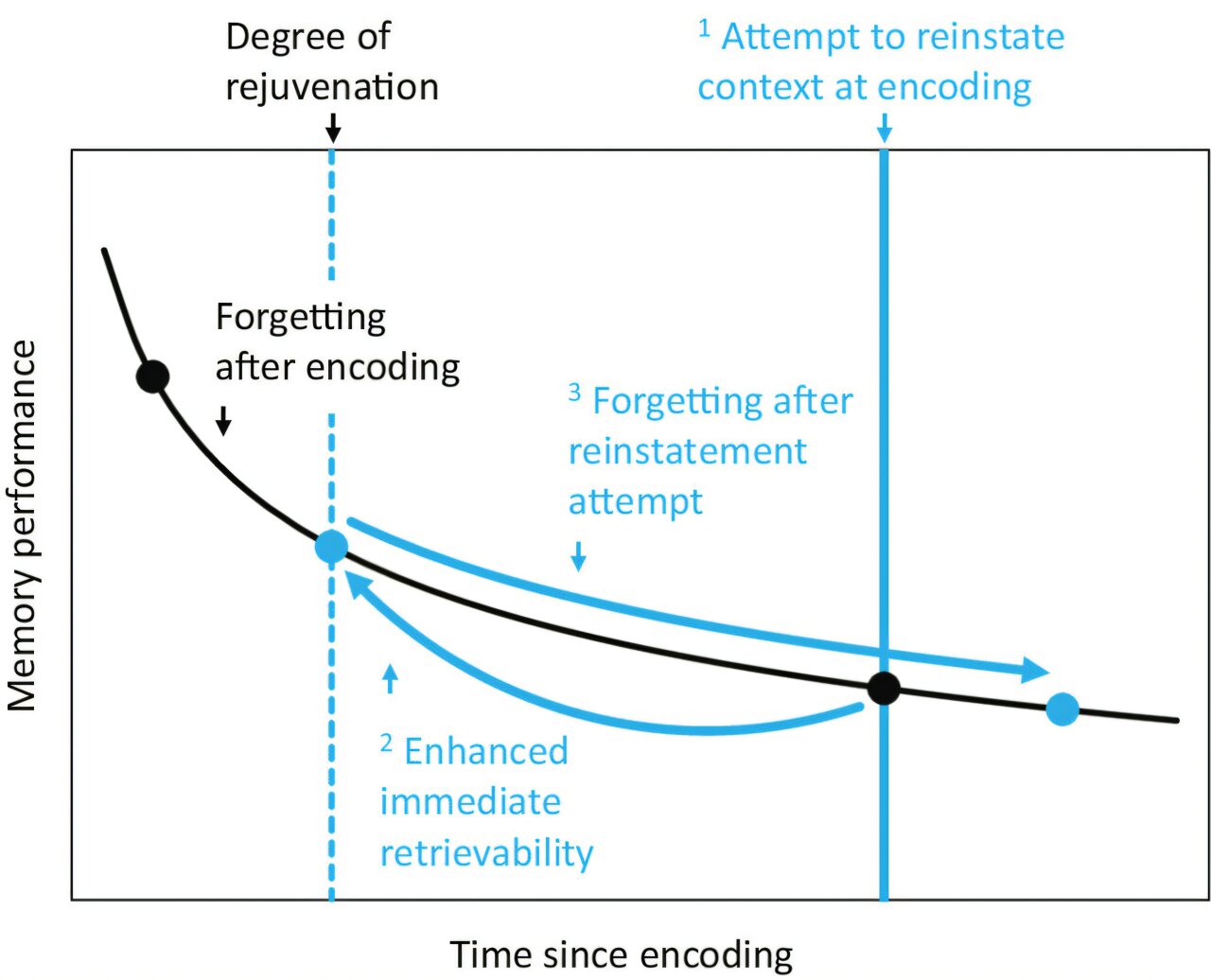
Despite this growing understanding, there remains a gap in knowledge regarding how exactly contextual memory recall is affected over time. Memory retrieval typically becomes more difficult as time passes, but the rate at which we forget does not follow a linear pattern. Instead, it tends to decline over time due to a process known as memory consolidation. Initially, people forget events quickly within the first few days or weeks, but after that, the rate of forgetting slows down significantly.
A Groundbreaking Study on Mental Time Travel
A recent study published in the Proceedings of the National Academy of Sciences explored whether "mental time travel" could help restore the natural retrieval and forgetting rates of memories. To investigate this, researchers recruited 1,216 participants who were divided into four groups for two separate experiments. In the first experiment, participants were asked to remember a list of words, while in the second, they read a passage.
One group from each experiment was instructed to recall the material without any form of mental time travel. The other groups were encouraged to use context reinstatement, meaning they were asked to recall their thoughts and feelings from the time the memory was encoded. These participants were then tested at different intervals—4 hours, 24 hours, or 7 days after learning the material.
The scientists hypothesized that mentally revisiting the past would enhance the retrievability of older memories and potentially alter the rate at which those memories were forgotten. Their theory, known as the "rejuvenation hypothesis," suggested that returning to the original context of a memory would make it more accessible and mimic the way it was immediately after being encoded.
Results and Implications
The findings of the study supported this hypothesis. Participants who used mental time travel showed a reversal in their forgetting trajectory, closely resembling the original forgetting curve right after encoding. However, this effect was less pronounced when the time between encoding and reinstatement was longer. Specifically, the method was more effective when the delay was only 4 or 24 hours rather than 7 days. As the time lag increased, the likelihood of successfully reinstating the memory decreased.
The researchers compared this phenomenon to the myth of Sisyphus, where an individual continuously tries to roll a boulder up a hill, only for it to fall back down. Similarly, the act of mental time travel temporarily restores a memory, but its effects do not last indefinitely. This suggests that the enhancement of memory retrieval through mental time travel is not a permanent solution, but rather a temporary one.
Real-World Applications and Future Research
While the study provides promising insights into memory restoration, it is important to note that the experiments involved controlled laboratory settings. Real-life memories often involve richer contexts, which may lead to stronger rejuvenation effects. Further research is needed to determine how these findings apply outside of the lab and whether memories can be effectively restored after extended periods of time.
This study offers hope that even seemingly lost memories might be recoverable under the right conditions. However, more investigation is required to fully understand the mechanisms behind this phenomenon and its potential applications in various fields, including psychology, education, and cognitive science.

Post a Comment for "Mental Time Travel Reclaims Lost Memories, Study Reveals"
Post a Comment