Mental Health Didn't Stop NY Shooter From Buying a Gun
Understanding the Legal and Mental Health Context
The tragic shooting in New York involving Shane Tamura has raised significant questions about the intersection of mental health laws and gun ownership. Tamura, a 27-year-old man, was responsible for the deaths of four individuals at a high-rise building in Manhattan before taking his own life. The incident has sparked discussions on how mental health crises are managed and whether these systems adequately prevent individuals from accessing firearms.
Tamura’s actions were reportedly linked to his belief that the NFL was concealing the dangers associated with chronic traumatic encephalopathy (CTE), a brain disease caused by repeated head trauma. He claimed to have suffered from CTE, which he attributed to playing football during his high school years. This belief appears to have played a role in his decision to commit the act.
According to reports, Tamura used an AR-15 style rifle that he had purchased for $1,400 from his supervisor at the Horseshoe Casino. Despite being placed in emergency mental health holds in both 2022 and 2024, he was still able to acquire a firearm and a concealed carry permit. These holds, known as "Legal 2000" or "L2K," are intended to provide temporary care for individuals in a mental health crisis.
How Emergency Mental Health Holds Work
Emergency mental health holds can be initiated by medical providers, social workers, or law enforcement. According to Josh Tomsheck, a criminal defense attorney and Second Amendment legal expert, these holds allow individuals in crisis to be held against their will for up to 72 hours. However, there is no judicial involvement in the process, and no formal finding is made regarding the individual's mental health status.
Tomsheck explained that most people placed in L2K holds are stabilized and released before the 72-hour period ends. He emphasized that being in a mental health hold does not necessarily indicate a long-term mental health condition or disqualify someone from owning a firearm. “There's a real slippery slope there,” Tomsheck said. “If we have a mechanism in place that prevents someone who may be expressing suicidal thoughts, we want to make sure they don’t hurt themselves. We don't want to take away their constitutional rights.”
The Role of Background Checks and Records
Despite the presence of emergency mental health holds, they do not automatically result in inclusion in Nevada’s Central Repository for Nevada Records of Criminal History. This database is used for background checks when purchasing a firearm. Therefore, even if an individual has been placed in a mental health hold, it does not necessarily prevent them from acquiring a gun.
However, Tomsheck noted that in some cases, an L2K hold can lead to further legal action. If a court determines that an individual is incompetent or faces other charges, this could result in restrictions on firearm ownership. But he stressed that the L2K hold itself does not serve as a basis for such restrictions.
Public Records and Community Response
Following public record requests, Las Vegas Metropolitan Police released documents, body-worn camera footage, and a 911 call related to Tamura’s mental health history. In 2022, a family member reported that Tamura had expressed a desire to harm himself and had access to a gun. The caller also mentioned that he was under medical care for depression, concussions, migraines, and insomnia.
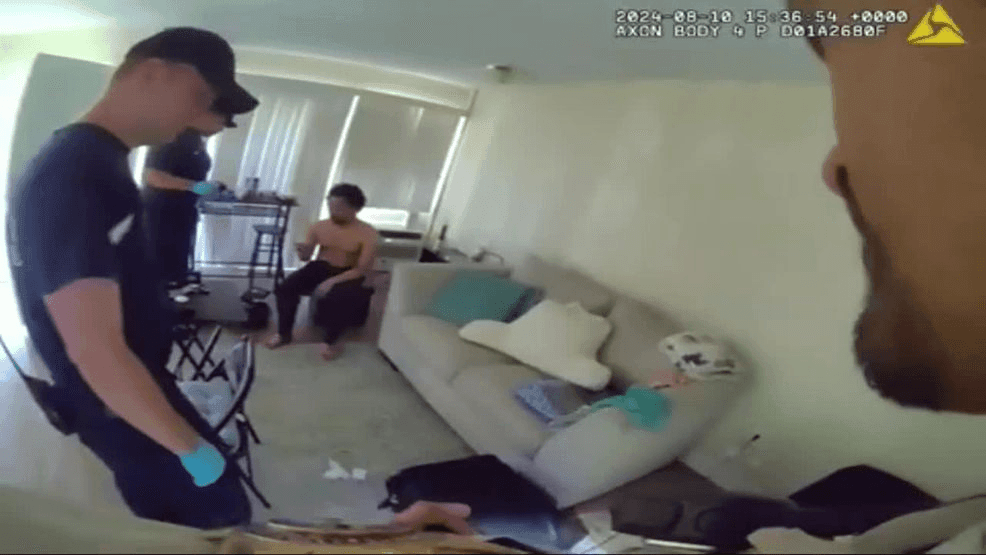
In 2024, a body-worn camera showed an officer and paramedics visiting Tamura’s apartment after he made statements about self-harm. During a 2024 application for emergency admission, an officer noted concerns about Tamura potentially causing serious injury to himself and mentioned that he had not yet decided on a method.
These events highlight the complexities of managing mental health crises and the challenges of ensuring that individuals who may pose a risk to themselves or others are appropriately addressed without infringing on their legal rights.

Post a Comment for "Mental Health Didn't Stop NY Shooter From Buying a Gun"
Post a Comment