Marco Rubio Faces Tough Questions on Past Putin Deal Stance
Marco Rubio’s Past Criticisms of Putin Highlight Tensions in U.S.-Russia Relations
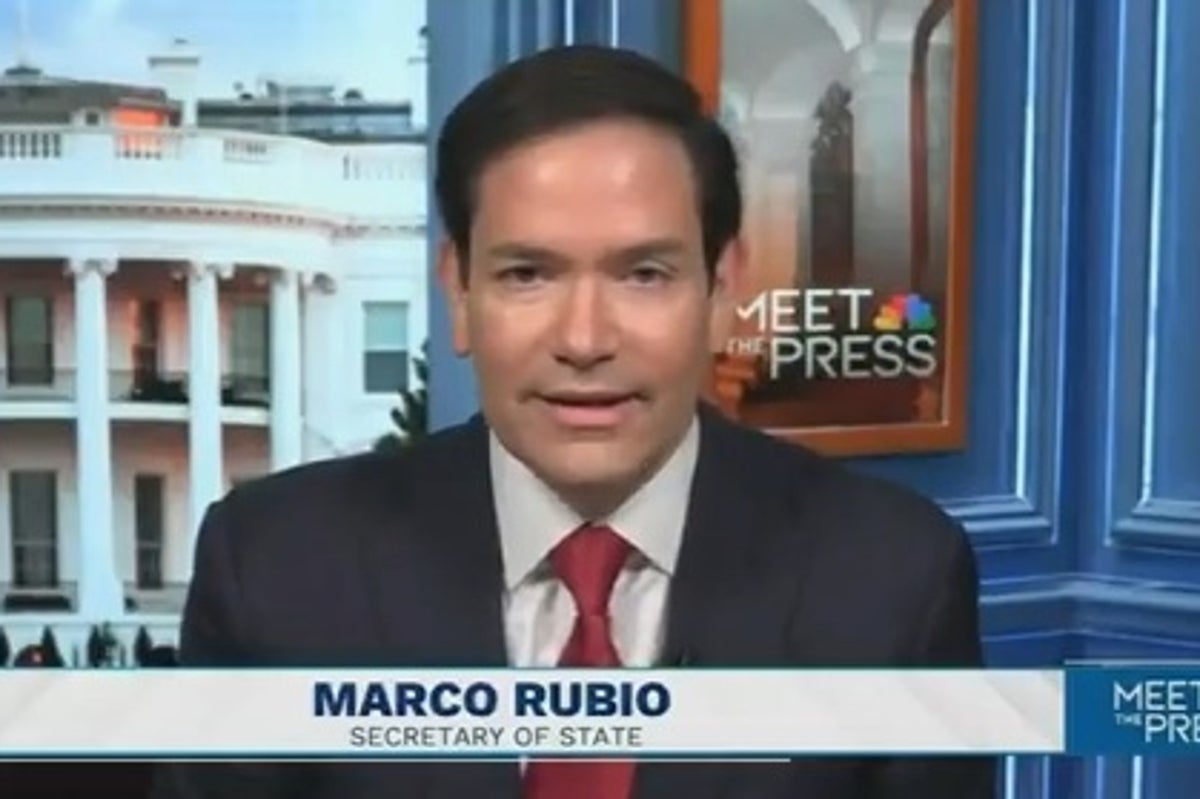
During a recent event, Marco Rubio found himself reflecting on his past statements about Vladimir Putin, as a news anchor played back his own remarks opposing the idea of striking a “deal” with the Russian leader. This moment occurred after Secretary of State Antony Blinken returned to Washington from Alaska, where he had been part of the delegation accompanying President Donald Trump to a historic summit with Putin.
The meeting between Trump and Putin took place at a U.S. military base in Anchorage and lasted nearly three hours. It marked their first meeting in six years, during which the two leaders discussed the ongoing war in Ukraine. While the U.S. president pushed for peace in the region, no formal ceasefire deal emerged from the talks. However, on Sunday, U.S. envoy Steve Witkoff revealed that Putin had agreed to allow the U.S. and its European allies to offer Ukraine a security guarantee.
This revelation came as NBC’s Kristen Welker confronted Rubio with a video clip from when he was still a senator, shortly after the Russian invasion of Ukraine in 2022. In the clip, Rubio expressed his belief that Western leaders had been repeatedly misled by Putin due to the mistaken assumption that the Russian leader would ever keep his word. He emphasized that Putin was not interested in peace agreements or avoiding conflict.
In the video, Rubio stated, “This guy lies. Habitually lies. He’s never kept a deal he ever signed, and he lies all the time. And I don’t know why—but he plays us like a violin in the west, because we want to cut a deal with everybody.” He added, “You can’t cut a deal with a guy like this. He’s a professional, experienced liar.”
Welker then asked Rubio, “Mr. Secretary, given that, what makes you think that if you are able to reach a deal with President Putin, that he would stick to it. Based on what you said, he is a liar.”
Rubio responded by highlighting the importance of a U.S.-backed security agreement for Ukraine. He pointed out that Putin’s openness to allowing Ukraine to sign a NATO-like security guarantee with American or European forces as part of a broader peace agreement was described as a “game-changer” by Witkoff. Rubio emphasized that such an agreement must include enforceable mechanisms, including security guarantees.
Despite these assurances, Trump has not publicly committed to honoring any U.S.-backed security agreement for Ukraine. His administration has often contradicted its own advisers, creating uncertainty about the future of U.S. policy toward the region.
Trump is set to meet with Ukrainian President Zelensky, several European leaders, and NATO’s secretary-general. During the Alaska summit, Trump and Putin reportedly agreed that the U.S. would consider backing a Russian proposal that the cession of the Donbas region, including parts occupied by Ukraine, would be part of an agreement to end the war.
Rubio’s comments on Putin have become a focal point of criticism, highlighting the challenges he faces in his new role as a member of the Cabinet. While serving in Congress, Rubio was known as one of the strongest bipartisan voices advocating for comprehensive immigration reform, although the effort ultimately failed. He also opposed tariffs and was among many Republicans who denounced Trump following the January 6th attack on the U.S. Capitol.
At the time, Rubio argued that the attack would damage America’s global image, a point he was later confronted about on ABC News. His boss, however, went on to pardon hundreds of individuals involved in the attack, including some convicted of assaulting police officers.
As the political landscape continues to evolve, the complexities of U.S.-Russia relations remain a central issue, with Rubio’s past statements and current role adding layers of scrutiny to the ongoing dialogue.

Post a Comment for "Marco Rubio Faces Tough Questions on Past Putin Deal Stance"
Post a Comment