Maps reveal California's new congressional boundaries
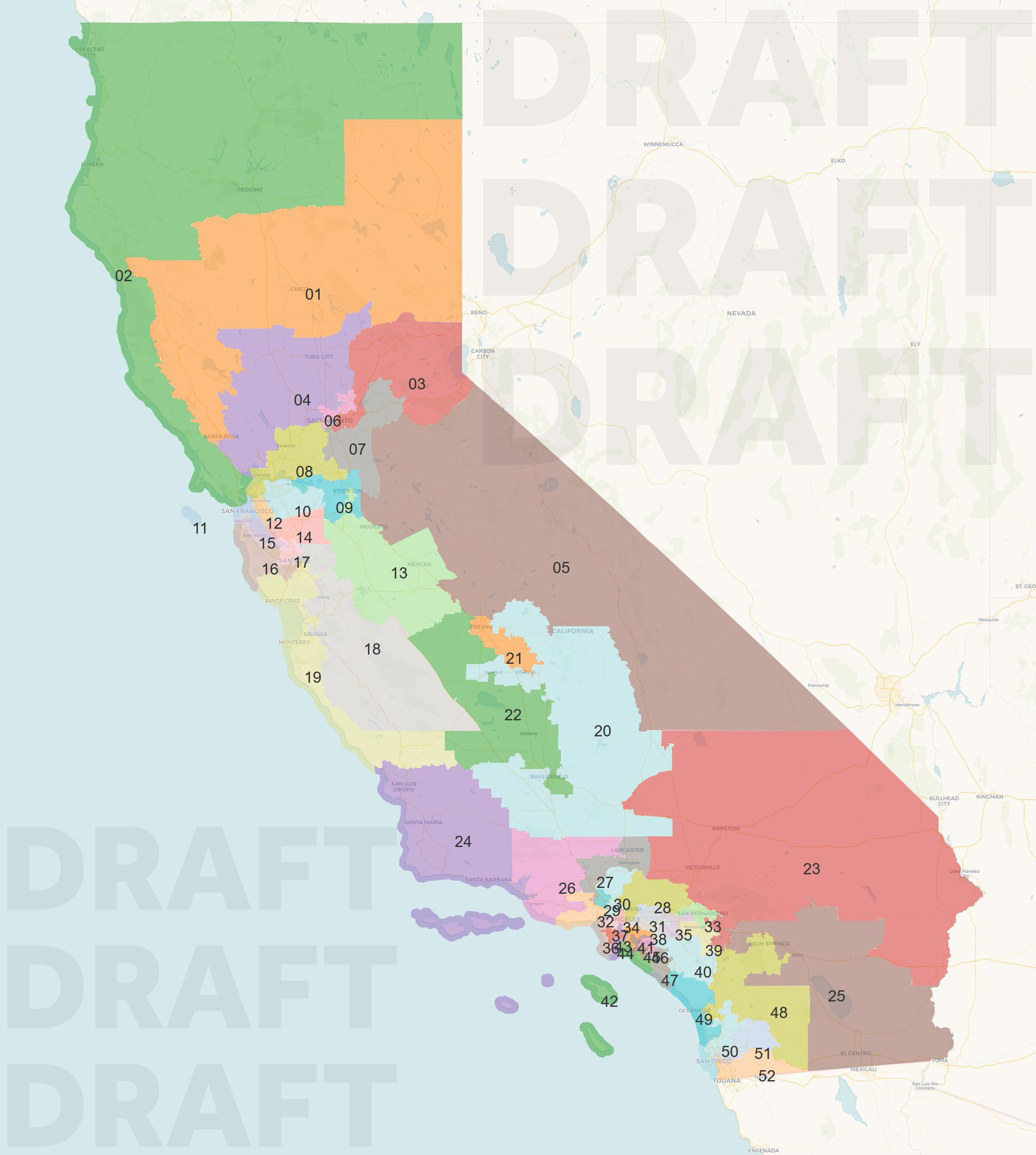
California's Proposed Congressional District Map Sparks Debate
The California Assembly has released a proposed map of new Congressional districts that voters could vote on in a special election, if the Legislature approves it next week. The map was obtained by KCRA 3 earlier this week and submitted by the Democratic Congressional Campaign Committee (DCCC) to the state legislature.
The DCCC provided a 60-page presentation detailing the proposed map, which includes a letter from Julie Merz, the executive director of the DCCC. In her statement, Merz expressed confidence that the proposal would gain support from both California office holders and various stakeholders across the state.
The leaked drafts align with what was officially released by the Assembly late Friday night. An interactive map is available for review, though some users may need to click through to view it properly.
This development follows Governor Gavin Newsom’s recent launch of the Election Rigging Response Act during a campaign rally in Los Angeles. Newsom and other Democrats have argued that if Texas does not back down from its efforts to send more Republicans to Congress, California will take steps to counteract by sending more Democrats to the House. Although California law currently prevents politicians from drawing district lines, Democratic leaders are pushing for a measure that would temporarily allow voters to approve changes in an upcoming election.
The maps were created by congressional Democrats and their consultants. An interactive version shared with KCRA 3 is hosted on redistrictingpartners.com, a site managed by Paul Mitchell, vice president of Political Data Inc. and an elections expert.
Legislative Steps to Call a Special Election
Assembly Speaker Robert Rivas announced that the California Legislature will consider three key measures to call a special election:
- A constitutional amendment authorizing the replacement of the current Congressional map.
- A statute containing the new proposed Congressional map for voter approval.
- A statute to call the special election, allocate funding for election administration, and make necessary adjustments to election calendars.
Rivas' office also outlined a timeline for the next week as legislators work to finalize the process:
- Monday, August 18: Legislation is put into print in the Assembly and Senate.
- Tuesday, August 19: The Assembly and Senate Elections Committees hear the legislation.
- Wednesday, August 20: The Assembly Appropriations Committee reviews the legislation.
- Thursday, August 21: Anticipated floor votes in both the Assembly and Senate.
Current Congressional Representation in California
California currently has 52 seats in the U.S. House of Representatives, with Democrats holding 43 and Republicans holding nine. The redistricting plan targets five Republican representatives: Doug LaMalfa (District 1), Kevin Kiley (District 3), David Valadao (District 22), Ken Calvert (District 41), and Darrell Issa (District 48).
According to the submitted map, LaMalfa’s inland rural district would lose many of his Republican constituents and extend westward to include more Democratic voters along the coast. LaMalfa criticized the map, stating that it makes no sense to combine areas like Modoc County with Marin County.
Kiley’s district would include parts of Democratic-leaning Sacramento County and remove a large portion of the Eastern Sierra. Kiley, however, remains confident he will win re-election regardless of the changes.
Congressman Ami Bera, who represents District 6, is considering all options to continue representing the Sacramento region, including potentially running for District 3 if the new maps are approved.
Gerrymandering and Political Strategy
Gerrymandering, the practice of redrawing district lines to favor a specific political party, is typically a sensitive topic. However, with President Donald Trump’s push for Texas to send five more Republicans to the House, Democratic leaders in California have become more open about using similar tactics.
Kiley has long opposed gerrymandering and has proposed legislation to block mid-decade redistricting efforts. Redistricting is usually conducted every 10 years following the U.S. Census.
If California lawmakers complete the plan by August 22, voters would be asked to approve the map in a special election on November 4. If approved, the map would take effect for the 2026, 2028, and 2030 elections, assuming Texas or another Republican state redistricts before the end of the decade.
Since 2008 and 2010, California’s redistricting process has been handled by a citizen-led independent commission.

Post a Comment for "Maps reveal California's new congressional boundaries"
Post a Comment