Mapped: Key Territories Putin Seeks for Peace in Ukraine
Key Issues in the Ukraine-Russia Conflict
As attention shifts to Washington DC, one of the most contentious topics for Ukrainian President Volodymyr Zelensky is the potential of giving up land to achieve peace. Despite launching an illegal invasion, Russian President Vladimir Putin has reportedly demanded that Kyiv hand over the eastern Donetsk and Luhansk provinces as a condition for ending the war. This move would effectively transfer control of Ukraine’s industrial heartland to Russia, granting them dominance over the Donbas region, where most of the heavy fighting has occurred since February 2022.
Currently, Russia controls nearly all of Luhansk and about 70% of Donetsk. Zelensky has consistently stated his refusal to withdraw from the Donbas region, arguing that such an action would create a “bridgehead” for further Russian advances. However, recent reports suggest that former U.S. President Donald Trump may support this approach, and he is expected to bring up the issue during his meeting with Zelensky at the White House on Monday.
In addition to the Donbas, Putin has indicated a willingness to freeze the frontline in the southern regions of Kherson and Zaporizhzhia, where Russian forces have occupied significant territory. These areas have long been of strategic importance to Moscow, as they were part of the 2014 offensive that led to the annexation of Crimea. Russian-backed separatists declared Donetsk and Luhansk as independent “people’s republics,” resulting in Moscow controlling more than a third of Ukraine's eastern territory.
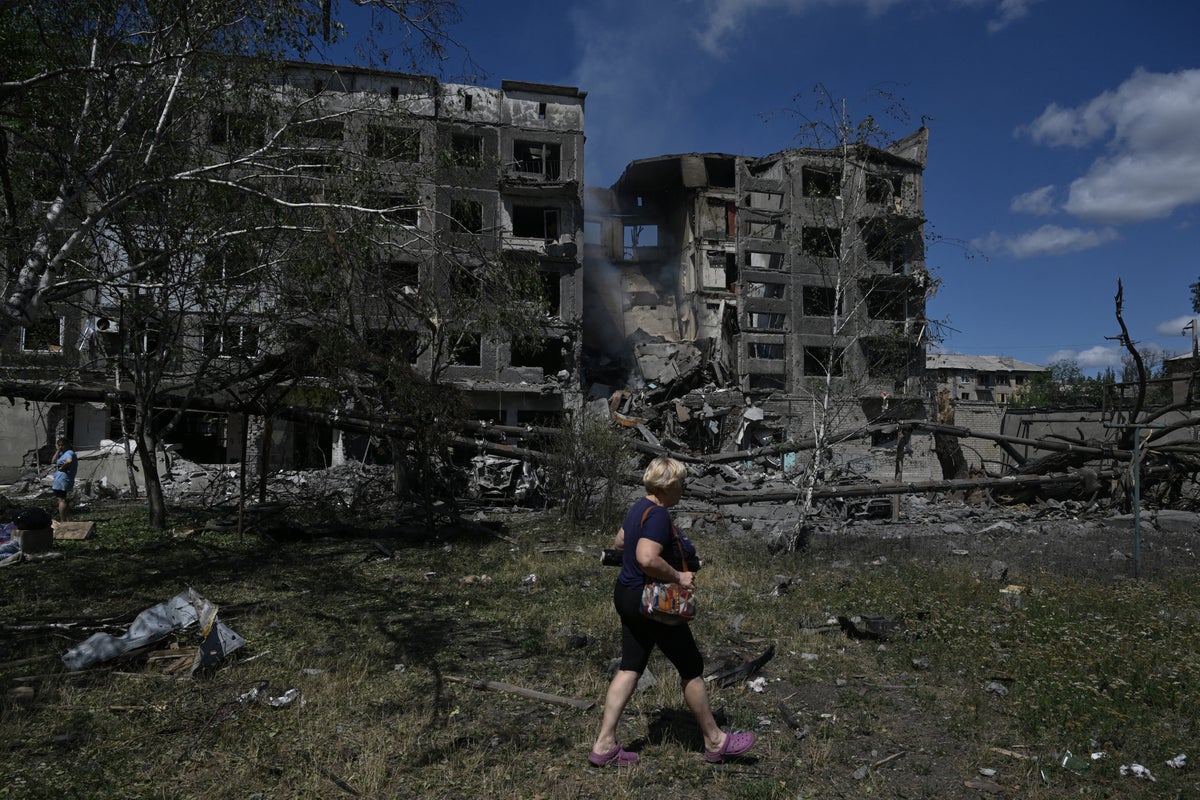
It is currently estimated that around 88% of the Donbas is under Russian control, while approximately 6,600 square kilometers remain under Ukrainian hold. In recent months, Moscow has intensified its efforts to capture these remaining areas, pushing toward cities like Pokrovsk and increasing drone and air strikes. The region is crucial for Ukraine due to its vast coal reserves and its status as an energy powerhouse.
The Donbas has also been described as a “fortress belt” by the Institute for the Study of War, given that Donetsk serves as the main defensive line along the eastern front. Elina Beketova, a fellow at the Centre for European Policy Analysis, explains that Ukraine has built a “deep, layered defense” over the past 11 years, including trenches, bunkers, anti-tank ditches, minefields, and industrial areas integrated into the terrain. The area includes dominant heights, rivers, and urban zones that make it extremely difficult to capture.
Relinquishing the territory would be “catastrophic” for Ukraine, especially if they do not receive concrete security guarantees, such as Article 5 protection from NATO. However, Putin has made it clear that he will not compromise on core demands, including Ukraine becoming a neutral state and abandoning its NATO aspirations.
The situation remains tense, with both sides showing little willingness to back down. As the conflict continues, the stakes for Ukraine and the broader region are higher than ever. The outcome of negotiations and military actions will have lasting implications for the future of the region and international relations.

Post a Comment for "Mapped: Key Territories Putin Seeks for Peace in Ukraine"
Post a Comment