Map reveals U.S. states where northern lights may appear
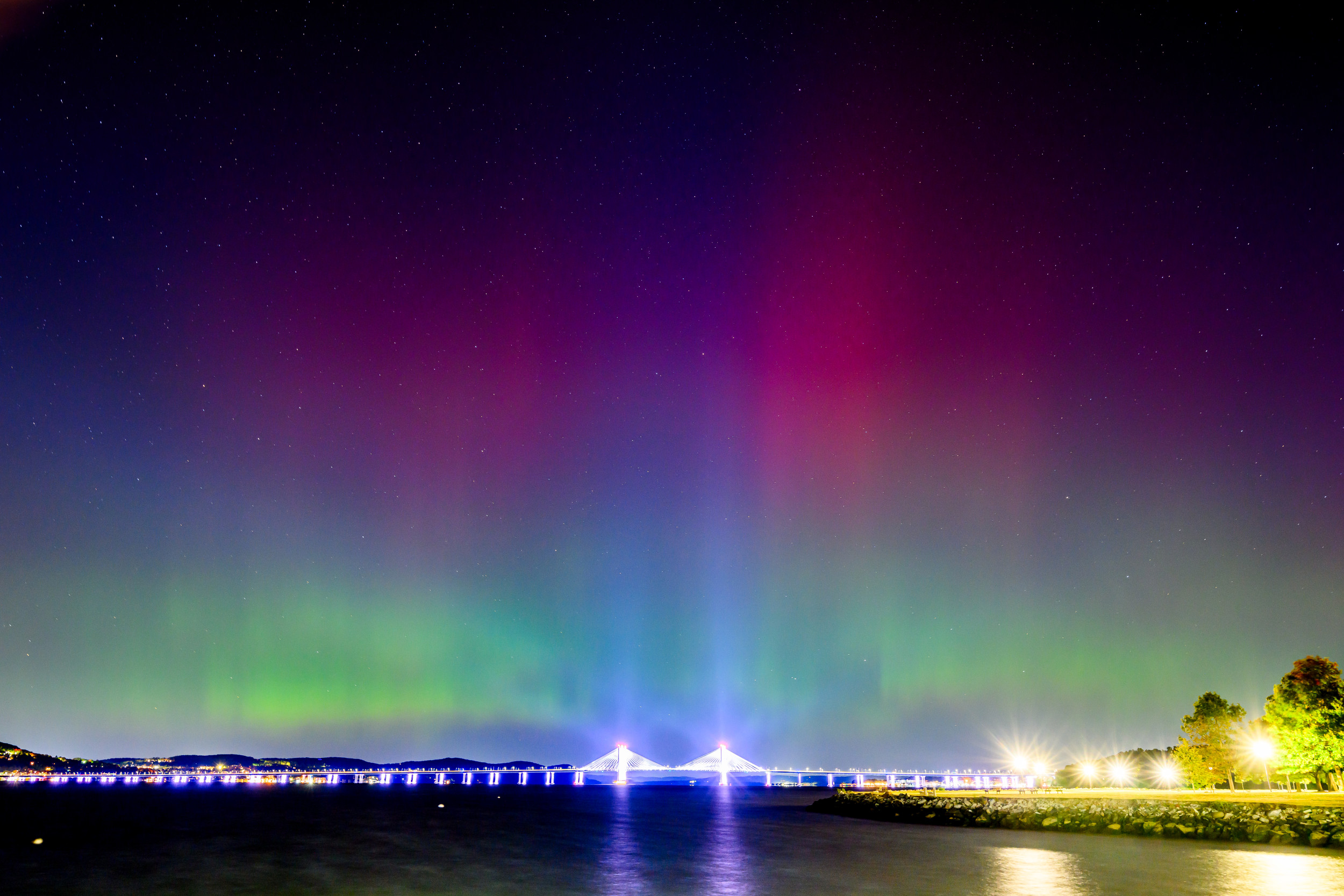
Understanding the Aurora Borealis and Its Unusual Visibility
The Northern Lights, or Aurora Borealis, are a breathtaking natural phenomenon that typically occurs in high-latitude regions. However, this Monday night, many states across the United States may have the rare opportunity to witness this celestial display. The reason for this unusual visibility lies in the occurrence of geomagnetic storms, which can expand the area where the aurora is visible.
Why This Occurrence Matters
According to data from the National Oceanic and Atmospheric Administration (NOAA) and the National Weather Service (NWS), geomagnetic storms can significantly alter the geographic range of the aurora. These storms occur when charged particles from the sun interact with Earth’s magnetic field, creating disturbances that can push the aurora further south than usual. The Kp-index, a measure of geomagnetic activity, is expected to reach 5 on Monday night, indicating moderate to strong geomagnetic conditions.
This means that the aurora could be visible in areas far below its typical range, offering a unique viewing opportunity for those in the northern parts of the U.S.
Which States Can Expect to See the Aurora?
NOAA's Aurora forecast map shows that numerous states are within or above the predicted viewing line for Monday night. These include:
- Washington
- Idaho
- Montana
- Wyoming
- North Dakota
- South Dakota
- Minnesota
- Iowa
- Wisconsin
- Michigan
- New York
- Vermont
- New Hampshire
- Maine
Residents in these areas should consider planning their viewing sessions accordingly, as the best time to see the aurora is usually after sunset, when the sky is darkest.
How the Aurora Forms
The aurora is created by the interaction between the solar wind—streams of charged particles emitted by the sun—and Earth's magnetosphere. When these particles collide with gas molecules in the atmosphere, they release energy in the form of light, resulting in the colorful displays we see.
According to the NOAA Space Weather Prediction Center, even moderate solar wind activity can produce an aurora, though it may be fainter. During periods of increased solar activity, such as when the interplanetary magnetic field turns southward, the aurora becomes more vibrant and extends farther from the poles.
Expert Insights on the Upcoming Event
Shawn Dahl, a meteorologist from the National Weather Service, explained that the potential for the aurora to be visible in the northern parts of the Northeast, upper Midwest, and northern regions of North Dakota and Montana depends on several factors. These include enhanced solar wind conditions from coronal high-speed streams (CH HSS) and possibly a weak coronal mass ejection (CME). CH HSS can lead to minor geomagnetic storms, while CMEs are more energetic and can cause stronger disturbances.
Dahl emphasized that the best viewing conditions would involve being away from city lights and looking toward the northern horizon an hour or two after sunset.
A Unique Perspective from Space
Astronaut Zena Cardman shared her experience of witnessing the aurora from space on X. She described the view from one Dragon capsule to another, capturing a time-lapse of the aurora over the South Pacific, along with the rising Orion constellation and distant satellites. Her account highlights the awe-inspiring nature of the aurora from a completely different vantage point.
What to Expect Next
While the current geomagnetic activity is expected to peak on Monday night, forecasters predict that the intensity will decline in the following days. This means that the likelihood of seeing the aurora farther south will decrease as the Kp values drop.
Skywatchers are advised to use real-time aurora forecast tools and check local cloud-cover forecasts to determine the best viewing opportunities. It’s also recommended to seek out dark locations with an unobstructed view of the northern horizon and plan for viewing windows late at night into the early morning hours.
Officials note that while the aurora itself poses no direct threat, geomagnetic disturbances can impact satellites, radio communications, and navigation systems. Therefore, it’s important to stay informed about space weather updates.
Final Thoughts
For those in the affected regions, this could be a once-in-a-lifetime chance to witness the beauty of the Northern Lights. Whether viewed from the ground or from space, the aurora continues to inspire wonder and fascination. As scientists and astronomers continue to study these phenomena, each event offers new insights into the complex relationship between the sun and Earth.

Post a Comment for "Map reveals U.S. states where northern lights may appear"
Post a Comment