Local Attorney Breaks Down Kansas Death Penalty as DA Considers Execution for Accused Shooter
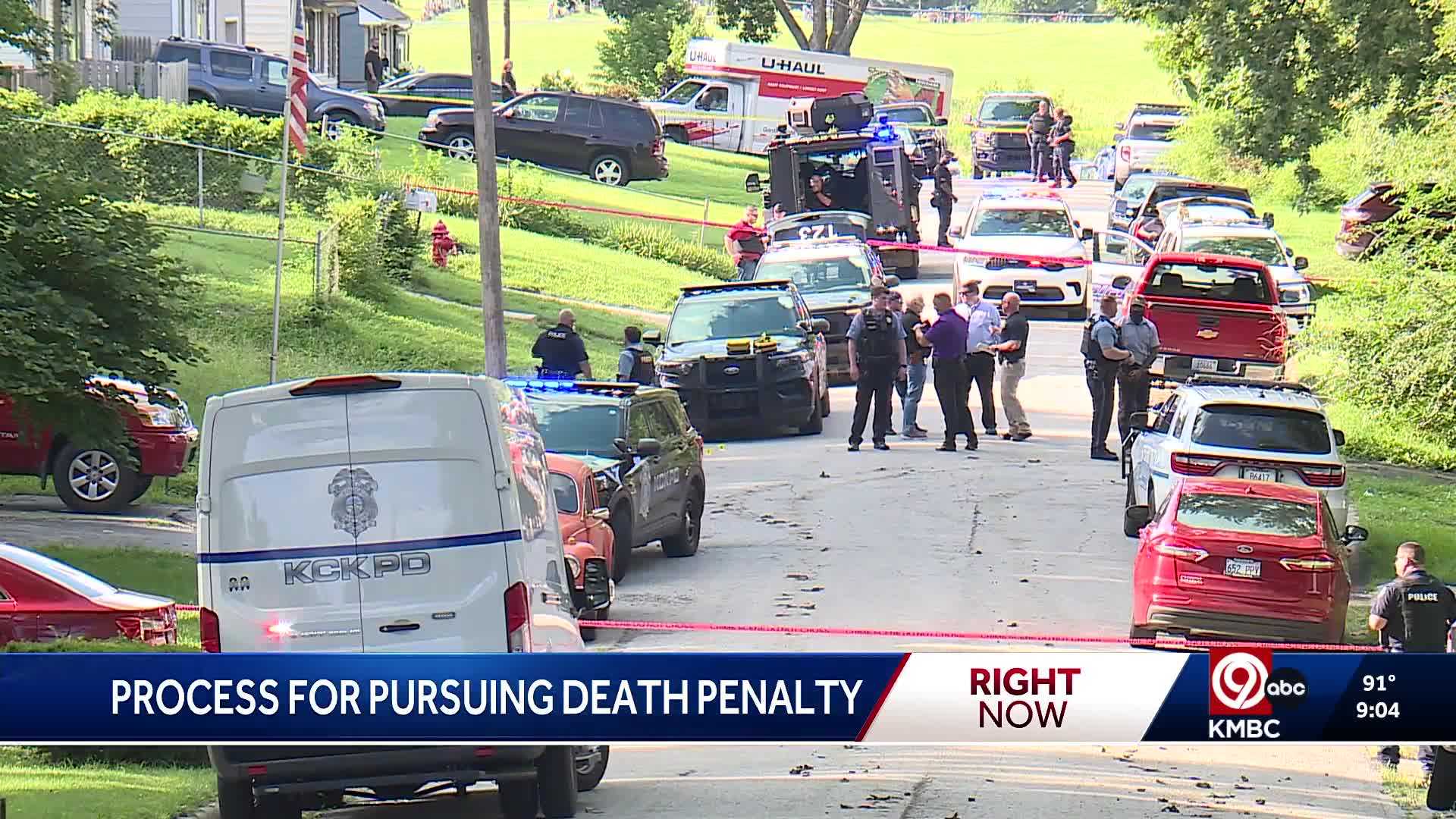
The Death Penalty Decision Looms for Suspect in Deputy's Shooting
In just under ten days, the suspect in the fatal shooting of a Wyandotte County deputy will learn whether the district attorney will seek the death penalty. Shawn Harris is charged with one count of capital murder and one count of criminal possession of a firearm by a felon in connection with the killing of Wyandotte County Deputy Elijah Ming. This case has sparked significant attention as the district attorney weighs the gravity of the crime and the potential consequences.
Wyandotte County District Attorney Mark Dupree is currently evaluating whether to pursue the death penalty or a life sentence. This decision involves a complex set of factors that must be carefully considered. According to Michael Duma, a defense attorney at Duma Law Office, prosecutors take into account several aspects when determining whether to seek the death penalty. These include the nature of the crime, the suspect’s background, and the potential impact on the community.
Duma, who is not directly involved in this case but has experience as a former prosecuting attorney in Wyandotte County, explained that the decision process can be quite challenging. “There are certain things you can do in our community that if you do them, you forfeit your right to live among us and that is what our death penalty is for,” he said. He also emphasized that the time frame for making such a decision is very short—just 10 days.
This limited timeframe raises questions about the thoroughness of the decision-making process. Duma noted that while it’s important for the district attorney to make a quick decision, there must also be a balance to ensure that all relevant facts are considered. “It should not be indefinite in the amount of time that a district attorney has to make that decision because they should know relatively quickly what the facts are,” he added.
For defense attorneys, there are multiple strategies to challenge the death penalty. One common approach is to examine the mental capacity of the suspect. Duma highlighted that mental health is always a key factor in these cases. “Whether that be whether he's competent to stand trial, whether or not he was under the influence of any drugs or alcohol when this happened or whether or not he's suffering from any other mental ailments that may have impacted his intent when this happened,” he explained. The focus is often on whether the act was premeditated.
Another consideration is the message that the death penalty sends to the community. Duma pointed out that the community has been deeply affected by the loss of Deputy Ming. “If you're a district attorney, you need to send a message,” he said. “You need to send a message that if you're going to come to Wyandotte County and kill one of our officers, you're going to face the death penalty.”
The victim’s family also plays a role in this decision. Duma noted that part of seeking the death penalty is about retribution. “If the family says they do not believe in the death penalty, you have to ask yourself, 'What retribution is that serving?'” he said. Getting input from the family is an essential step in the process.
Additionally, the death penalty can serve as a bargaining chip in legal negotiations. Duma mentioned that prosecutors often offer plea deals in exchange for dropping the death penalty. “They can say, 'Hey, if you plead guilty to this, we agree to take the death penalty off the table,'” he said. This strategy is frequently used in similar cases.
However, it’s important to note that no one convicted of the death penalty in Kansas has been executed in recent years. If a person is sentenced to death, the appeals process goes to the Kansas Supreme Court. Duma explained that these processes can be lengthy, allowing defense attorneys to exhaust every possible avenue. “We have never under our current law, which was passed in 1994, we've never executed somebody,” he said. “There are several individuals who are on death row, so to speak. But I think it is largely, the fact that our Supreme Court scrutinizes these cases so carefully that, when they find an error, it's amplified, and that very often results in the case being modified to a life sentence.”
With every death penalty conviction since 1994 effectively resulting in a life imprisonment sentence, Duma believes that prosecuting attorneys must weigh the resources required against the likelihood of execution. “I think they have to decide whether it's worth all of the resources that it's going to take,” he said. “I don't know if they should pay attention to that particularly. There comes a time when a message has to be sent, and we have to disregard resources, and I think in Wyandotte County that time has come.”

Post a Comment for "Local Attorney Breaks Down Kansas Death Penalty as DA Considers Execution for Accused Shooter"
Post a Comment