Legal Group Files Brief to Block Iowa's Book Ban Law
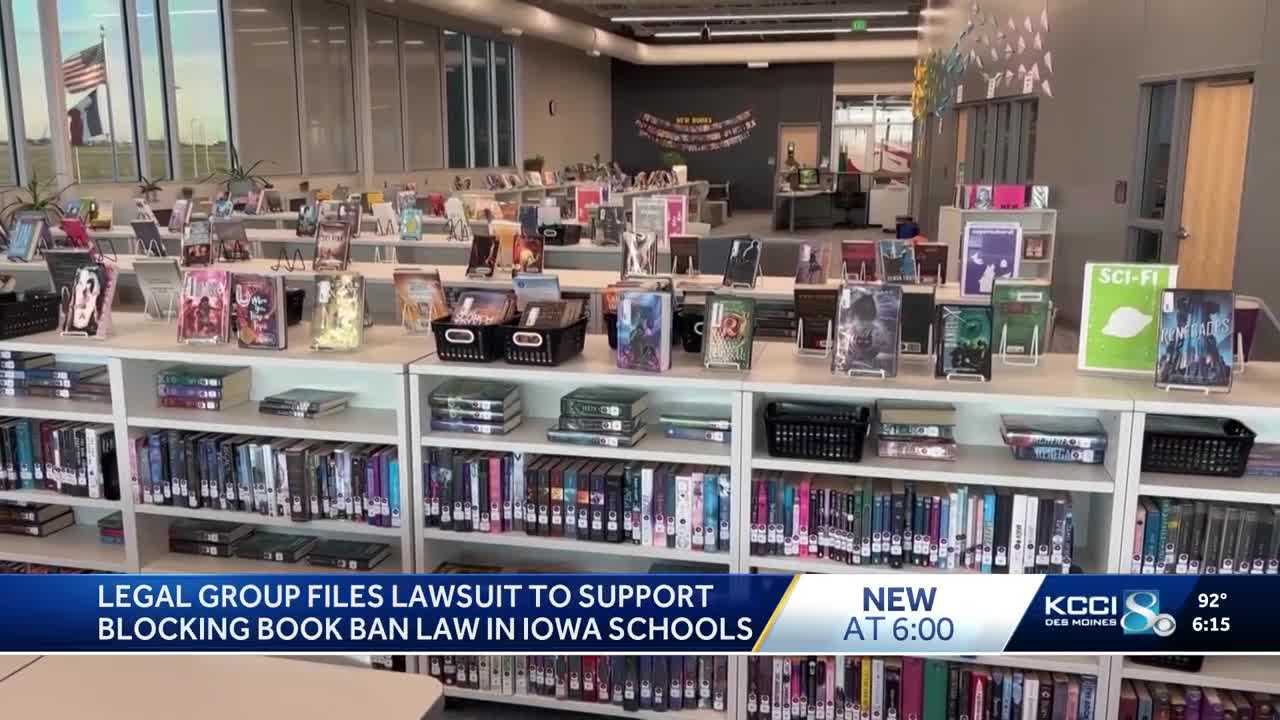
Legal Group Challenges Iowa’s Book Ban Law
A legal organization dedicated to freedom of expression has submitted a new legal brief, urging the Eighth Circuit Court of Appeals to maintain an injunction that blocks Iowa’s law banning books deemed “not age appropriate” from K-12 school libraries. The organization, PEN America, supports a legal challenge led by publishers such as Penguin Random House, the Iowa State Education Association, and authors like Laurie Halse Anderson, John Green, and Jodi Picoult.
The law in question, Senate File 496, was enacted in 2023 and prohibits books depicting sexual acts from being available in school libraries. It also bans programs, materials, and instruction related to gender identity and sexual orientation for students in grades K-6. This legislation has sparked significant controversy, with critics arguing it infringes on free speech and limits students’ access to essential information.
U.S. District Court Judge Stephen Locher initially ruled to block enforcement of several parts of the law, including the restriction on books containing sexual or LGBTQ+ content. However, the Eighth Circuit Court of Appeals overturned this decision in August 2024, stating that Locher’s analysis of the case was incorrect and sending the matter back to the district court for further review.
PEN America argued in its recent brief that the law undermines public education systems by violating the First Amendment. The organization claims the law denies students their right to receive information, infringes on authors' free speech rights, and misapplies the obscenity doctrine. According to the brief, the law mandates the removal of hundreds of books from school libraries without considering the age of the student or the overall value of the books, which are key factors under the First Amendment.
Iowa public schools had removed over 3,400 books by the end of 2024, according to the Des Moines Register. These included classic literature such as “1984” by George Orwell, “The Bluest Eye” by Toni Morrison, and “I Know Why the Caged Bird Sings” by Maya Angelou. Many school districts have expressed uncertainty about what books can be available under the law, as the Iowa Department of Education has not provided clear guidance on what constitutes “age appropriate” materials.
Judge Locher noted that the law places the burden on local school districts to determine whether a book is permissible, calling the measure “facially unconstitutional” when compared to previous court precedents on First Amendment cases.
In the Monday court brief, PEN America staff attorney Elly Brinkley echoed these concerns, emphasizing that laws targeting all descriptions of sex in literature have been “squarely condemned” by U.S. courts. She argued that such laws abridge students’ First Amendment rights to receive information. Brinkley stated, “This sweeping Iowa law robs young people of literary classics that have offered sustenance and meaning to generations of readers. These restrictions deprive Iowa students of books that help them understand the world in which we live. We cannot allow a vocal minority of censorship proponents to have the final say over what tens of thousands of students can read in school.”
In addition to the lawsuit filed by Penguin Random House, ISEA, and authors, another challenge has been brought by Lambda Legal and the ACLU of Iowa on behalf of students, teachers, and the organization Iowa Safe Schools. This action targets the law’s ban on books and materials in school libraries and classrooms, as well as the prohibition on programs, curriculum, tests, surveys, and instruction related to gender identity and sexual orientation for K-6 students.
Judge Locher ruled in May that parts of the law challenged by Lambda Legal and the ACLU are also unconstitutional, issuing an injunction that allows K-6 students to join Gender Sexuality Alliances (GSA) and other LGBTQ+ student groups. He also ruled that school districts and teachers must be allowed to provide instruction and materials referencing gender identity and sexual orientation, though they cannot focus exclusively on these topics.
The ongoing legal battle highlights the broader debate over the balance between protecting students and upholding constitutional rights. As the case moves forward, the outcome could have significant implications for how schools across the country handle literature and educational materials.

Post a Comment for "Legal Group Files Brief to Block Iowa's Book Ban Law"
Post a Comment