Lee Addresses Liberation Day Without Mentioning Japan's Role
A Thoughtful Approach to History and Future Cooperation
President Lee Jae Myung took a measured stance during his Liberation Day address, emphasizing the importance of reflecting on history while focusing on future cooperation with Japan. This approach marks a strategic shift, aiming to separate past grievances from the need for diplomatic collaboration ahead of an upcoming Korea-Japan summit.
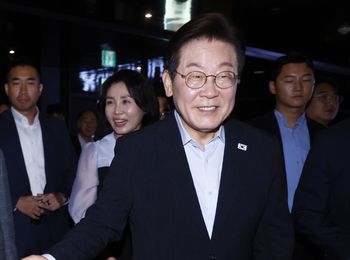
On Sunday, President Lee attended a screening of the documentary “La Resistance” at a theater in Seoul. The film, produced by the Heritage of Korean Independence and General Hong Beom-do Memorial Society, was created to commemorate the 80th anniversary of Korea’s liberation. Through the life of General Hong Beom-do, the documentary highlights the sacrifices made by independence fighters, offering a powerful reflection on the struggles that shaped the nation.
In his remarks following the screening, Lee expressed hope that the film would encourage viewers to reflect on its themes and the significance of the 80th anniversary. However, he avoided addressing specific historical issues, such as the role of pro-Japanese collaborators, which were mentioned in the film. His Liberation Day speech on Friday also maintained a similar tone, acknowledging the lingering effects of historical wounds but refraining from engaging with sensitive topics like Japan's wartime sexual slavery or forced labor policies.
Since assuming office in June, Lee has consistently distanced himself from both anti-Japan sentiment and the notion of framing Korea and Japan as rivals. He has urged the Japanese government to confront its painful past while ensuring that trust between the two nations is not compromised. Lee emphasized that defining the bilateral relationship is both important and challenging, given the shared turbulent history between Korea and Japan.
This balanced approach has led some analysts to describe it as the "shared yard neighbor" theory. In his Liberation Day speech, Lee referred to Japan as "a neighbor with whom we share a yard and an essential partner in economic development." He first introduced this metaphor during a bilateral summit with Japanese Prime Minister Ishiba Shigeru at the Group of 7 meeting in Canada in June.
“Like neighbors sharing a front yard, our ties, our relationship cannot be severed,” Lee stated at the time. This message has remained consistent, leading Japanese officials to view Lee as a stable and predictable counterpart. According to Lee Won-deog, a professor of Japanese studies at Kookmin University, historical disputes have long hindered pragmatic cooperation between the two countries. However, this administration has clearly set its direction: to confront history while pushing forward with strategic cooperation.
Some officials believe that this approach was solidified during trade negotiations with the United States. During these discussions, Korea relied heavily on Japan’s examples, which underscored the importance of cooperation between the two countries. At the June summit with Ishiba, Lee highlighted the challenges of the global trade environment and suggested deeper collaboration between Korea and Japan.
“Korea and Japan have complementary strengths and can help each other greatly if we cooperate across many areas,” Lee said during the meeting. This sentiment reflects a broader effort within the Democratic Party to advance Korea-Japan relations during Lee’s term.
Inside the party, there is a sense of urgency to move forward with the relationship. Some officials even mention reviving the spirit of the “Korea-Japan Joint Declaration: A New Korea-Japan Partnership towards the 21st Century,” signed in October 1998 by then-President Kim Dae-jung and Prime Minister Keizo Obuchi. While this may be considered in the long term, it is not expected to be on the agenda for the upcoming summit on August 23. Scheduling issues may result in a more working-level meeting.
President Lee’s approach to Japan reflects a nuanced strategy that balances historical reflection with the need for future cooperation. By maintaining a respectful and pragmatic stance, he aims to foster stronger ties between Korea and Japan while addressing the complexities of their shared history.

Post a Comment for "Lee Addresses Liberation Day Without Mentioning Japan's Role"
Post a Comment