Leaked: California's New Congressional Map Revealed
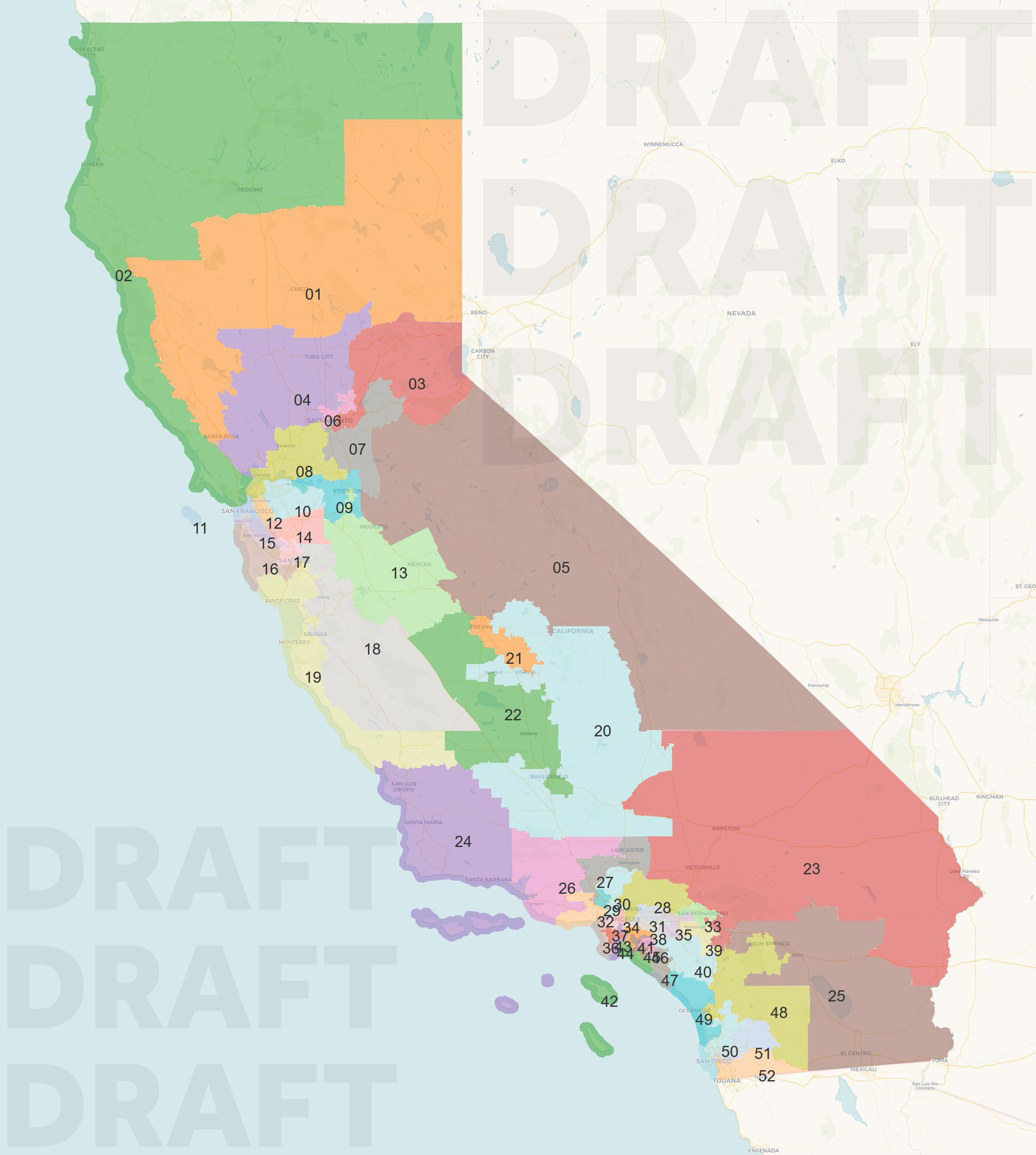
New Maps Reveal Potential Shifts in California’s Congressional Districts
New maps have been released that illustrate how California’s Congressional districts could be redrawn if Texas moves forward with its redistricting plan. These maps, obtained by KCRA 3, were submitted by the Democratic Congressional Campaign Committee (DCCC) to the California Legislature. The documents include a 60-page presentation along with a letter from Julie Merz, the executive director of the DCCC.
The maps have not yet been officially released to the public, and there is uncertainty about whether they match the ones legislative leaders had planned to release earlier in the week. Multiple sources close to the situation suggest that congressional Democrats and state Democratic lawmakers are currently at odds over the draft, which has delayed the official release.
This development comes just a day after Governor Gavin Newsom announced what he and other Democrats are calling the Election Rigging Response Act during a campaign rally in Los Angeles. Newsom and his office have been warning for days that if Texas does not back down from its efforts to increase the number of Republicans in Congress, California will attempt to counteract by sending more Democrats to the House. While California law currently prevents politicians from drawing district lines, Democratic leaders are hoping voters will approve a measure to temporarily change this rule in an upcoming election.
The maps were created by congressional Democrats and their consultants. An interactive map was shared with KCRA 3 on redistrictingpartners.com, a website led by Paul Mitchell, vice president of Political Data Inc. and an elections expert.
Several versions of the maps were posted online but were removed shortly before 3 p.m. The maps cover different regions of California, including the Northern California map, the Southernmost part of California, the Los Angeles region, Central Coast, and Central Valley.
Current State of California’s Congressional Representation
California currently has 52 seats in the U.S. House of Representatives, with Democrats holding 43 of them and Republicans holding nine. The redistricting plan targets five Republican representatives: Doug LaMalfa (District 1), Kevin Kiley (District 3), David Valadao (District 22), Ken Calvert (District 41), and Darrell Issa (District 48).
According to the submitted map, LaMalfa’s inland rural district would lose many of his Republican constituents and extend westward to include more Democratic voters along the coast. LaMalfa criticized the proposed changes, stating that it doesn’t make sense for Modoc County on the Nevada and Oregon border to have common interests with Marin County and the Golden Gate Bridge. He argued that voters took away the power to draw district lines from Sacramento for this very reason.
Kiley’s redrawn map includes parts of Democratic-leaning Sacramento County and removes a large portion of the Eastern Sierra. Kiley, however, remains confident that he will win reelection regardless of the proposed changes, stating that he expects the 3rd District to remain as it is.
A source familiar with the thinking of Congressman Ami Bera mentioned that he is considering running for District 3 if the new maps are approved. Bera is interested in keeping representation of Sacramento County if parts of it become part of the new District 3. This scenario could potentially create a new Democratic seat in the region.
The Politics of Gerrymandering
Gerrymandering, the practice of intentionally redrawing district lines to favor a specific political party, is typically not publicly celebrated. However, with President Donald Trump's push for Texas to send five more Republicans to the House, Democratic leaders in California, including Newsom, have become more open about “fighting fire with fire.”
Kevin Kiley has criticized gerrymandering and proposed legislation to invalidate mid-decade redistricting efforts. Redistricting is normally conducted every 10 years following the U.S. Census.
If California lawmakers can complete the process by August 22 for a special election, voters would be asked on November 4 to approve the map. If Texas or another Republican state redistricts before the end of the decade, the new map would take effect for the 2026, 2028, and 2030 elections. Since two ballot initiatives in 2008 and 2010 were approved, California’s redistricting process has been handled by a citizen-led independent commission.

Post a Comment for "Leaked: California's New Congressional Map Revealed"
Post a Comment