Law Scholars Call Abbott's Move to Remove Wu Unprecedented and Baseless
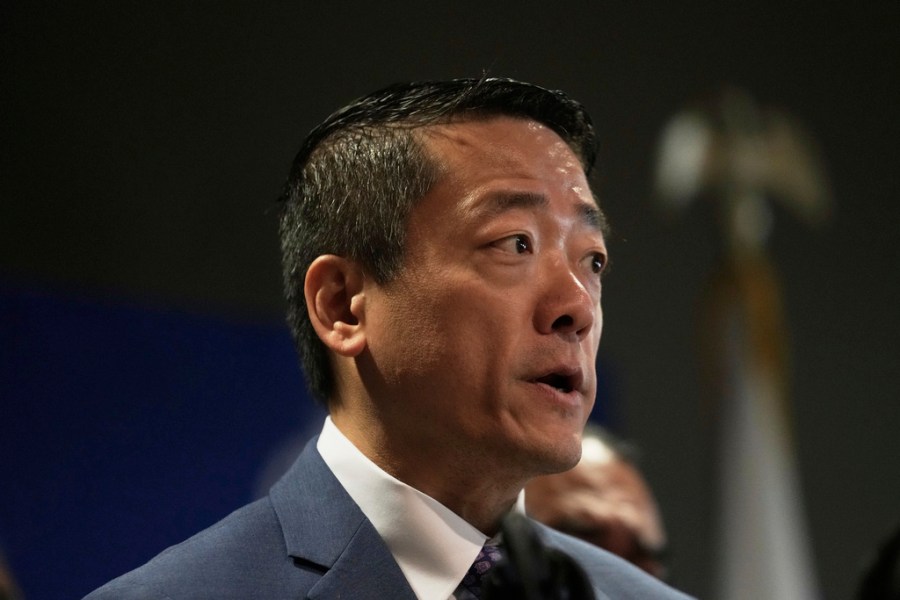
Legal Scholars Question Governor Abbott’s Petition to Remove State Representative
Legal scholars have raised concerns about Texas Governor Greg Abbott’s petition to the Texas Supreme Court, which aims to remove State Representative Gene Wu from office. They describe the move as “unprecedented” and argue that it lacks a solid legal foundation. While some experts are skeptical about its success, they acknowledge that the court might side with the governor under certain circumstances.
Understanding Quorum Breaking in Texas
Quorum breaking has a long history in Texas, often used by minority parties to block legislative action. However, Governor Abbott’s recent petition marks a new and controversial approach. The petition, filed by his counsel, requests the Texas Supreme Court (SCOTX) to issue a “writ of quo warranto,” a legal tool typically used to remove public officers from their positions. In this case, the petition accuses Rep. Wu of allegedly taking or soliciting a bribe to break quorum and abandoning his office by leaving the state for an indefinite period.
Notably, other Democrats who participated in the quorum break were not named in the petition. However, the filing could set a precedent for future similar actions.
Legal Arguments and Expert Opinions
Quinn Yeargain, a law professor at Michigan State University specializing in states’ constitutional law, criticized the petition for lacking sufficient evidence. He argued that the governor’s claim relies on “common sense” rather than concrete legal reasoning. According to Yeargain, Abbott’s argument is that Wu left the state intentionally to prevent the House from conducting business, thereby vacating his seat.
Yeargain also pointed out that elected state legislators are not considered public officials in the same way as executive branch employees. He highlighted that the 1893 case cited by Abbott’s counsel is irrelevant to the current situation. Additionally, he noted that the Texas Government Code has historically been used to argue the opposite of what Abbott is claiming.
Seth Barrett Tillman, a U.S. Constitutional law professor, echoed these concerns. He acknowledged that the petition was well-structured but expressed doubt about its legal merits. Tillman questioned whether quorum breaking constitutes “official influence” as defined by state law. He emphasized that the governor’s argument hinges on a narrow interpretation of the law, which may not hold up in court.
The Role of Intent and Evidence
One of the key points of contention is whether Wu and other quorum breakers intended to abandon their seats. Tillman pointed out that the lawmakers have stated they plan to return to their districts. He argued that simply wanting to return under different conditions does not equate to abandoning their positions.
The petition also includes a bribery allegation, which Tillman described as “a fairly weak claim.” He noted that the Texas Constitution’s Article 16, Section 41, would need to be interpreted carefully if the court were to consider such allegations. Tillman suggested that the court would likely require strict adherence to the constitutional language before making any ruling.
Potential Implications and Precedents
Both scholars emphasized that the Texas Supreme Court places a strong emphasis on historical practice and consistency. Yeargain noted that Abbott’s petition lacks any historical precedent, which makes it even more problematic. If the court were to issue a writ in this case, it could open a “can of worms” and turn the highest court into a political battleground.
Tillman speculated that a majority of the justices might side with Abbott, but he remains doubtful about the outcome. He argued that the court should avoid stepping into political disputes and instead leave such matters to the voters.
Addressing Future Quorum Breaks
Some critics argue that without consequences, quorum breaks could become a recurring tactic. Tillman pointed out that supermajority quorum rules inherently carry the risk of such actions. He suggested that the intent behind these rules might be to ensure that only legislation with broad support can pass.
Yeargain also mentioned that other states, like Oregon, have taken steps to address quorum breaks. For example, Oregon amended its constitution to bar lawmakers with excessive absences from running for office again. Texas lawmakers could consider similar measures if they want to create a constitutional obstacle against future quorum breaks.
Existing Remedies and Legal Framework
Yeargain and Tillman both highlighted that the Texas Legislature already has mechanisms in place to address quorum breaking. The Texas House has increased fines for such actions and even has the power to issue warrants for absent representatives. Additionally, the Texas Constitution allows the Legislative branch to remove members with a two-thirds vote.
In 2023, the House nearly voted to remove former Republican Rep. Bryan Slayton, though he resigned before the vote. Tillman argued that expanding judicial involvement in such matters could lead to significant legal and political complications.
Conclusion
As the legal battle over Rep. Wu’s seat unfolds, the Texas Supreme Court faces a complex and unprecedented challenge. The outcome could have far-reaching implications for the balance of power between the executive and legislative branches. While the governor’s petition raises important questions, many legal experts remain skeptical about its viability and the broader impact it could have on Texas governance.

Post a Comment for "Law Scholars Call Abbott's Move to Remove Wu Unprecedented and Baseless"
Post a Comment