Lake Mead to Reach All-Time Low in Two Years
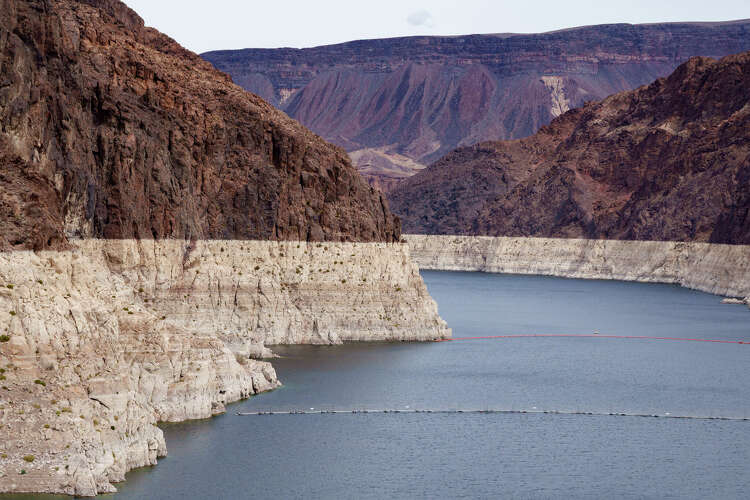
Predictions of Record Low Water Levels in Lake Mead
Federal officials have issued a dire warning about the future of Lake Mead, one of the largest reservoirs in the United States. As the Colorado River Basin faces an unprecedented drought and ongoing negotiations over water rights, the Bureau of Reclamation has predicted that Lake Mead will reach its lowest water levels ever within the next two years. This forecast comes as part of a comprehensive report released last week, which outlines projected water levels for key reservoirs in the region, including Lake Powell and Lake Mead.
Currently, both Lake Powell and Lake Mead are only 31% full, raising concerns about the sustainability of water supplies for millions of people across the Southwest. The report estimates that by the end of 2025, Lake Powell’s water levels will drop by 34 feet compared to the previous year, reaching an elevation of 3,538 feet on January 1. This would place the reservoir 162 feet below its full operating capacity and just 48 feet above the level needed for hydropower generation at Glen Canyon Dam.
The situation is even more alarming for Lake Mead. By the end of this year, the reservoir’s water levels are expected to fall to 1,056 feet, which is 7 feet lower than the previous year. The decline is projected to continue, with federal officials predicting that by July 2027, the water level will reach 1,037 feet — a record low that surpasses the previous record set in 2022 when the lake reached 1,041 feet.
Water Cuts and Negotiations
In response to these projections, the Bureau of Reclamation has implemented cuts to water allocations for Arizona and Nevada, reducing their shares by 18% and 7%, respectively. Mexico will also see a 5% reduction in its water allotment. However, California was not required to make immediate cuts, despite the state already committing to reduce its use of Colorado River water.
States in the upper basin — Colorado, Wyoming, Utah, and New Mexico — were also spared from immediate reductions. The bureau emphasized that the current drought is "unprecedented" and that the coming years will be critical for determining the future of water usage in the West.
Acting Commissioner David Palumbo stated that the cuts highlight the need for urgent action to secure the long-term viability of the Colorado River. The river serves 40 million people across seven states and Mexico, making it a vital resource for agriculture, urban centers, and ecosystems.
Ongoing Challenges and Calls for Action
With several key agreements governing water rights set to expire at the end of 2026, negotiations between federal agencies and the states have become increasingly tense. Scott Cameron, acting assistant secretary for water and science at the Department of Interior, stressed that delaying a consensus agreement is not an option.
The Lower Basin states — California, Arizona, and Nevada — are already implementing significant water cuts. According to JB Hamby, chairman of the Colorado River Board of California, 2026 will mark the third consecutive year that the Lower Basin and Mexico receive less than 7.5 million acre-feet of water from Lake Powell. This is a rare occurrence, seen only five times since the reservoir filled, with four of those instances occurring in the past five years.
California, although not required to cut its water use, is ahead of schedule in meeting its conservation goals. Hamby urged all seven states to take responsibility for protecting the river’s future, emphasizing that no single region can bear the burden alone.
A Call for Immediate and Collective Action
Water experts like Kyle Roerink of the Great Basin Water Network argue that all states must act collectively to reduce water consumption. He pointed out that while some states are cutting back, others are planning to increase their usage, which he described as illogical given the current crisis.
Roerink warned that without meaningful cuts, the Colorado River will struggle to meet existing demands, let alone support new requests. He called for immediate and coordinated action across the entire basin to ensure the river’s survival for future generations.
As the situation continues to evolve, the pressure on all stakeholders to find sustainable solutions grows. The Colorado River remains a lifeline for millions, and its future depends on the willingness of states and federal agencies to work together in the face of mounting challenges.

Post a Comment for "Lake Mead to Reach All-Time Low in Two Years"
Post a Comment