Judges Consider Alabama's Voting Map Rules
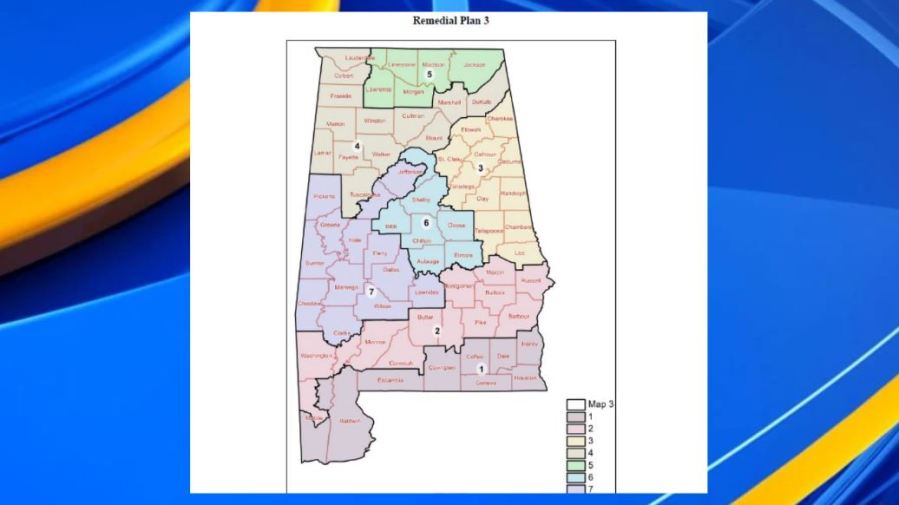
Legal Battle Over Voting Rights in Alabama
A heated legal debate unfolded this week as federal judges scrutinized a request to reinstate the preclearance requirement of the Voting Rights Act for the state of Alabama. The move comes after courts ruled that Alabama intentionally diluted the voting power of Black residents through its congressional map. Civil rights groups and Black voters, who filed a lawsuit leading to a new congressional map for Alabama, are now seeking to have any future maps reviewed by federal authorities for the next seven years.
The Voting Rights Act, which was in place for decades, required states with a history of racial discrimination—particularly in the South—to obtain federal approval before making changes to their election procedures. However, this preclearance requirement was effectively eliminated in 2013 when the U.S. Supreme Court declared the formula used to determine which states were covered as outdated and unconstitutional.
The current request aims to activate the “bail-in” provision of the Voting Rights Act, which allows a court to require a state to undergo federal review if it has shown a pattern of discriminatory behavior. Alternatively, the plaintiffs are asking the court to retain jurisdiction over any future plans drawn by Alabama’s lawmakers.
Deuel Ross, an attorney representing the NAACP Legal Defense Fund, argued that Alabama has consistently resisted creating a fair congressional map for Black voters. He emphasized the need for preclearance to prevent the state from reverting to discriminatory practices in the future.
“There is no question what happened in this case is extraordinary,” Ross said during the hearing. He highlighted the state’s history, including lawmakers’ deliberate defiance of a court order to create a second majority-Black district or something close to it. In response, judges stepped in to select a new map that was used in the 2024 elections.
Alabama’s Solicitor General, Edmund LaCour Jr., countered that preclearance is an extreme measure reserved for cases involving multiple violations. He argued that the current situation does not meet the threshold for such a remedy.
During the hearing, the judges questioned whether there were less restrictive alternatives to preclearance. U.S. District Judge Terry Moorer challenged LaCour, stating that the best way to predict a state’s actions is to look at its past behavior. He asked if Alabama expected to be “divorced” from its history, noting the actions of state lawmakers.
LaCour responded by asserting that the current situation differs from the context in which preclearance was originally established in the 1965 Voting Rights Act. He claimed that attempting to persuade a court is different from evading judicial orders, as seen in the 1950s and 1960s.
In May, the same three-judge panel permanently blocked Alabama from using its state-drawn map, which they deemed unfair to Black voters. The state is currently appealing that decision.
This ongoing legal battle underscores the broader struggle over voting rights and the extent to which federal oversight should be reinstated in states with a documented history of discrimination. As the case continues, the outcome could set a precedent for how future election maps are evaluated and approved.

Post a Comment for "Judges Consider Alabama's Voting Map Rules"
Post a Comment