Judge to Decide by Sept. 1 on Texas' School Ten Commandments Rule
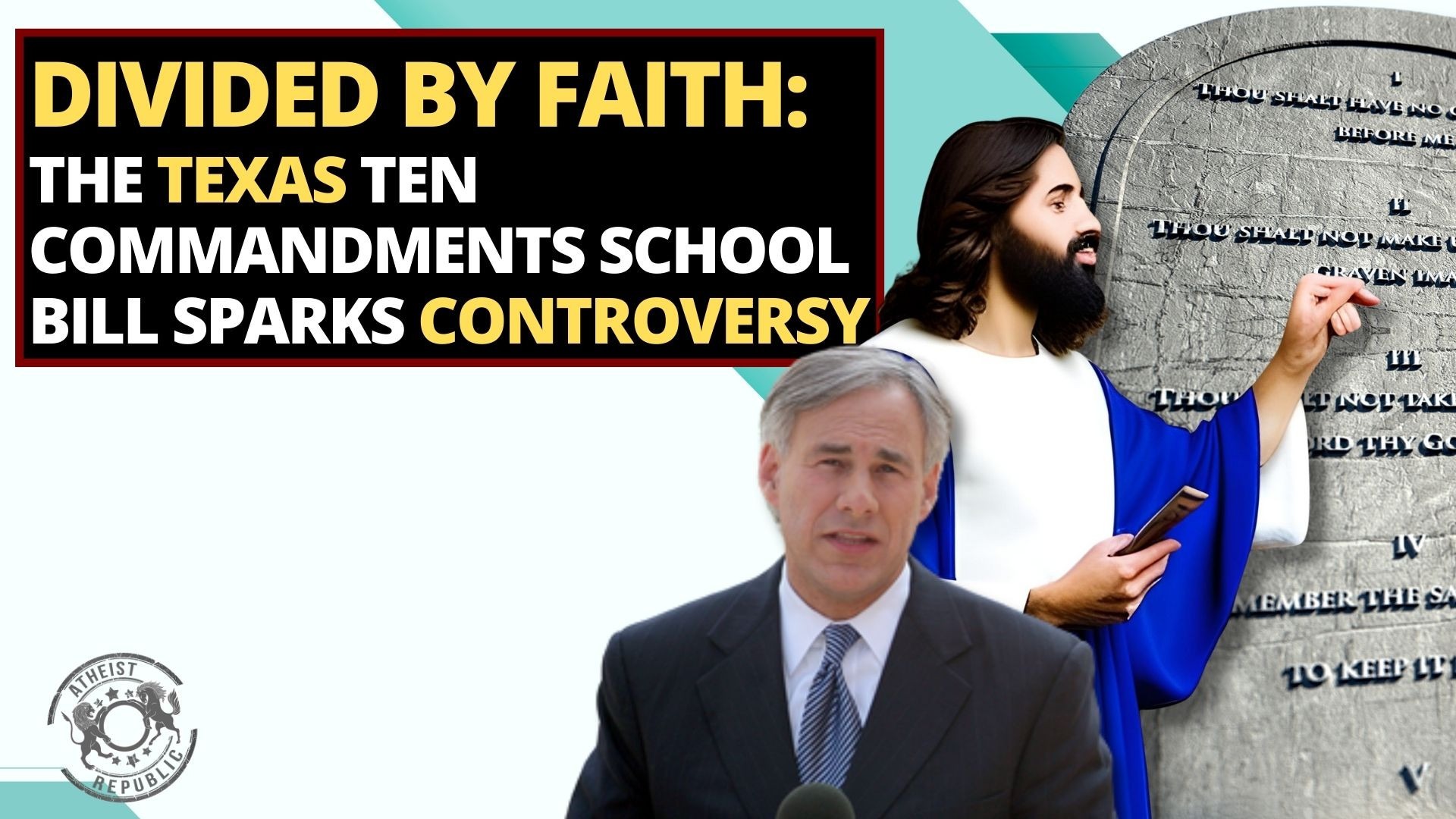
Legal Battle Over Ten Commandments in Texas Classrooms
A Texas federal judge will soon decide whether to block a new state law requiring public schools to display donated posters of the Ten Commandments in classrooms. The ruling, expected before September 1, could determine whether nearly a dozen school districts can implement the law as the case proceeds through the court system.
The case, Rabbi Nathan v. Alamo Heights Independent School District, involves oral arguments that concluded recently. A group of 16 parents from various religious backgrounds, represented by the American Civil Liberties Union of Texas and other religious freedom organizations, have challenged the law, calling it "catastrophically unconstitutional." They argue that the legislation violates the First Amendment by promoting religion in public education.
During the trial, both sides debated the historical role of the Founding Fathers, such as Thomas Jefferson and James Madison, in shaping the Bill of Rights and the First Amendment. They also discussed the influence of the Ten Commandments on the country's legal and educational systems, and whether the version required by the law favors a specific religious group.
The law, Senate Bill 10 (SB 10), was signed by Governor Greg Abbott in late June. It requires schools to display donated posters of the Ten Commandments, measuring at least 16 by 20 inches, starting in September. The bill was passed by the Republican-controlled Legislature earlier this year and has faced criticism for potentially injecting religion into public schools, which serve about 5.5 million children.
Supporters of SB 10 argue that the Ten Commandments are essential to understanding U.S. history and that they reflect the values of Christianity. This message aligns with a broader movement to challenge the traditional separation between church and state. Texas lawmakers have passed several laws in recent years to reflect conservative religious views, a trend supported by many Christian leaders.
“This issue is likely to get to the United States Supreme Court,” said U.S. District Judge Fred Biery, who will decide whether implementing SB 10 constitutes religious coercion by the state.
Plaintiffs' Arguments Against the Law
Plaintiffs in the lawsuit argue that displaying the Ten Commandments in public schools is un-American and undermines the principle of church-state separation. Griff Martin, a pastor and plaintiff, stated that the law conflicts with Baptist beliefs, which emphasize the government’s lack of involvement in religious matters.
In a separate lawsuit brought by North Texas parents, plaintiffs identified as Christian claimed the law is unconstitutional and violates their right to direct their children’s upbringing. One plaintiff, a Christian minister, argued that the displays promote religious intolerance, implying that those who do not believe in the state’s official scripture are outsiders.
Another plaintiff, a mother of two, expressed concerns that her children might be forced into premature discussions about topics like adultery. She also opposed the idea of her children being taught about the biblical definition of adultery.
The ACLU lawsuit includes plaintiffs from diverse religious backgrounds, including non-religious families. Allison Fitzpatrick, a plaintiff, fears her children may think they are breaking school rules if they do not follow commandments like honoring the Sabbath.
Annie Laurie Gaylor, co-president of the Freedom From Religion Foundation, stated that the state has no right to dictate how children worship. The plaintiffs’ attorneys argue that the version of the Ten Commandments in SB 10 represents a "state-sponsored Protestant version," supported by constitutional law professor Steven Green, who testified that the historical significance of the Ten Commandments lacks support.
State's Defense of the Law
The attorney general’s office defended SB 10, arguing that the Ten Commandments are part of the nation’s heritage. They noted that previous rulings blocking similar laws did not consider the historical context of the commandments. The state also referenced a Supreme Court decision that overturned the test used to determine when government actions endorsed religion.
Attorney William Farrell described SB 10 as a “passive display” that does not involve student participation. He emphasized that the law only requires donated posters and does not mandate any specific actions by students or schools.
Mark David Hall, a professor and author, supported the state’s position, arguing that Christian nationalism is not a threat to America. The state claims that SB 10 does not favor any particular religious group and poses no harm to families.
Schools’ Responses
Austin ISD, a defendant in the ACLU lawsuit, stated that the district has not adopted any policy in response to SB 10 and is asking the court to dismiss it from the complaint. The Texas Education Agency, another defendant, did not respond to requests for comment.
Other school districts, such as Lancaster ISD and Dallas ISD, have not commented on the litigation. DeSoto ISD, however, stated that it operates in alignment with state and federal laws and remains committed to an inclusive learning environment for all students.
Additional News
TribFest 2025 has announced 20 more speakers, including Margaret Spellings, Michael Curry, Beto O’Rourke, Joe Lonsdale, and Katie Phang. The event, presented by JPMorganChase, will take place in 2025. Get tickets now.

Post a Comment for "Judge to Decide by Sept. 1 on Texas' School Ten Commandments Rule"
Post a Comment