Jimmy Hoffa's Disappearance: Son Accuses Teamsters and Mob
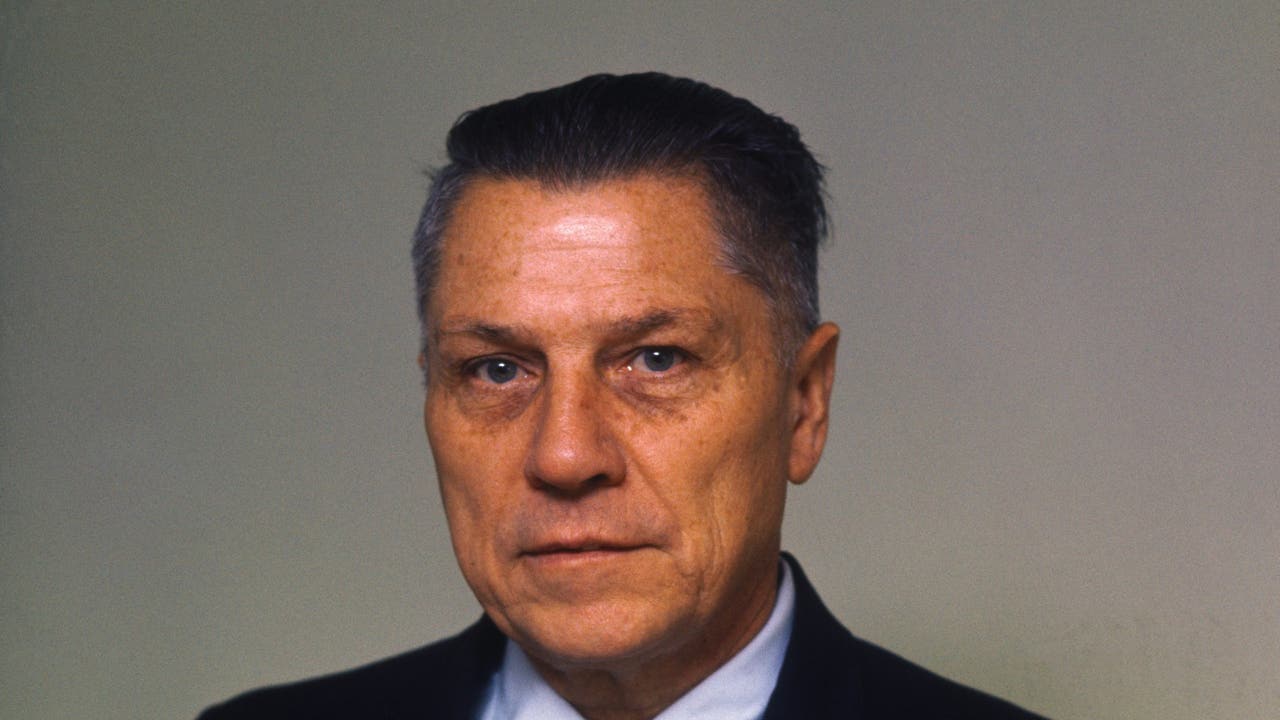
The Legacy of Jimmy Hoffa and the Search for Truth
For over 50 years, the disappearance of Jimmy Hoffa has remained one of the most enduring mysteries in American history. Despite numerous investigations, tips, and searches, no conclusive evidence has ever been found. For his son, James P. Hoffa, the lack of closure is a heavy burden that continues to shape his life.
James P. Hoffa, who shares the same name as his father, is not just a son but also a former Teamsters Union president. He carries the legacy of his father, a man known for his fearlessness and determination. Jimmy Hoffa was a powerful voice for workers, challenging both the government and organized crime while advocating for the rights of laborers. His son believes that this same courage may have cost his father his life.
In a rare interview, James P. Hoffa spoke with FOX 2’s Taryn Asher at his favorite coney island in Troy. He reflected on his father's fearless nature and the impact it had on his own life. "I was afraid for his safety. My father was a very fearless person, and he was one of these people who was just a strong individual," James said. "So, when I knew he didn't come home, I had the worst thoughts. I immediately flew home."
At the time of his father's disappearance, James was 34 years old. He called the police, filed reports, and reached out to anyone connected to his father. But nobody was talking. Now, at 84, the pain of his father’s disappearance still lingers.
A Journey from Humble Beginnings
To understand Jimmy Hoffa, one must look back to Clay County, Indiana, where the Hoffa family began. His father died young, and the family faced difficult times, eventually moving to Michigan. Jimmy Hoffa had to work early in life. "He didn’t have a choice; he had a 10th grade education, and he had to go to work because they didn’t have any money," James recalled.
Jimmy Hoffa started working at Kroger, where he took his first stand by refusing to unload a shipment of strawberries due to the treatment of delivery drivers. This act of defiance caught the attention of the Teamsters Union, and Jimmy Hoffa became a labor legend.
As a child, James would often accompany his father on picket lines. "We'd go for a ride around town, and we'd always end up on a picket line. At 10 years old, I was carrying a picket sign with my dad by the fire barrel," he said.
A Leader for the Working Man
Jimmy Hoffa rose to prominence in the 1950s, becoming the president of the Teamsters Union. He traveled across the country, fighting for workers’ rights and confronting powerful politicians. His efforts led to the creation of the first national contract covering 400,000 workers, significantly raising the standard of living for Teamsters.
He also fought for pensions for blue-collar workers, ensuring they could retire with dignity. However, his success came with challenges. In 1967, he was convicted of jury tampering, fraud, and using pension funds to pay off mob members. He served part of a 13-year sentence before being released in 1971.
A Father’s Influence and a Son’s Struggle
James Hoffa, after finishing college, became an attorney. But he couldn’t stop his father from going to prison. Visiting his father every week was a difficult experience. "It was hard on me because I was trying to build my law practice, I just got married, and I had kids. I had my hands full," he said.
Despite the hardships, Jimmy Hoffa continued to push for his return to the union. "He basically was saying, get me out of here. I mean, you know, I'm being held as a political prisoner. I want to be out of there," James recalled.
But Jimmy Hoffa never returned to the union. Instead, he disappeared in 1975, leaving behind a mystery that continues to haunt his family.
Theories and Suspicions
James P. Hoffa believes his father’s disappearance was linked to power, politics, and the mob. "He wanted to come back into the union, and the people running the union at the time did not want him coming back," he said. "They got together with people that could kill him, and that's what happened to him."
The last known meeting took place at the Machus Red Fox in Bloomfield Township. Jimmy Hoffa was supposed to meet Tony Giacalone, but the meeting never happened. Instead, another car arrived, and Jimmy Hoffa got in.
Over the years, several theories have emerged, including the possibility that Chuckie O'Brien, Jimmy Hoffa’s foster son, was involved. James P. Hoffa believes O'Brien was part of the plot. "I think he was involved somehow. He showed up at the cottage the next day and I started asking him where he was. He didn’t have any answers and he ran away from me," he said.
A Life Shaped by Legacy
Despite the pain, James P. Hoffa followed in his father’s footsteps. In 1998, he was elected president of the Teamsters Union, 41 years after his father’s election. He worked to rebuild the union, which had fallen into disarray under previous leadership. "The union was in shambles at that time," he said. "I wanted to make sure the union was what it should be."
His father’s fight inspired him to modernize the labor movement and restore integrity to the union. Today, at 84, he is working on his memoir, reflecting on his time as Teamsters president and the legacy he has built.
A Lasting Impact
James P. Hoffa’s journey reflects the enduring strength of the American worker and the power of leadership. While the mystery of his father’s disappearance remains unsolved, his own contributions have helped shape the future of labor rights. As he looks back, he knows that the Hoffa name stands for more than just a missing man—it represents a legacy of courage, purpose, and the ongoing fight for justice.

Post a Comment for "Jimmy Hoffa's Disappearance: Son Accuses Teamsters and Mob"
Post a Comment