Israel's Economy Dips 3.5% as Iran Conflict Hits Spending and Business
Israel’s Economy Faces a Sharp Decline
Israel's economy experienced a significant contraction during the April to June quarter, with gross domestic product (GDP) declining by 3.5 percent. This marked the first three-month decline since the last quarter of 2023, when the economy had plummeted by 20.8 percent due to the conflict with the Hamas terror group. The recent downturn is attributed to the war with Iran, which led to widespread business shutdowns and negatively impacted consumer spending, exports, and investment.
The conflict with Iran began on June 13, as Israel launched a surprise campaign against the regime, citing an imminent existential threat from its nuclear and ballistic missile programs. The 12-day war ended with a ceasefire, but its effects on the economy were profound. Key industries faced disruptions, and much of the country's airspace remained closed for extended periods. Additionally, thousands of workers were called into military reserve duty, further affecting both individuals and businesses.
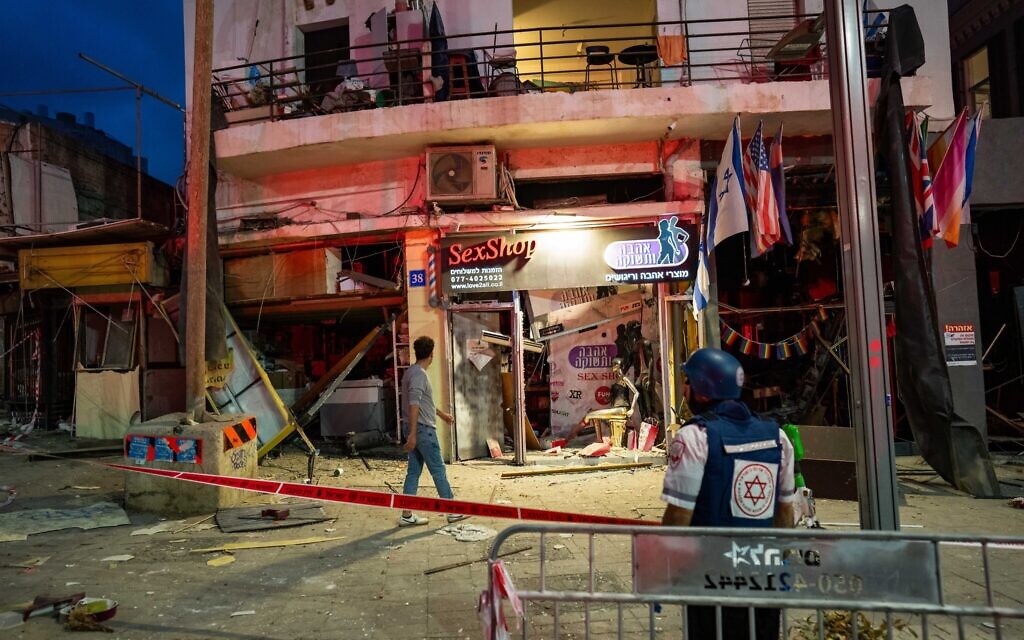
During the conflict, numerous ballistic missile barrages forced citizens to seek shelter, resulting in damage to hundreds of buildings. Local businesses and commerce were either completely or partially shut down during this time.
Ronen Menahem, chief markets strategist at Mizrahi Tefahot Bank, highlighted that the preliminary economic data reflects the impact of the Iran war on business activity and consumer spending. According to the Central Bureau of Statistics, much of the GDP decline was driven by a drop in business sector output, which fell by 6.2 percent. Consumer spending also decreased by 4.1 percent, while exports of goods and services, excluding startups and diamonds, dropped by 3.5 percent. Government spending saw a modest decline of 1 percent.
Menahem noted that the high interest rates and the appreciation of the shekel have added challenges to the economy. He stated that it may take at least one or two quarters to "clean up" the impact of the Iran war from the trend data. He also pointed out that investments in fixed assets, particularly in residential buildings, were the most sensitive to security tensions, recording a sharp 12.3 percent drop.
Over the past year, Israel's economy grew by approximately 1 percent, a decrease from 1.8 percent in 2023 and 6.3 percent in 2022, before the hostilities began. In the past 22 months, the country has been engaged in the longest and most intense war in its history, fighting the Hamas terror group and dealing with military engagements with Iran and its regional proxies. The multifront conflict has cost around NIS 300 billion ($88.7 billion), significantly increasing government borrowing and the country's debt burden.
The Bank of Israel revised its growth projections, estimating GDP growth of 3.3 percent in 2025 and 4.6 percent in 2026. However, the Finance Ministry recently lowered its 2025 growth forecast from 3.6 percent to 3.1 percent, assuming that the intensity of fighting in Gaza will continue only until the end of September. These projections do not account for the potential costs of the recently approved plan to take over the densely populated Gaza City.
Despite these challenges, Menahem expects much of the economic slowdown to reverse course. However, he cautioned that there remains considerable uncertainty about the pace of recovery. He emphasized that the recovery will be gradual and largely dependent on the political-security environment surrounding the economy. To support this recovery, he stressed the need for a cautious fiscal policy focused on growth-supporting items.

Post a Comment for "Israel's Economy Dips 3.5% as Iran Conflict Hits Spending and Business"
Post a Comment