Ishiba Vows to Stay as Resignation Pressure Mounts
Japanese Prime Minister Faces Pressure Amid Political Challenges
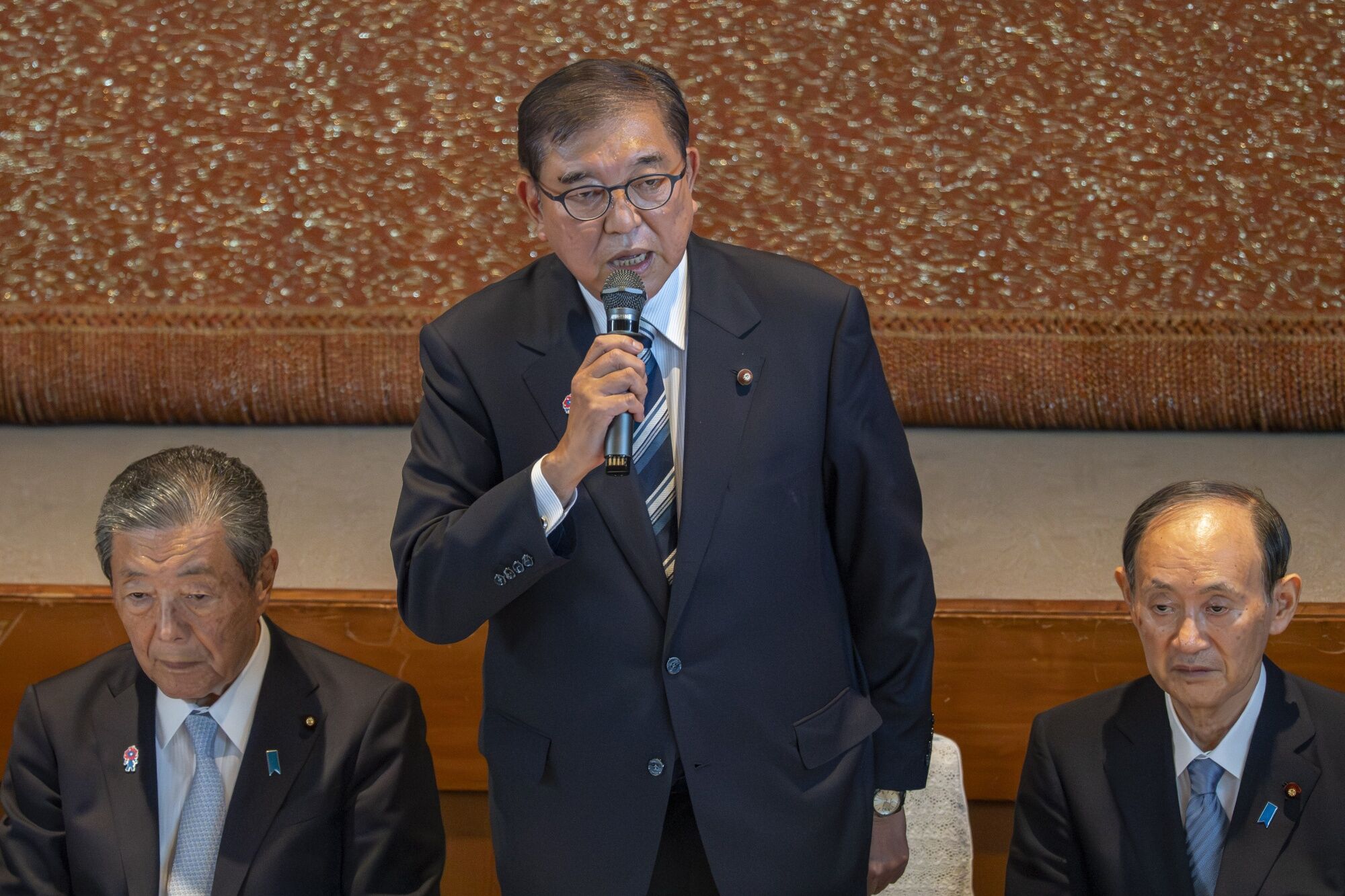
Japanese Prime Minister Shigeru Ishiba has reaffirmed his commitment to remain in office and ensure the successful implementation of a recent trade agreement with the United States. This declaration comes as lawmakers within the ruling Liberal Democratic Party (LDP) continue to push for his resignation following a significant electoral loss.
At the start of a meeting with LDP lawmakers, Ishiba emphasized his determination to fulfill his responsibilities and avoid creating a political vacuum for the nation. He expressed regret over the ruling coalition’s loss of its majority in the upper house during the July 20 election. The prime minister pledged to do everything possible to ensure the full execution of the recent trade deal with the U.S.
LDP Secretary-General Hiroshi Moriyama, speaking at the same event, mentioned that he plans to complete an analysis of the election results by August and make a decision on accountability at that time. The meeting is part of the party's efforts to recover from its poor performance in the recent election and determine its next steps.
For the first time since 1955, a leader from the historically influential Japanese party must govern without a majority in either legislative body. Hokuto Hoshi, an upper house LDP lawmaker, stated that the majority view was that Ishiba should step down at a certain point to draw a line under the current situation and transform the LDP from within.
Following the LDP's poor results in the general election last fall and the recent Tokyo metropolitan government election, the latest setback in the upper house highlights the need for a change in administration, according to lower house representative Takako Suzuki. She called for the party president and leadership team to take responsibility for the current situation.
Recent opinion polls indicate that support for Ishiba’s administration remains low, although many voters see few viable alternatives to the current prime minister. Surveys published by Mainichi and Asahi newspapers showed approval ratings of 29% for Ishiba’s government. The Asahi poll also revealed a lack of consensus among voters, with 41% believing Ishiba should resign and 47% thinking it wasn’t necessary. Additionally, 81% of respondents believed the LDP’s defeat was due to party-wide issues rather than the prime minister’s leadership.
Despite the pressure, Ishiba has found some support on social media and in small public gatherings outside the prime minister’s office. Supporters have called for him to remain in his position. However, the announcement of the trade deal with the U.S. did not significantly boost his popularity or guarantee his survival in the political landscape.
Former Foreign Minister Toshimitsu Motegi called for a leadership change within the LDP on his YouTube channel, suggesting the party needs a “fresh start with a new leader.” Nevertheless, rivals within the party may be hesitant to take on the challenge of leading when the LDP lacks a majority in either chamber.
Hajime Funada, a member of the lower house, expressed his desire for Ishiba to stay on partly because of his ability to work across party lines, such as passing budgets. He stated, “Ishiba is the most appropriate person. I said I want him to continue.”
As the LDP navigates these challenges, the future of the party and its leadership remains uncertain. The path forward will require careful consideration and strategic decisions to address the concerns of both the party and the public.

Post a Comment for "Ishiba Vows to Stay as Resignation Pressure Mounts"
Post a Comment