Is 185 F-47 NGAD Stealth Fighters Enough?
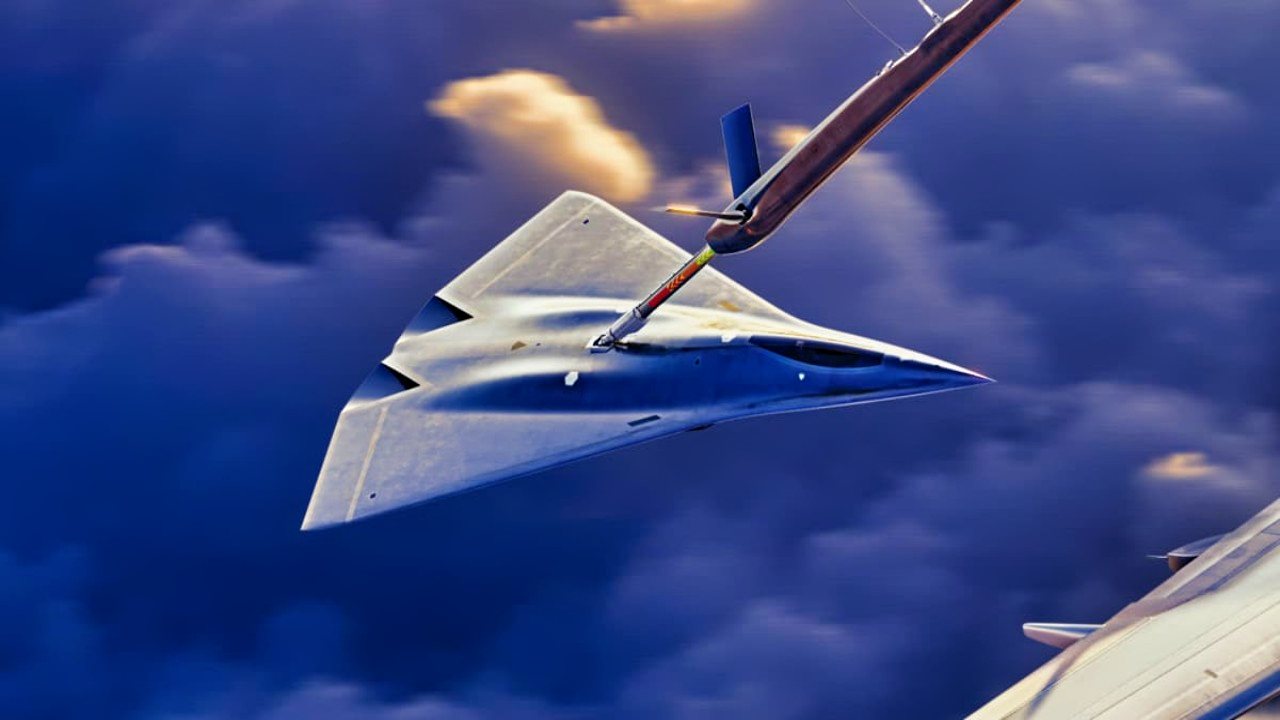
The U.S. Air Force’s Next-Generation F-47 Fighter: A Strategic Shift
The U.S. Air Force is developing the F-47, a next-generation fighter jet that is central to its Next-Generation Air Dominance (NGAD) program. This aircraft is designed to be a "stealth++" marvel, boasting a combat radius of 1,000 nautical miles and advanced capabilities that surpass those of existing fifth-generation fighters like the F-22 and F-35. However, the current plan to acquire around 185 of these high-cost jets to replace the F-22 has sparked significant debate.
The Numbers Game: How Many F-47s Are Needed?
Initially, the Air Force aimed to acquire at least 185 F-47s, potentially replacing the F-22 fleet on a one-to-one basis or even exceeding that number. Yet, questions remain about whether this quantity will be sufficient to meet America's strategic needs. Operational demands and industrial considerations could lead to an increase in the number of F-47s required.
In addition to the manned fighters, the Air Force plans to procure over 1,000 uncrewed collaborative combat aircraft (CCAs) to operate alongside the F-47 and F-35. These drones are intended to enhance the effectiveness of the manned aircraft by providing additional firepower, reconnaissance, and electronic warfare capabilities.
Strategic Shift: Quality Over Quantity
The decision to limit the initial F-47 fleet to approximately 185 units reflects a strategic shift toward a more distributed and flexible force structure. Instead of relying solely on large numbers of manned fighters, the Air Force is embracing a combination of highly capable manned aircraft with a larger fleet of autonomous systems. This approach allows for greater adaptability and resilience in combat while also helping to manage costs, as the F-47 is expected to be significantly more expensive than the F-35.
Senior officials in the Air Force remain confident in the F-47’s ability to ensure American air superiority. A strategic review conducted in 2024 confirmed that no alternative platform could match the capabilities required to dominate in a highly contested environment. As Major General Joseph Kunkel stated, “There was no more viable option than NGAD to achieve air superiority in this highly contested environment.”
The Need for Firepower in Modern Warfare
In modern warfare, quality plays a crucial role in determining victory, but quantity cannot be ignored. In a full-scale war against a peer adversary like China, both quantity and industrial output will likely be significant factors. China has invested heavily in its aerospace industry and has been working to increase production of its own J-20 stealth-fighters. Its airspace is also heavily saturated with advanced air defense systems, making deep penetration, even with stealth fighters, challenging.
Against China or even Russia, the U.S. should expect to take heavy casualties. The strategic role of the F-47 is to ensure U.S. air dominance in the face of rapidly evolving threats. The F-22, while still formidable, is aging and increasingly vulnerable to modern air defense systems and enemy fighters.
Advancements in Technology and Capabilities
China is developing its sixth-generation aircraft and has made significant advances in long-range missile technology and integrated air defense systems. The F-47 is designed to counter these developments by combining speed, stealth, range, and networked warfare capabilities in a single platform.
Development of the F-47 began in the 2010s when the Department of Defense recognized that fifth-generation fighters like the F-22 and F-35 would eventually be outpaced by emerging threats from peer adversaries such as China and Russia. In response, the NGAD program was launched to develop a “family of systems” that would include a manned fighter, uncrewed CCAs, and a suite of advanced sensors and weapons platforms.
Technological Innovations and Future Prospects
The F-47 is designed to be the most advanced fighter ever built. It features what the Air Force describes as “stealth++” capabilities, surpassing the stealth of both the F-22 and F-35. This enhanced stealth allows it to operate deep within contested airspace without detection. Its top speed exceeds Mach 2, and it boasts a combat radius of over 1,000 nautical miles—nearly 70% farther than the F-22.
This extended range is particularly critical for operations in the Indo-Pacific region, where vast distances and the presence of advanced enemy air defenses demand long-range strike capabilities. Beyond its raw performance, the F-47 is built with a modular architecture that allows for rapid upgrades and integration of future technologies. This includes the potential for directed energy weapons, quantum sensors, and advanced electronic warfare systems.
Manned-Unmanned Teaming and Networked Battlespace
The aircraft also serves as a command node in a broader networked battlespace, capable of coordinating with CCAs and other assets to execute complex missions. This manned-unmanned teaming is a cornerstone of the NGAD strategy, enabling the F-47 to direct drone wingmen that can carry additional munitions, extend sensor coverage, or perform high-risk tasks without endangering human pilots.
The F-47 is also a significant milestone for Boeing, marking its first clean-sheet fighter design selected by the Air Force since the merger with McDonnell Douglas. The company has invested heavily in the program, including the construction of a $1.8 billion advanced production facility. This investment underscores the importance of the F-47 not only for national defense but also for the U.S. defense industrial base.
Looking Ahead
The F-47 is currently expected to enter service in the 2030s. Its deployment will coincide with the rollout of the CCAs and other elements of the NGAD family of systems. Together, these assets will form a cohesive and adaptable force capable of projecting power across the globe, deterring adversaries, and winning conflicts in the most challenging environments.

Post a Comment for "Is 185 F-47 NGAD Stealth Fighters Enough?"
Post a Comment