IRS Allows Worship Centers to Endorse Candidates. Do Houston Muslims Agree?
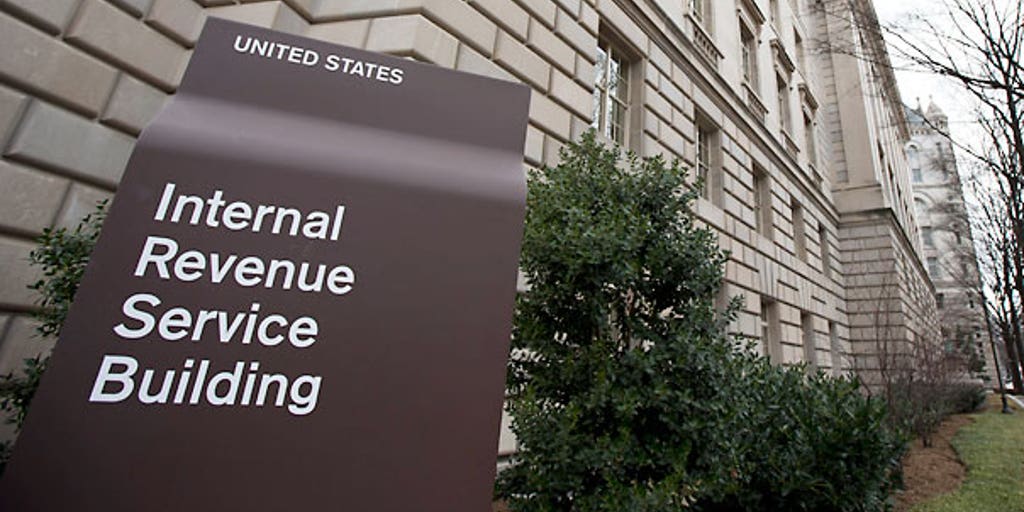
Understanding the IRS Ruling and Its Impact on Religious Institutions
In early July, the Internal Revenue Service (IRS) announced a significant change in its interpretation of tax-exempt status for religious organizations. According to this new guidance, churches and other places of worship can now endorse political candidates to their congregations without jeopardizing their tax-exempt status. This development has sparked a wide range of reactions across various communities, especially in Texas, where religion plays a central role in public life.
The state, which is predominantly Christian, has seen both support and concern over the ruling. While many religious conservatives have welcomed the change, some progressive groups have also expressed approval. However, several faith leaders, legal experts, and academics have voiced concerns about the potential implications of this shift.
Muslim Perspectives on the New Rule
In Houston and throughout Texas, Muslim leaders have been vocal about their views on the IRS’s new stance. Some have celebrated the decision, seeing it as an opportunity for greater political engagement. Others, however, remain cautious. Mohammed Usman “Jazz” Aijaz, founder of the Muslim United Political Action Committee in the Houston area, has stated that he personally does not want to see Texas Muslims endorsing political candidates. He argues that religion is often weaponized, and he believes that mixing faith with politics could lead to unintended consequences.
The Council on American-Islamic Relations (CAIR), the largest Muslim civil rights and advocacy group in the United States, has issued a strong recommendation to mosques to avoid allowing speakers to endorse political candidates. The organization emphasizes the importance of maintaining the separation between religious and political spheres to protect the integrity of religious institutions.
Political Diversity Within the Muslim Community
The Muslim community in Texas is not monolithic in its political affiliations. Many older Muslims in cities like Houston and Dallas tend to identify as religiously and politically conservative. However, younger generations, particularly Millennials and Gen Zers, are increasingly leaning toward progressive values, especially during the tenure of former President Donald Trump and the rise of Muslim politicians such as Zohran Mamdani in New York.
Texas Muslim voters on both sides of the political spectrum have expressed concerns about recent developments, including the Republican-led attacks on the proposed "EPIC City" housing project in the Dallas-Fort Worth area. Additionally, the ongoing Israel-Hamas conflict has had a direct impact on many residents in the state, influencing their political views and engagement.
Legal Challenges and Political Reactions
The updated IRS rule comes amid a federal court lawsuit filed by the National Religious Broadcasters organization and two Texas churches. The lawsuit claims that the previous ban on political endorsements violated the First Amendment rights of religious institutions. The case involves Sand Springs Church in Athens and First Baptist Church Waskom, which argue that the IRS should not restrict religious speech.
Former President Donald Trump had long criticized the Johnson Amendment, a 1954 provision that barred tax-exempt religious organizations from endorsing political candidates. During his first term, he promised to eliminate the amendment, arguing that it limited the ability of religious leaders to speak freely.
On July 7, the IRS did not fully repeal the Johnson Amendment but clarified that communications in "good faith" by a church to its members would not be considered as "intervening" in a political campaign. The agency compared such endorsements to a "family discussion," suggesting a more lenient approach.
Support and Criticism from Religious Leaders
Several Texas pastors and politicians, including Lt. Gov. Dan Patrick and Dallas-based pastor Robert Jeffress, have criticized the Johnson Amendment. Jeffress, who leads First Baptist Dallas and is a known Trump ally, called the IRS's update "the right decision." He previously claimed that his megachurch faced legal challenges due to its political endorsements, costing the church hundreds of thousands in legal fees.
"The IRS has no business dictating what can be said from the pulpit," Jeffress said. "They need to stay the heck out of our churches."
In Houston, some Christian leaders have celebrated the IRS ruling and called for the complete elimination of the Johnson Amendment. Others, however, have stated that they will continue to avoid formal political endorsements.
Shifting Dynamics in the Muslim Community
As the Muslim population in the Houston metro area grows—estimated at around 500,000 residents with ties to South Asia, the Middle East, and East Africa—there is a growing dialogue about how imams and khatibs (sermon deliverers) should approach political issues in mosques.
Aijaz, who serves as a committeeman for Congressional District 22 in the Texas State Democratic Executive Committee, noted that while Texas politicians have historically been welcomed in Houston mosques, most Muslim leaders ensure that they do not openly endorse them in front of their congregations.
Recent Controversies and Community Responses
Recent events have highlighted the tensions within the Muslim community. For example, earlier this year, a pro-Palestinian demonstrator was handcuffed outside a Houston-area mosque during a mayoral campaign event. This incident led to heated debates among Muslim residents, with some accusing the mosque and local Islamic organizations of mishandling the protest. The controversy underscored the complex relationship between religious institutions and political engagement.
In response to these dynamics, CAIR has emphasized the importance of maintaining the Johnson Amendment, warning that allowing political endorsements could transform mosques into partisan campaign organizations. The organization stressed that while imams and khateebs can still speak out on policy, justice, and values, they must avoid explicitly endorsing political candidates.
Conclusion
The IRS ruling has reignited discussions about the intersection of religion and politics, with varying perspectives across different faith communities. As religious institutions navigate this evolving landscape, the balance between free speech and maintaining tax-exempt status remains a critical issue. The ongoing debates reflect the broader societal challenges of ensuring that religious voices are heard without compromising the integrity of sacred spaces.

Post a Comment for "IRS Allows Worship Centers to Endorse Candidates. Do Houston Muslims Agree?"
Post a Comment