Interstellar Comet 3I/ATLAS: Not Alien, But Here Are the Theories
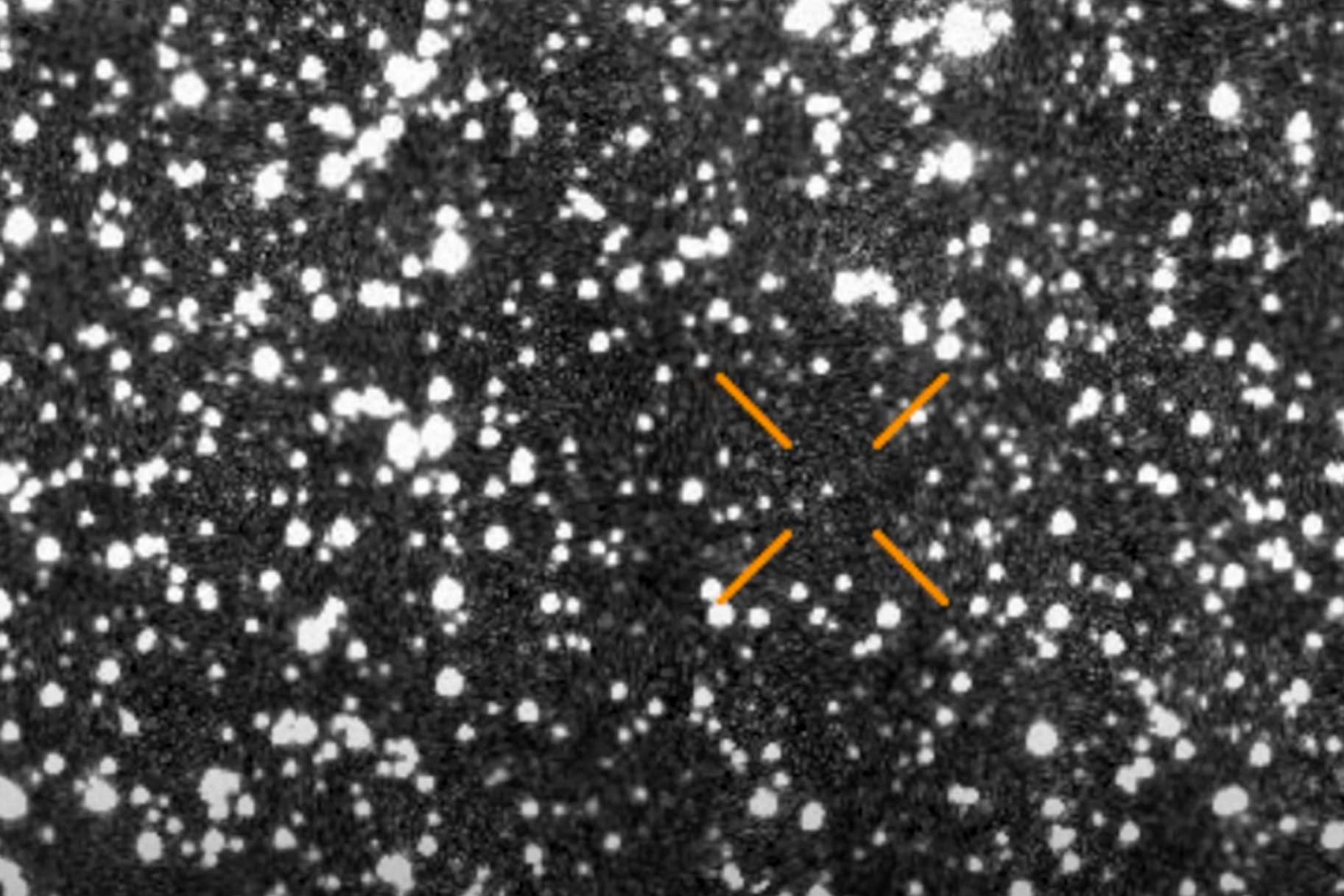
The Discovery of 3I/ATLAS: A New Interstellar Visitor
The space rock known as 3I/ATLAS is the third confirmed interstellar object discovered by astronomers, following 'Oumuamua and the comet Borisov. Scientists believe that this object originated from the Milky Way’s thick disk, which could make it as old as 7 billion years—several billion years older than our entire solar system. Its journey through space will take it between the orbits of Earth and Mars before it eventually heads back into interstellar space.
When it was first detected by NASA’s ATLAS (Asteroid Terrestrial-impact Last Alert System) on July 1, 2025, 3I/ATLAS was traveling at an incredible speed of 137,000 miles per hour and continues to accelerate. By the time it makes its closest approach to the Sun, it will be moving faster than 150,000 miles per hour. The name 3I/ATLAS reflects its status as the third interstellar object identified and the telescope that made the discovery.
Understanding the Trajectory of 3I/ATLAS
Astronomers have determined that 3I/ATLAS is interstellar because its trajectory follows a hyperbolic path, meaning it will not remain in our solar system but instead return to deep space after passing through the inner solar system. The comet is traveling within 5 degrees of the ecliptic plane, the imaginary plane upon which Earth and most other planets orbit. During its passage, it will come relatively close to Venus, Mars, and Jupiter.
This particular path has sparked some intriguing speculation. Astronomer Avi Loeb suggests that the trajectory might be evidence of alien technology. He posits that if an alien intelligence wanted to observe our solar system, they might chart a similar path. Loeb also notes that the probability of such a trajectory being so close to three planets is extremely low—only 0.005%.
The Fermi Paradox and the Dark Forest Hypothesis
This isn’t the first time Loeb has proposed extraterrestrial origins for interstellar objects. He previously suggested that 'Oumuamua could have been an alien probe and even searched the ocean floor with a magnetic rake looking for debris from potential alien spacecraft. This time, however, he frames his ideas as a thought experiment.
In a preprint paper posted to arXiv, Loeb and his colleagues present an analysis of the astrodynamics of 3I/ATLAS and hypothesize that the object could be technological, possibly even hostile. They reference the "Dark Forest" hypothesis, a concept from Liu Cixin’s science fiction novel The Dark Forest. According to this idea, the universe is filled with civilizations that are hostile and silent, choosing to remain hidden to avoid detection and potential destruction.
The Great Silence and Possible Explanations
The question of why we haven’t found signs of alien life is often referred to as the Fermi Paradox. Physicist Enrico Fermi famously asked, “Where is everyone?” given the vast number of stars and potential planets where life could exist. Despite this, there is no clear evidence of extraterrestrial civilizations.
Several theories attempt to explain this silence. Some suggest that we may be alone, while others propose that intelligent life is rare or that civilizations tend to self-destruct before they can communicate across the stars. The Dark Forest hypothesis offers another perspective: that the universe is dangerous, and the best strategy for survival is to remain quiet and unseen.
The Possibility of Alien Probes
If 3I/ATLAS were an alien spacecraft, its trajectory would allow it to access Earth easily. While behind the Sun and out of view, it could potentially adjust its speed and enter a stable orbit around the Sun. From there, it could theoretically travel to Earth as early as November or December. However, Loeb acknowledges that this scenario is highly unlikely.
“By far, the most likely outcome will be that 3I/ATLAS is a completely natural interstellar object, probably a comet, and we await the astronomical data to support this likely origin,” Loeb said.
As scientists continue to study this fascinating object, the possibility of alien technology remains a topic of debate and speculation. Whether 3I/ATLAS is a natural celestial body or something more extraordinary, its arrival in our solar system has opened new discussions about the nature of the universe and our place within it.

Post a Comment for "Interstellar Comet 3I/ATLAS: Not Alien, But Here Are the Theories"
Post a Comment