Inside the A-10's GAU-8/A Cannon: Engineering and Maintenance
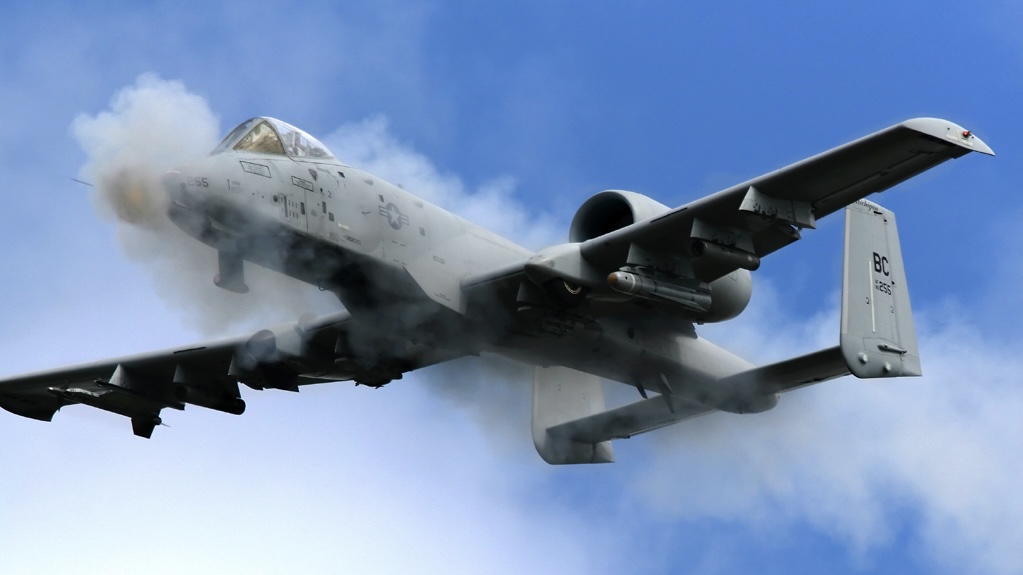
The A-10 Thunderbolt II and Its Revolutionary GAU-8/A Avenger Cannon
The United States Air Force’s A-10 Thunderbolt II, affectionately known as the “Warthog,” was designed specifically for Close Air Support (CAS) missions. At the heart of this aircraft is the GAU-8/A Avenger, a powerful 30 mm rotary cannon that has become synonymous with the A-10's identity. This weapon system is not just a component of the aircraft—it is the core around which the entire design was built.
A Weapon Designed for Combat
In the early 1970s, the U.S. Air Force issued a Request for Proposals (RFP) for a new CAS aircraft capable of engaging heavily armored targets on the battlefield. The need for an internal gun was driven by lessons learned during the Vietnam War, where traditional fighter aircraft without guns struggled against ground threats. With the Soviet Union building up its armored forces during the Cold War, the USAF sought a cost-effective solution to counter these tanks and armored vehicles.
The specifications called for a 30 mm gun capable of firing up to 4,000 rounds per minute while maintaining accuracy. This led to the development of a rotary cannon design, which allowed for a high rate of fire and extended barrel life. General Electric, with its experience in developing rotary cannons like the M61 20 mm gun, emerged as a key player in this project.
The Development of the GAU-8/A Avenger
General Electric’s design, eventually named the GAU-8/A Avenger, was chosen over competitors such as Philco-Ford. It was mounted slightly to the port side of the A-10’s fuselage, aligning the barrel with the aircraft’s centerline to minimize recoil effects and improve accuracy. The gun’s recoil force is immense—around 10,000 pounds-force—but the A-10’s twin engines provide more than 9,000 pounds-force each, helping to counteract this impact.
The placement of the cannon required modifications to the aircraft itself. The front landing gear was offset to the right to accommodate the large gun assembly, and armor plates were added between the fuselage and the ammunition drum to protect the rounds from enemy fire. The drum itself extends nearly 20 feet from the muzzle, almost reaching the front fuel tank.
How the GAU-8/A Works
The GAU-8/A is a seven-barrel rotary cannon that follows the original design principles of Richard Gatling. Each barrel has its own breech and bolt, with only one barrel firing at a time. As the bolt rammed a loaded round into the breech, the cocking pin compressed the firing pin spring. A cam then released the trigger, allowing the firing pin to strike the igniter tube and ignite the main powder charge.
The barrels are driven by two hydraulic motors, allowing the gun to cycle through its firing process. Originally, the rate of fire could be adjusted, but it was later fixed at 3,900 rounds per minute. The drum is linked to a two-way feed system that returns empty cases to the drum rather than ejecting them, preventing damage to the aircraft and preserving its center of gravity.
Engineering Challenges and Maintenance
The GAU-8/A presents unique engineering challenges due to the large amount of propellant and the soot and smoke produced during firing. This often caused issues with pilot visibility and engine performance. To address these problems, engineers developed a window-washing system to clean the windscreen and integrated the engine ignition system with the gun trigger to prevent engine stalling.
Maintenance of the Avenger is critical. The gun is inspected and cleaned every 36 months or after 25,000 rounds. Removable panels in the nose and lower fuselage allow access to the gun, and the entire system can be disassembled for cleaning and inspection. The minimum barrel life is set at 21,000 rounds, and worn parts are replaced as needed.
Variations and Legacy
While the GAU-8/A was originally designed for the A-10, variations of the gun have found their way into naval applications. However, with the A-10 slated for retirement, the iconic “BRTTTTT” sound of the Avenger may soon be a thing of the past. Despite this, the legacy of the GAU-8/A remains a testament to the ingenuity of military engineering and the enduring role of close air support in modern warfare.

Post a Comment for "Inside the A-10's GAU-8/A Cannon: Engineering and Maintenance"
Post a Comment