In Druze Town, Tragedy and Fear Amid Border Crossings
A Year of Tragedy and Renewal in Majdal Shams
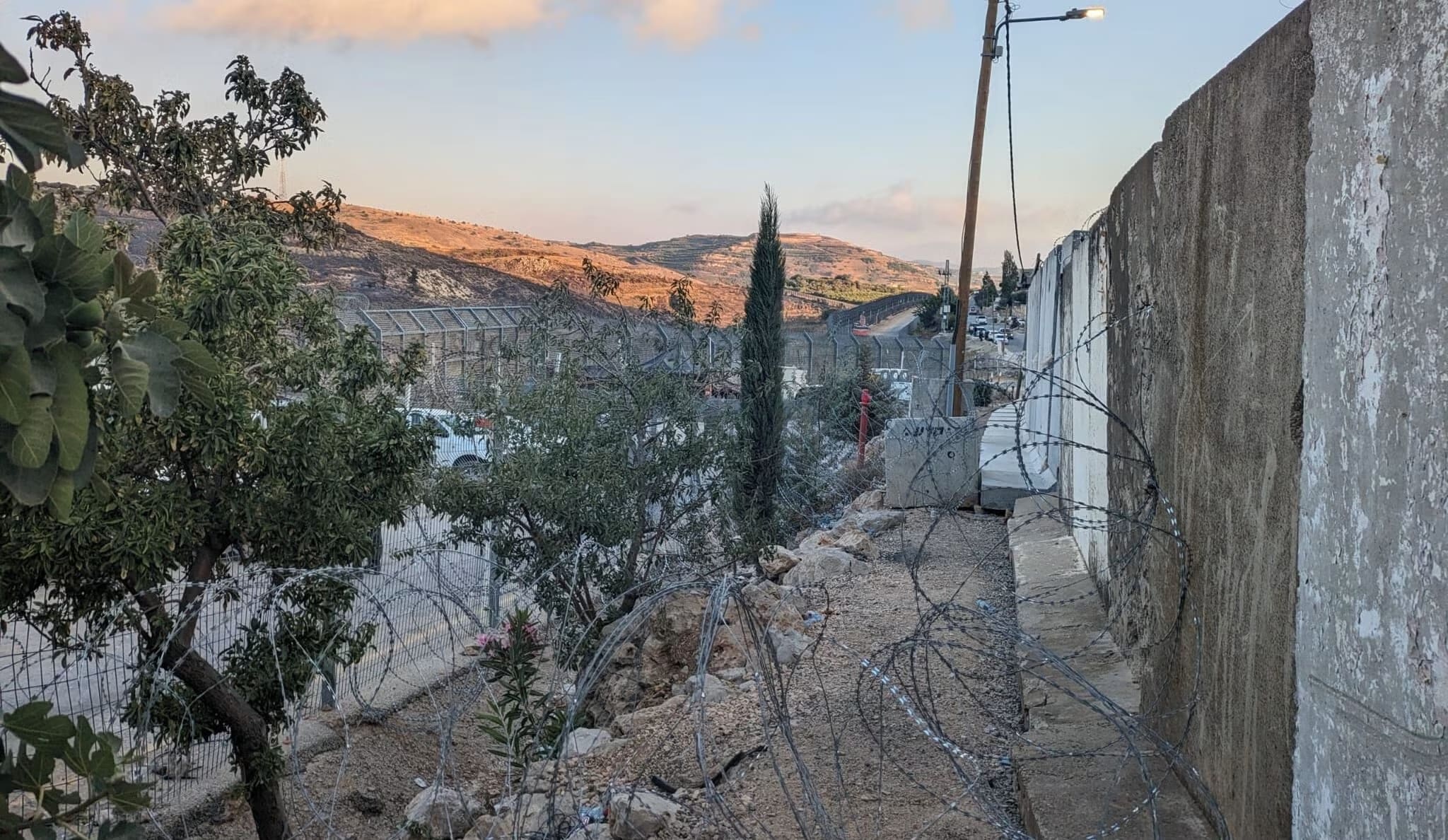
A year after a Hezbollah missile struck a soccer field in the quiet Druze town of Majdal Shams, killing 12 children and transforming the area into a symbol of grief, the town once again found itself in the spotlight. This time, it was for an unexpected border crossing that drew hundreds of Druze residents to the security fence separating the Israeli Golan Heights from Syria. The breach came amid escalating violence in southern Syria, where clashes between local Druze populations and Bedouin militias backed by Syrian government forces have claimed over 1,100 lives and displaced more than 120,000 people.
Many of those who crossed the fence were driven by a deep desire to reconnect with family members they had not seen in decades. Some even spoke of marching all the way to Sweida, the epicenter of the conflict, to try to stop the bloodshed themselves. Footage of the massacre of Druze civilians, reportedly filmed by the perpetrators, began circulating on mobile devices, evoking painful memories of the October 7 attack by Hamas.
Residents of Majdal Shams compared the horror unfolding across the border to the tragedy they had already endured. Some criticized the Israeli government for not doing enough to prevent the violence, despite its strikes against Syrian military targets in Sweida and Damascus. Prime Minister Benjamin Netanyahu claimed these actions were aimed at protecting the Syrian Druze and their "deep blood covenant" with their Israeli counterparts. Others, however, supported the intervention.
At the border, families called out to one another across the fence, holding signs with the names of lost relatives. Two sisters, separated for 30 years, embraced tearfully in front of cameras. Another mother clutched her son, whom she hadn’t seen since he moved to Syria as a teenager.
Three days later, as a fragile ceasefire held, some residents remained near the fence, reflecting on the emotional toll of the events. Dalia Shams, a local resident, expressed concern about the risks of crossing the border. She urged her children to stay away, fearing that if the gate were closed, they might be trapped on the other side.
A Quiet Show of Solidarity
Hadi Sabra, a local resident, viewed the Israeli army’s decision not to intervene forcefully as a sign of solidarity. He believed the soldiers understood the need for people to express their emotions and reunite with loved ones, even if only briefly.
A border soldier, known only as “A,” described the emotional impact of witnessing the reunions. “They cried, they hugged, and then they went back to opposite sides of the fence, in enemy states. No one knows if they’ll ever meet again.”
Despite the public call from a Druze spiritual leader urging people to cross the border to help their brothers in Syria, not everyone supported the breach. Heba Asaad, a community leader, acknowledged the urge to help but argued that such actions should have been more organized. “We need to act logically, not emotionally. Crossing like that into an enemy state endangers them and us.”
Asaad, head of the B’Yachad nonprofit, has worked to coordinate humanitarian aid, including shipments of emergency contraception following reports of sexual violence. Meanwhile, the Israeli Defense Forces (IDF) transferred medical supplies to hospitals in Sweida, where an alleged massacre occurred. On the same day, Druze and Jewish Israelis lined up to donate blood for the wounded.
A Complex Relationship with Syria
Jonathan Conricus, a former IDF spokesperson, suggested that Israel’s strikes in Syria were aimed at preventing broader escalation. He linked the regime’s assault on Sweida to the recent lifting of US sanctions on Syrian President Ahmad al-Sharaa, calling the shift puzzling. “This is a centuries-old conflict between Druze and Bedouin. But for the first time, it was backed by the Syrian state and its armed forces.”
Sabra welcomed the IDF’s actions but wished they had come earlier. “But of course, I’m happy the IDF assisted fighters in the field. It proved that there really is an alliance between us.”
In the weeks leading up to the flare-up, there were reports of Syria potentially joining the Abraham Accords, a possibility now considered unlikely. Dalia Shams said, “The minute there’s peace, I’m the first to go.” However, Sabra was less forgiving, stating, “You can’t make peace with jihadists. Once a jihadist, always a jihadist.”
Evolving Identities and New Challenges
The Syrian civil war has reshaped the perception of national identity among the Druze in the Golan Heights. Many had previously seen themselves as citizens of Syria, but now, they are formalizing ties to Israel. In the first half of 2025, 1,050 applied for Israeli citizenship, nearly double the number from 2024. About 6,000 Druze in the Golan Heights now hold Israeli passports, though many do so quietly.
With the threat of Hezbollah subsiding, tourism in the north began to recover. However, the recent violence disrupted this momentum. At the Bambook resort, which had just started to see bookings return after 20 months of conflict, owner Muchi Shams lamented the sudden loss of business. “First Hezbollah, then Iran, and now Syria,” he said.
A Town Still Reeling
Back in Majdal Shams, the sun set behind the hills, casting a calm against the backdrop of ongoing tensions. A sculpture of a soccer ball with angel wings and a crown stood atop a traffic circle, commemorating the 12 victims of the Hezbollah missile attack. For many, the scars of that tragedy remain fresh, and the recent violence in Syria has added to the grief.
Sabra noted that friends who had lost loved ones in the attack still avoided celebrations. “It left too many scars.” Asaad echoed this sentiment, adding that the massacres in Syria had compounded the pain of families still reeling from the last tragedy. “They haven’t even had a chance to mark the anniversary of their children’s death. There’s been no closure, it’s just one blow after another.”
As the town slowly moves forward, the memory of the past lingers. At the soccer field, children laughed and played, their joy a stark contrast to the solemnity of the space. The broken scooters and faded banner serve as a reminder of the tragedy that once unfolded there. For now, the community continues to heal, finding comfort in their shared history and faith.

Post a Comment for "In Druze Town, Tragedy and Fear Amid Border Crossings"
Post a Comment