Immigrants and Advocates Demand Houston Police End ICE Collaboration
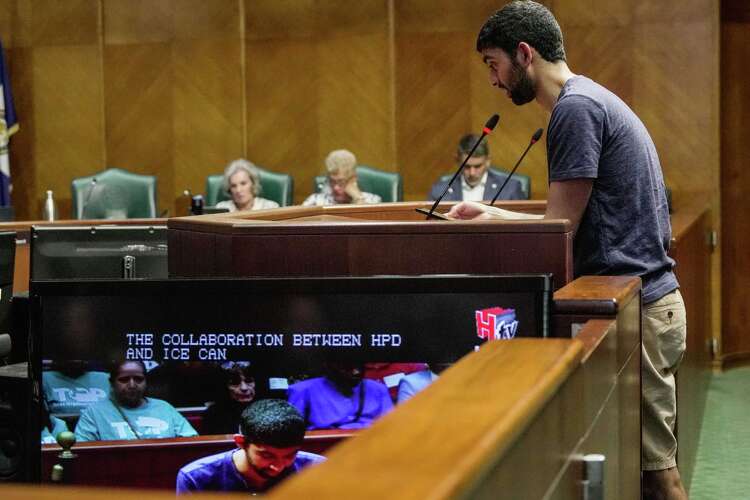
Community Protests Against Police Cooperation with ICE in Houston
Dozens of immigrants and their supporters gathered at Houston City Hall on Tuesday to express their concerns about the cooperation between the Houston Police Department (HPD) and federal immigration authorities. This collaboration, according to critics, has led to a climate of fear within the immigrant community, resulting in family separations, a loss of trust in first responders, and a misuse of public funds.
Local advocacy groups have raised alarms over the impact of HPD's communication with Immigration and Customs Enforcement (ICE). They argue that this practice has contributed to what they describe as "state-sponsored child abuse," where families are torn apart due to the involvement of federal immigration agents during routine encounters like traffic stops.
Kelley Sadler, a prominent voice in these discussions, emphasized the financial implications of this policy. She stated, “Houston is funding state-sponsored child abuse. Every dollar this city spends helping ICE is a dollar spent orphaning Houston kids.” Her comments reflect the growing frustration among community members who feel that taxpayer dollars are being used to support actions that harm vulnerable populations.
“This is not public safety, this is public cruelty,” she added. “Our budget pays for this cruelty while Houston families are terrorized. You have a choice today. Cut all contracts with ICE.”
Criticism of Mayor Whitmire’s Statements
The protest also targeted Mayor John Whitmire, whose previous statements about the city's relationship with ICE were scrutinized. In January, Whitmire claimed that local police had not assisted federal agents in deportation efforts. However, activists pointed out that this stance was contradicted by the reality on the ground, where innocent individuals were reportedly separated from their families during ICE operations.
Mina Vuong, an advocate, highlighted this contradiction, stating, “At the beginning of the year, John Whitmire said the current ICE raids were for warranted criminal and violent offenders. However, as ICE began to make its deportations across Texas including Houston, we witnessed innocent people being brutally separated from their friends and family.”
In response to these concerns, Mary Benton, communications director for Whitmire, issued a statement clarifying the city’s position. She noted that “the city of Houston is not ICE and does not focus on immigration enforcement.” According to her, HPD enforces state law and holds violators accountable regardless of their immigration status.
The Role of Routine Traffic Stops
A recent investigation by the Houston Chronicle revealed that more than half of the 58 calls made by HPD to ICE occurred during routine traffic stops. Additionally, there were instances where HPD contacted ICE following domestic abuse reports, even though the victims were not taken into custody.
Lizette Prestwich, a community leader, stressed the importance of restoring trust in police interactions. “It is crucial that the Houston Police Department address community concerns and fears through clear and intentional acts, not words,” she said. “Our community must trust that routine police encounters such as traffic stops or calls for help will not lead to deportation, family separation, or inhumane treatment in detention centers.”
Impact on Mental Health and Public Safety
Rishab Chawla, a psychiatry resident in Houston, expressed concern over the potential impact of this policy on mental health. He noted that reports of ICE involvement in routine law enforcement could deter individuals from seeking medical care during crises.
“The recent reports that HPD called ICE on community members at the moments of these crises is deeply concerning to me,” he said. “The collaboration between HPD and ICE could leave vulnerable people to not call 911 out of fear that they could be taken into ICE custody.”
Calls for Transparency and Action
The protest was organized by Houston Leads, an advocacy group focused on supporting the Black and LGBTQ communities. Letty Ortega, a community organizer with the group, urged immediate action to prevent further harm. “If we don't act now, more parents will be torn from their kids, more workers will disappear from jobs, and more trust in police will crumble. Our city must choose protection over persecution.”
The group has launched a petition calling for greater transparency in how local police and city departments interact with ICE. It also seeks funding for know-your-rights campaigns and the acceptance of the Harris County Enhanced Library Card as a valid form of identification.
Conclusion
As the debate over police cooperation with ICE continues, the voices of those affected by this policy grow louder. The demand for transparency, accountability, and a shift toward community-centered policing remains central to the movement. For many, the goal is clear: to ensure that every individual, regardless of immigration status, can access the safety and support they need without fear of deportation or family separation.

Post a Comment for "Immigrants and Advocates Demand Houston Police End ICE Collaboration"
Post a Comment