Illinois Expressway Critics Warn of Land Seizures and Misplaced Priorities
Illinois Expressway Project Sparks Debate Over Priorities and Impact
The Illinois Department of Transportation (IDOT) is advancing plans for a new expressway that aims to connect southern Illinois towns with St. Louis. This initiative has drawn significant attention, with critics raising concerns about its financial viability, environmental impact, and potential use of eminent domain. The project is part of a broader effort to improve transportation infrastructure in the region, but it has also sparked heated discussions about where taxpayer money should be allocated.
A $6 million study is currently underway to evaluate improvements along Routes 3, 154, and 13/127. These routes are critical for connecting rural communities to major urban centers, but the proposed expressway has faced pushback from local residents and officials. Republican congressional candidate Dillan Vancil has been one of the most vocal critics, arguing that the state’s focus on this project overlooks more pressing needs.
Vancil highlighted the long-standing demand for safer roads, particularly on Highway 3, which has been a source of concern for decades. “We have been asking for funding to expand to four lanes for decades,” he said. “They finally completed it around the high school here at West Central because there were too many fatalities. It was a major safety concern.” While one phase of the project has been funded, the second phase on the west side remains unfunded, leading Vancil to question the state’s priorities.
He expressed skepticism about the new expressway, saying it could disrupt businesses and encroach on farmland. “This new project feels similar, but I don’t believe in disrupting businesses and taking farm ground just to make a connector to make it a little bit easier,” he added.
Criticism of the Illinois Route 3 Connector
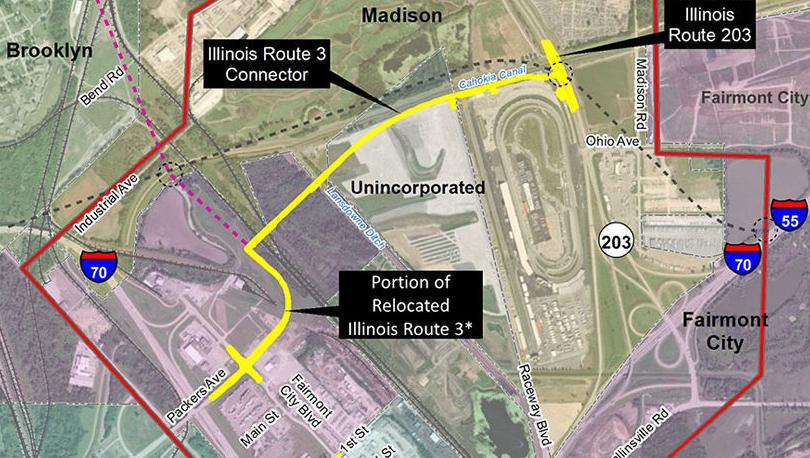
In addition to the new expressway, the Illinois Route 3 Connector project has also come under scrutiny. This project, currently in Phase II, aims to enhance traffic flow between Routes 3, 203, and Collinsville Road in St. Clair County. The estimated cost of construction is $80 million, a figure that has raised eyebrows among local residents.
Vancil questioned the high price tag, noting that the project would cover just two miles. “I'm trying to figure out two miles for $80 million, even, I mean, it's just rough,” he said. He also pointed to the presence of a family-owned business in the area that employs around 100 people. “You have a feasible business there,” he emphasized.
A 2023 report by the Belleville News Democrat revealed that the Illinois Route 3 Connector project would require the use of eminent domain to acquire land from a family-owned trucking company. This has further fueled concerns about the project’s impact on local communities. Until mid-August, IDOT will continue to solicit public feedback on the Southwest Connector, an initiative that aims to upgrade 70 miles of rural highways from Waterloo to Murphysboro.
Support from State Officials
Illinois U.S. Sen. Dick Durbin, a Democrat from Springfield, has voiced strong support for the Southwest Connector project. He believes the initiative will create jobs and boost the local economy. In a 2023 news release, Durbin stated, “When Congress passed the Bipartisan Infrastructure Law in 2021, the largest investment in our infrastructure since President Eisenhower created the Interstate Highway System, it was proof that we could get big things done on behalf of the American people.”
Durbin sees the Southwest Connector as an opportunity to replicate that success. However, Vancil remains skeptical about the project’s benefits. He argued that while large-scale projects can justify land use, smaller ones should not rely on eminent domain without community input.
“If a new facility came in that would create 300 or 400 jobs and take up 10 acres of farmland, I can understand the strong community impact,” Vancil said. “That makes sense. I think a lot of landowners would be willing to work with someone on that. But at the end of the day, if they don’t want to, find somewhere else to go.”
Balancing Development and Community Concerns
Vancil stressed the importance of involving local communities in the decision-making process. He pointed out that the Illinois Route 3 Connector had multiple potential routes, but officials opted for the one that best suited engineering plans rather than community needs.
“I’m sure for this connector project [Illinois Route 3 Connector], there were probably six different routes they could have taken,” he said. “And of course, they just want to go with whatever works best for the engineers that come up with this. But how about we go out and get the responses and the feedback from the community first?”
As the debate over the new expressway and the Southwest Connector continues, the challenge remains to balance infrastructure development with the interests of local residents, businesses, and farmers.

Post a Comment for "Illinois Expressway Critics Warn of Land Seizures and Misplaced Priorities"
Post a Comment