Hsiung Feng III Missiles spotted on Taiwan's F-CK-1 Fighters
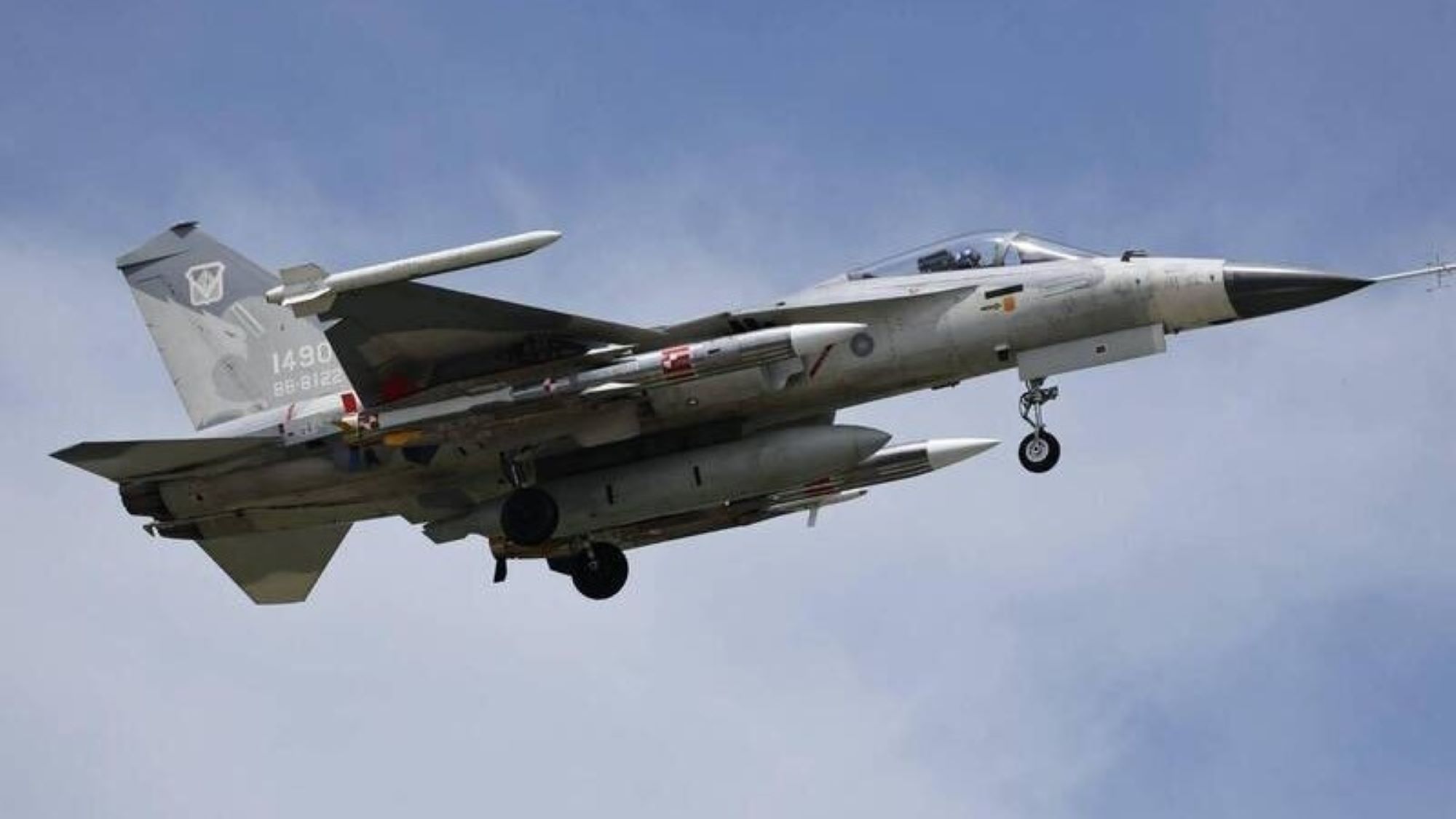
Overview of the Hsiung Feng III Missile Testing
Taiwan's National Chung Shan Institute of Science and Technology (NCIST) is making significant progress in its efforts to test the air-launched Hsiung Feng III (HF-3) anti-ship missile. This advanced weapon system, designed for deployment from the Republic of China Air Force’s F-CK-1 Ching-kuo Indigenous Defense Fighter (IDF), is currently undergoing a series of captive carry and drop trials. These tests have taken place in June, July, and August 2025, as reported by various sources.
The HF-3 is an extended-range variant of the earlier HF-2 model. It has been modified to be compact enough for air-launch, part of a project known as 'Project Xiong Ying'. The modifications include reducing the missile's length to 5.5 meters, narrowing its diameter to 36 centimeters, and keeping its weight between 900 and 1,000 kg. This makes it suitable for integration with the IDF, which has the necessary flight capabilities to support such a missile.
Visual Observations and Test Phases
In one report from June 19, 2025, an image showed an IDF carrying two HF-3s, each on a wing. The missiles were marked with red-and-white paint schemes and numbered AX-001 and AX-004, indicating they are test articles. However, these designations were not clearly visible in the image. Notably, the missile was missing two large side boosters, which are typically seen when the HF-3 is launched from the ground.
Another report published on August 10, 2025, featured an image of an IDF carrying a single HF-3 with similar markings on the starboard wing. The color scheme of this test article differed from the grey paint used in February 2025 when two HF-3s were first spotted on an IDF.
According to the reports, NCIST is accelerating through the testing phases to gather aerodynamic and mechanical data that will inform future live fire trials. The next phase is expected to begin on August 15, focusing on testing the missile's aerodynamic characteristics during separation from the launcher.
Technical Details and Future Testing
The Jun. 19, 2025, report noted that the HF-3 had "bright" and "metallic" silver paints, along with tail control fins featuring a red-yellow-blue color combination. This suggests that the next stage might involve testing the missile's guidance, seeker, navigation, and mid-course target-updating capabilities from the launching IDF via two-way data links. While no confirmation has been received from NCIST, these speculations indicate the potential direction of future tests.
On August 10, the report mentioned that NCIST conducted drop tests of the HF-3 test articles off the Taichung coast in mid-July. Additionally, an F-CK-1A MLU (tail number 1490) tested a drop of the HF-3 at Chihhang Air Base on August 6, 2025. Further simulated missile tests off Taichung are expected to start on August 15 and continue until the end of the month.
Military officials indicated that the intensive testing means the system is transitioning from simulation to test missile stages. After mid-August, it should move into the fighter jet mounting test missile stage, involving combat evaluations like launch simulations, targeting, and attacking with test missiles and live ammunition.
Modifications and Capabilities
In December 2023, reports highlighted that the IDF required modifications to accommodate the HF-3. The missile's pre-modification weight of 1,400 kg was reduced, and its booster stage was removed. The new missile weighs between 900 and 1,000 kg, minus the boosters. The basic version of the missile can reach speeds of Mach 3.5 and has a range between 150 km and 300 km, earning it the nickname "carrier killer."
While changes to the warhead, seeker, and guidance sections are unknown, internal tweaks to circuitry and electronics cannot be ruled out. A lighter HF-3 would also reduce structural stress on the IDF's airframe, allowing it to carry other air-to-air missiles for various roles.
Electronic Warfare Pods for the IDF
Recent images revealed a RoCAF C-130H carrying two Electronic Warfare (EW) pods meant for the IDF. These pods, part of the "Xuan Ji Project," are in flight testing before operational fielding. They offer radar signal detection, electronic jamming, and threat warning capabilities, enhancing the IDF's survivability against radar and missile locks.
The C-130H's spacious cabin includes a dedicated operator station for recording real-time flight data under various conditions. The project faced challenges due to limited access to critical components but was pursued independently using a homegrown system. Since 2020, the defense ministry has allocated around $135 million in research funding for Project Xuan Ji.

Post a Comment for "Hsiung Feng III Missiles spotted on Taiwan's F-CK-1 Fighters"
Post a Comment