How Washington Averted Civil War in Early America
The Crucial Moment in American History: Washington’s Leadership at Newburgh
In a small town 60 miles north of New York City, General George Washington played a pivotal role in shaping the future of the United States. This was not long after the Battle of Yorktown in 1781, where Washington's decisive victory over the British effectively ended the Revolutionary War. With the war nearing its conclusion, Washington established his new headquarters in Newburgh, waiting for news of a treaty that would officially end the conflict.
However, challenges loomed on the horizon. Washington faced the difficult task of keeping the Continental Army ready in case peace negotiations failed. At the same time, the soldiers were struggling with hunger, inadequate clothing, and, most critically, lack of pay. The Continental Congress, constrained by the Articles of Confederation, lacked the resources to properly support the army throughout the war.
Jack Warren, author of Freedom: The Enduring Importance of the American Revolution, noted that "Washington's officers struggled to maintain order, but most of them were as angry and frustrated as their men." These officers, like the soldiers, had also gone without pay, adding to the growing sense of discontent.
The frustration extended beyond financial concerns. There was an emerging belief that the Congress was ineffective and unable to govern the new nation. This sentiment was expressed in the "Newburgh Letter," sent to Washington by Colonel Lewis Nicola on May 22, 1782. In this letter, Nicola urged Washington to become the king of the United States, believing that only he had the moral authority to lead the nation through its challenges.
Washington, committed to the ideals of the Revolution, rejected the idea of monarchy. He responded quickly and emphatically, stating, "If you have any regard for your Country, concern for your self or posterity—or respect for me, banish these thoughts from your Mind, & never communicate, as from yourself, or any one else, a sentiment of the like nature."
Washington was aware of historical precedents where generals became absolute rulers. He also feared being seen as an "America Cromwell," a term used to describe a military leader who might seize power after a successful campaign.
By early 1783, tensions within the officer corps reached a breaking point. Anonymous letters began circulating, suggesting a potential mutiny if Congress did not act. One letter, written by an aide to General Horatio Gates, encouraged officers to gather and discuss their grievances, even proposing defiance if their demands were not met. Another letter further inflamed passions, hinting at open rebellion if Congress failed to respond.
Faced with the threat of a mass mutiny, Washington took decisive action. He issued a general order the next day, disrupting the planned gathering. He also subtly implied that he might not be present, leaving the meeting to be led by the senior officer in attendance.
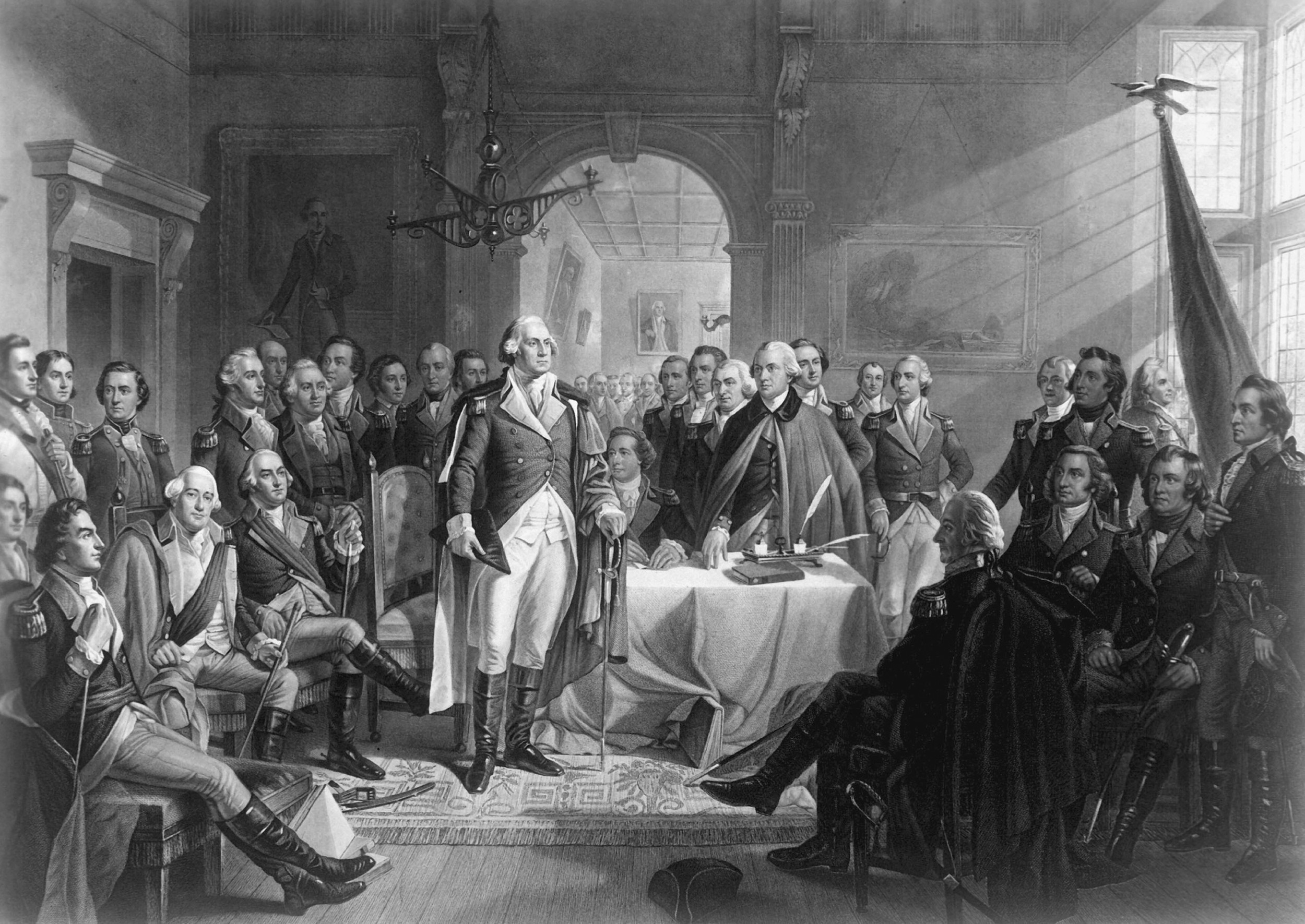
What followed was one of the most remarkable displays of leadership in American history. Washington understood that directly confronting the officers could risk losing their support, but ignoring the issue was equally dangerous. When the meeting took place, Washington did not appear at first. General Gates took the floor, stirring up the crowd. But soon, Washington entered the room, shocking everyone present.
Rather than using force or threats, Washington chose to appeal to the officers' sense of honor and duty. He reminded them of their commitment to the Revolution and the importance of maintaining civilian control over the military. He said:
"You will give one more distinguished proof of unexampled patriotism and patient virtue, rising superior to the pressure of the most complicated sufferings; and you will, by the dignity of your conduct, afford occasion for posterity to say, when speaking of the glorious example you have exhibited to mankind, had this day been wanting, the world had never seen the last stage of perfection to which human nature is capable of attaining."
As he read a letter from Congress addressing their concerns, Washington struggled to see the words due to his poor eyesight. His soldiers noticed this and were deeply moved. In a moment of vulnerability, Washington pulled out his glasses and said, "Gentlemen, you will permit me to put on my spectacles, for I have not only grown grey, but almost blind in service to my country."
Whether this moment was staged or spontaneous, it had a profound impact. The emotional response of the officers was overwhelming, and any thoughts of mutiny vanished. Washington's actions reaffirmed the principle that civilian authority must always prevail over the military.
The meeting concluded with the officers pledging their support for Congress and rejecting any calls for rebellion. The Treaty of Paris was signed in September 1783, officially ending the Revolutionary War. Thanks to Washington's efforts, the officers' grievances were partially addressed when Congress approved half-pay pensions for life.
On December 23, 1783, Washington made another historic decision. He voluntarily resigned his commission, returning to civilian life and his home at Mount Vernon. This act solidified his legacy as a leader who prioritized the principles of the Revolution over personal power.

Post a Comment for "How Washington Averted Civil War in Early America"
Post a Comment