How to Survive a Plane Crash, Science Says
Pay Attention to the Safety Demonstration
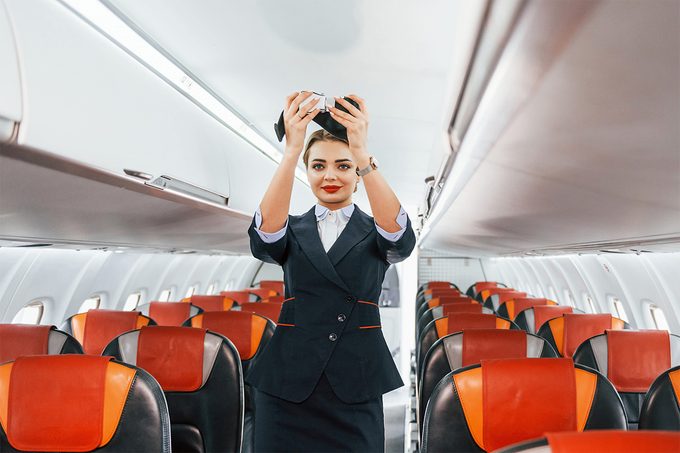
It may be tempting to put on headphones before a plane takes off, but experts emphasize the importance of paying attention to the flight attendants during their safety briefing. This is especially crucial when the aircraft is pushing back from the gate. Take the time to review the aircraft safety card to understand where the exit doors are located and how many there are. Being informed can make a significant difference in an emergency.
Rimmer agrees: “The best time to prepare for an accident or in-flight emergency is before it happens, not while it’s underway.” Being proactive can help you react more effectively if something goes wrong.
Consider Booking a Middle Seat
While the middle seat is often considered the best option, it’s not necessarily guaranteed to be the safest by a significant margin. For example, Vishwash Kumar Ramesh, a survivor of the recent Air India crash, was sitting in seat 11A, which is a window seat. Twenty-seven years prior, Thai singer and actor James Ruangsak Loychusak was also seated in 11A when he survived a Thai Airways crash that left 101 people dead.
Experts caution against assuming any specific seat is the safest. Aircraft configurations vary, and survival depends on multiple factors. “There is no miracle seat,” Rimmer says. “Each accident is different.”
Opt for the Back of the Plane or an Exit Row
When considering the safest part of the plane to sit, two options stand out. The rear of the aircraft is often recommended because the front acts as a shock absorber during a crash. Rimmer highlights this spot, noting that history shows sitting in the rear increases your odds of survival. However, it all depends on the nature of the accident and whether the emergency exits near you are safe to use.
The emergency exit row is another contender. When Rimmer travels, he prefers sitting near an emergency exit over the wing. Not only does he think it offers a more comfortable ride during turbulence, but he also believes there are better odds of making a quick exit. Interestingly, Ramesh’s 11A seat on the Air India flight was in an emergency exit row.
Dress Appropriately
Flying isn’t the time to make a fashion statement. Wear nonflammable, loose-fitting clothing, as recommended by Bubb. He also suggests wearing clothing that will keep you warm in case of a plane ditching, even if it's summertime. If the crash occurred on elevated terrain, the temperature could get cold at night.
According to the FAA, wearing “sensible clothing” can reduce your chances of serious injury in an emergency. This means opting for natural fabrics like cotton, wool, denim, or leather, and avoiding synthetics that may melt when heated. Cover as much skin as possible to maximize protection.
Wear the Right Type of Shoes
In addition to your clothing, choose your shoes carefully. “The best shoes to wear are durable, close-toed shoes,” Bubb says. Avoid open-toed shoes like flip-flops. The FAA recommends low-heeled leather or canvas shoes. The goal is to evacuate the plane as quickly and efficiently as possible.
High heels should also be avoided, as they can puncture the emergency slide. You might even be required to take off your shoes in this scenario.
Bring a Car Seat for Young Children
If your child is small enough to fit in a car seat, Bubb recommends bringing one for them to sit in on the plane. If they are too big, ensure they are wearing their seat belt at all times.
Avoid misrepresenting your child’s age to fly on your lap, as the FAA strongly discourages this. Parents are urged to buy a seat for their child and use an approved car seat. “Your child’s safety is more important than saving a few bucks,” Rimmer adds.
Follow Directions
If anything were to go wrong on a flight, the flight attendants will guide you through the situation. Keep in mind that even though you may be panicking, the cabin crew has received special training for various scenarios, including plane crashes. According to Rimmer, it’s important to “follow the directions of the trained crews and leave your belongings behind.”
Brace for Impact
In the event of a crash, the cabin crew will provide instructions on how to brace for impact. “The best position to brace for a plane crash is to tuck your head down and place your arms or hands on your head to protect it and your neck,” Bubb says.
Flight attendants usually do not include this in their safety demonstration to avoid alarming passengers, but instructions are printed on aircraft safety cards. In an emergency, the flight attendants will be clear in giving instructions on what to do and how to do it.
Protect Yourself from the Smoke
Some plane crashes produce a lot of smoke, and inhaling it can be dangerous. “The best way to protect yourself from inhaling smoke is to tear a piece of cloth to create a mask,” Bubb says. Stay low to the floor because smoke tends to rise. Listen to flight attendants’ instructions.
Between 1986 and 1991, about 16% of all U.S. transport aircraft accidents involved fire, and 22% of the deaths in these accidents resulted from fire or smoke toxicity, according to an FAA report from 1995.
Leave Your Bag, and Grab Supplies, if Possible
In the event of a crash, don’t attempt to retrieve your carry-on bag from the overhead bins. “Leave it, and follow the flight attendants’ instructions,” Bubb says. There’s nothing you should try to take out of your bag and bring with you. “You have to quickly evacuate the aircraft, leave everything and head for the exits,” Bubb says.
Attempting to bring your bag with you will delay your escape and threaten the safety of everyone behind you. That said, if water, food, or other necessities for survival are easily accessible, grab them on your way out of the plane.
Move Away from the Plane
If you have survived a crash, the first thing to do is get away from the wreckage to a safe space. “There potentially could be an explosion, especially if fire comes in contact with jet fuel,” Bubb says. And definitely don’t slow down to capture pictures or videos.
What should you do next? “The second thing to do [after you’ve moved away from the plane] is seek help, if possible,” Bubb says. “If your cellphone can pick up enough signal for use, call for help. If not, and you are not too severely injured, find the nearest road or house and call for help.”

Post a Comment for "How to Survive a Plane Crash, Science Says"
Post a Comment