How Israel's Victory Over Hezbollah Proves Terrorists Can Be Controlled During a Truce
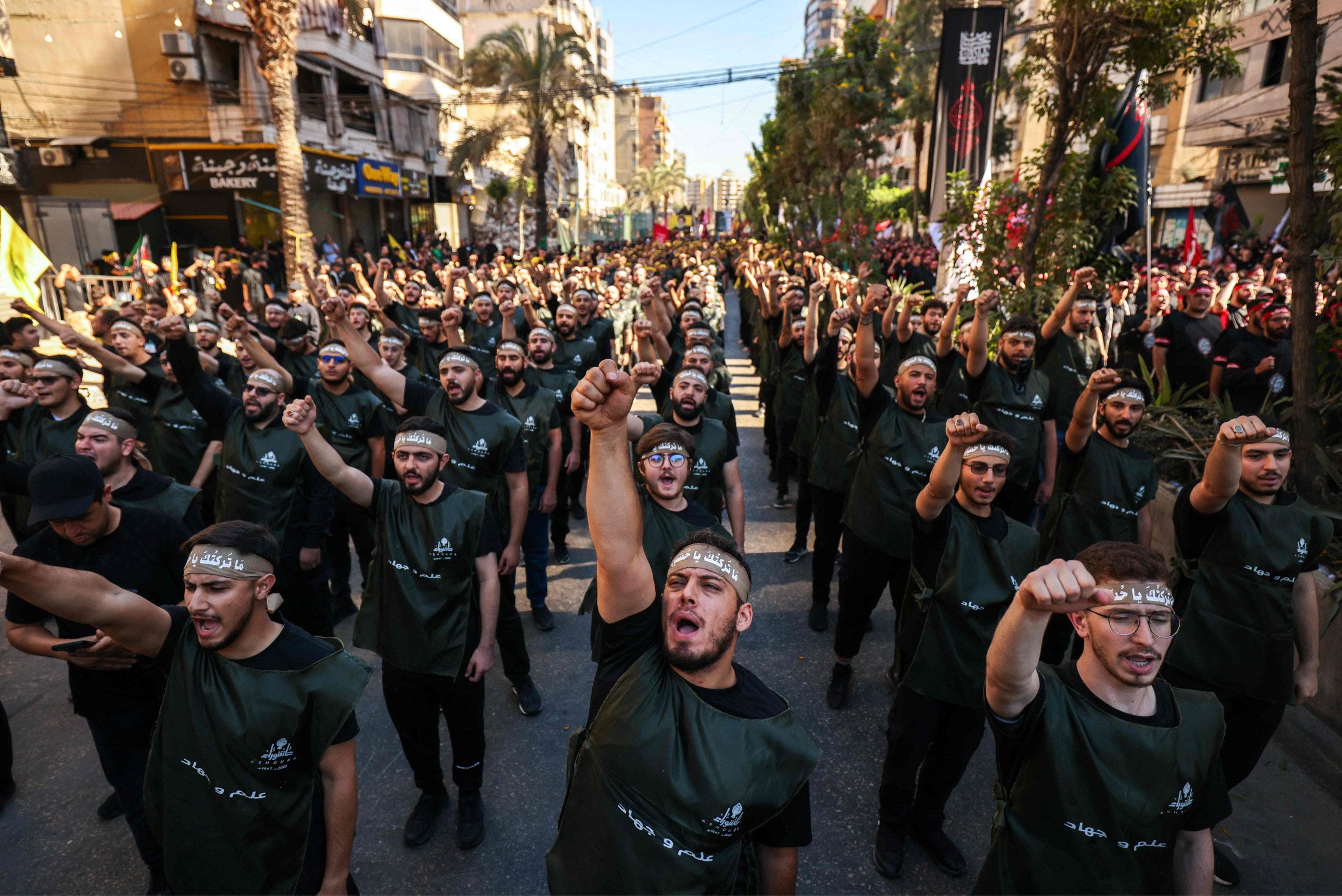
Israel's Military Operations in Lebanon and Syria Highlight the Effectiveness of Containing Terrorist Groups
The Israeli Defense Forces (IDF) have demonstrated that even during periods of calm, it is possible to significantly weaken militant groups such as Hezbollah. According to the military, one-third of its operational successes against the organization in Lebanon were achieved during times of relative peace, leading to what it describes as "the worst state" Hezbollah has faced since its founding. This development challenges previous claims by Israeli leaders that ending the Gaza war would hinder efforts to combat Hamas.
Since the northern cease-fire was established in November, the IDF has conducted over 500 airstrikes in Lebanon, resulting in the deaths of more than 230 Hezbollah operatives. These operations have disrupted the group’s capabilities and forced it into a weakened position. The military has also reported destroying thousands of rockets, 90 launchers, 20 command posts, five weapons production sites, and other key infrastructure. In recent weeks alone, the air force has destroyed approximately 3,000 rockets and underground facilities south of the Litani River.
The IDF claims that over 4,000 Hezbollah fighters have been killed since the campaign against the group began, with hundreds more reported missing. As a result, the organization has struggled to fill key leadership roles, leaving only two top officials remaining. Prior to the October 2023 war, Hezbollah had an estimated 25,000 combat-ready troops, but today, the IDF estimates that only about half that number remains fit for battle.
Despite these setbacks, Hezbollah is attempting to rebuild. However, the group is currently unable to launch large-scale invasions or engage in prolonged conflicts with Israel. It is also struggling to rejoin the Iranian-led axis of resistance. Its elite Radwan force, originally designed to fight the IDF, has been relegated to internal policing and protecting assets.
Most of Hezbollah’s weapons have been moved north of the Litani River. While the IDF estimates that the group still possesses thousands of missiles, most are short-range, with only a smaller number capable of reaching central Israel. The military believes Hezbollah lacks the capacity for sustained attacks due to a shortage of launchers.
Unlike in Gaza, the IDF has not identified any extensive tunnel networks used by Hezbollah. Any tunnels found are primarily for staging attacks or providing shelter during conflict. Intelligence reports suggest that the group is working on developing the capability for targeted raids, but these remain in the planning stages.
Hezbollah still maintains a significant inventory of drones, which could be used to disrupt daily life in northern Israel. Recent intelligence has uncovered evidence of attempts to restart drone production in Beirut’s Dahiyeh neighborhood. The IAF has responded by attacking the site after issuing evacuation warnings to civilians.
In addition, Hezbollah is trying to smuggle arms from the Syrian army. Many of these shipments have been intercepted by the Israeli Air Force. However, under the new regime led by President Ahmed al-Sharaa, the Syrian army has also begun targeting these convoys, preventing smuggling from Syria to Hezbollah. The IDF notes that the number of smuggling operations thwarted by the Syrian army exceeds those stopped by the Lebanese army, which is legally obligated to prevent such activities.
Iran, which has long funded Hezbollah in preparation for a confrontation with Israel, expected the group to provide support during the June war. However, Hezbollah feared that further fighting would lead to its collapse. Israel believes that the Lebanese army must be strengthened to counter future threats, but it has expressed disappointment that global support for this effort has been less than the $1 billion Iran has invested in rebuilding Hezbollah.
Impact on Israeli Civilian Population and Military Readiness
Seventy-four percent of residents in northern Israel who were evacuated at the start of the war in October 2023 have returned to their homes. However, in areas like Metula and Kibbutz Manara, the return rate is lower. Initially, four battalions were deployed to defend the north, but the IDF is now preparing to routinely deploy a force two to three times larger, consisting mostly of reserves.
The Northern Command has criticized government efforts to pass a law exempting Haredim from conscription. Without ultra-Orthodox recruits, maintaining a large reserve force for extended periods will be challenging. Soldiers may leave if forced into prolonged deployments, making it essential to have a conscription law that ensures enough recruits to protect the northern border.
Developments in Syria
In Syria, the new regime has established two security forces: a General Security Service and a new Syrian army, based on former militia groups that opposed the Assad regime. President al-Sharaa is reshaping Syria’s security structure by appointing allies rather than loyalists to key positions.
The IDF reported that al-Sharaa “got the message” after the IAF attacked Damascus in response to the massacre of Druze in southern Syria. Tensions remain high in Sweida province, where both sides are holding hostages. Israel continues to provide humanitarian and security assistance to Druze villages in Syria, home to around 700,000 people, including establishing medical clinics.

Post a Comment for "How Israel's Victory Over Hezbollah Proves Terrorists Can Be Controlled During a Truce"
Post a Comment