How a Immune 'Brake' Molecule Guides Skin Defense
New Insights into PD-1's Role in Immune Cell Development
Researchers at Weill Cornell Medicine have uncovered a new and critical function of PD-1, a molecule long known for its role in regulating immune responses. This discovery reveals that PD-1 is essential not only for controlling the immune system but also for guiding T cells to become long-term defenders in the skin. These findings could reshape how scientists and clinicians understand and use immune checkpoint inhibitors in cancer treatment.
During an infection, PD-1 acts as a kind of "steering wheel," directing T cells to develop into resident memory T cells (TRM). These TRM cells remain in specific tissues, such as the skin, and serve as a rapid defense mechanism against previously encountered pathogens or cancer cells. The ability of these cells to remember past threats makes them a crucial component of the immune system.
The study, published in Nature Immunology on July 29, highlights the potential implications of this discovery for the development of more effective and safer cancer treatments. Immune checkpoint inhibitors, which target PD-1, are widely used to treat melanoma and other cancers by removing the "brakes" on T cells, allowing them to attack cancer cells more aggressively. However, these therapies can cause side effects, including inflammatory rashes and itching in the skin or other epithelial tissues.
Dr. Niroshana Anandasabapathy, senior author of the study and associate professor of dermatology and microbiology and immunology at Weill Cornell Medicine, explained that PD-1 is necessary for the development and anchoring of TRM cells in the skin. “This means that PD-1 plays a key role in determining where these memory T cells end up and how they function,” she said. This finding challenges the traditional view of PD-1 as solely a suppressor of immune activity and suggests it has a more active role in shaping the immune response.
Understanding the Mechanism
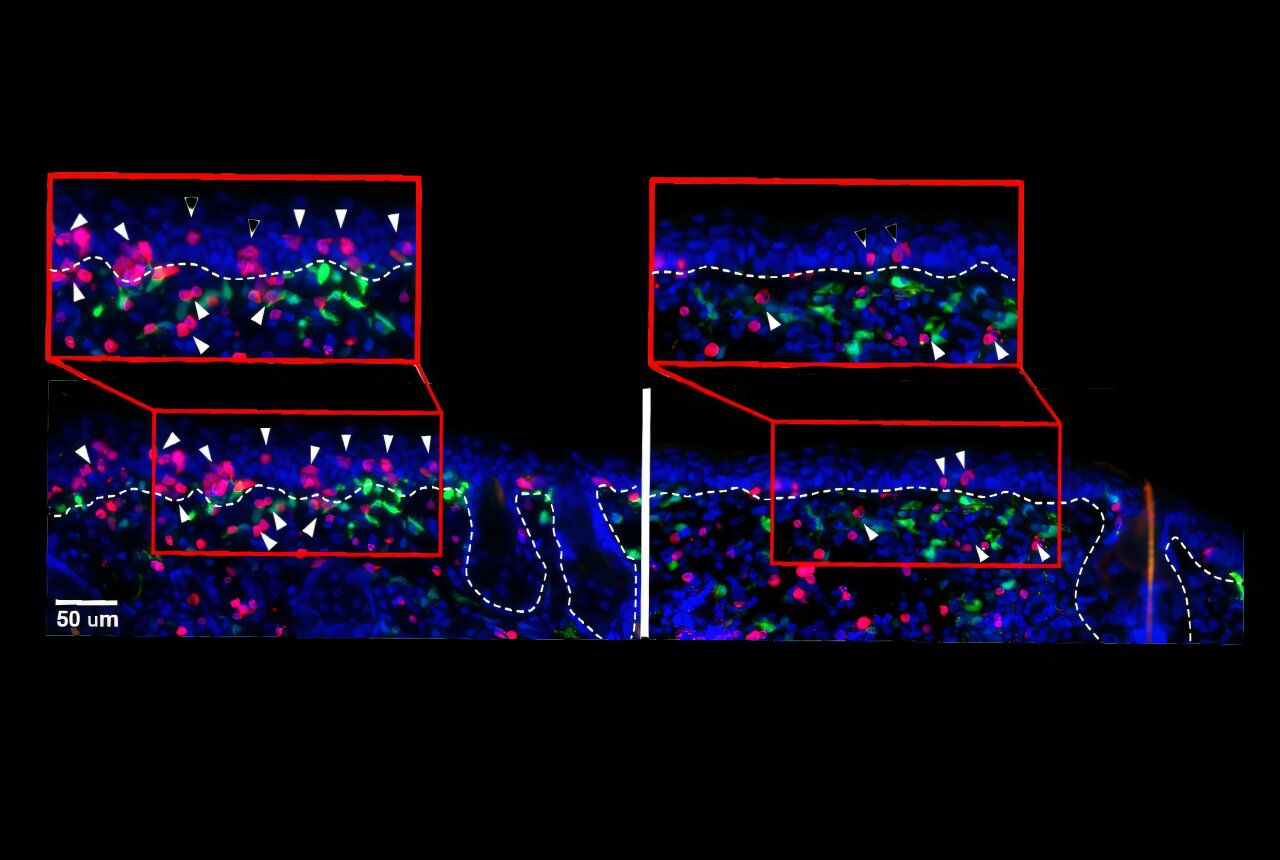
Sanjana P. Devi, first author of the study and now at Quest Diagnostics, and Eric Wang, an M.D./Ph.D. student at the University of Pennsylvania, co-led the research. Their work focused on how PD-1 contributes to the formation of TRM cells. Using mice models, the team found that when PD-1 was blocked—either through antibodies or genetic modification—T cells failed to develop into TRM cells or remained unanchored in the skin.
“We showed genetically, pharmacologically, and with imaging that you need PD-1 to form resident memory T cells,” Dr. Anandasabapathy said. Her lab, which studies how immune cells communicate and fight cancer while avoiding harmful overreactions, is uniquely positioned to explore these interactions.
The researchers also investigated the role of a cytokine called TGF-β, which is involved in cell signaling and immune responses. Genomic data suggested that TGF-β may play a part in the process of forming TRM cells. In experiments, they found that when PD-1 activity was blocked early in an infection, adding TGF-β helped restore the ability of T cells to become TRM cells.
“This shows that PD-1 helps TRM cells use TGF-β to stay in the skin,” Dr. Anandasabapathy said. “However, if PD-1 is blocked too early during cancer treatment, TRM cells might not form properly, potentially leading to side effects.”
Implications for Future Treatments
These findings could lead to the development of better therapies that target PD-1 without causing unwanted side effects. For example, understanding the timing and context of PD-1 inhibition could help improve the effectiveness of immune checkpoint inhibitors while reducing their adverse effects.
Beyond cancer treatment, the research has broader implications for cell-based therapies, particularly for patients with autoimmune diseases. Some strategies involve blocking PD-1 early in the immune response, which could unintentionally disrupt the formation of TRM cells. “We need to think about blocking PD-1 in the right context and at the right time,” Dr. Anandasabapathy emphasized.
The study, titled “PD-1 is requisite for skin TRM cell formation and specification by TGFβ,” provides valuable insights into the complex mechanisms of immune cell development and offers new directions for future research and clinical applications.

Post a Comment for "How a Immune 'Brake' Molecule Guides Skin Defense"
Post a Comment