How Fast Is China's J-20 Stealth Fighter?
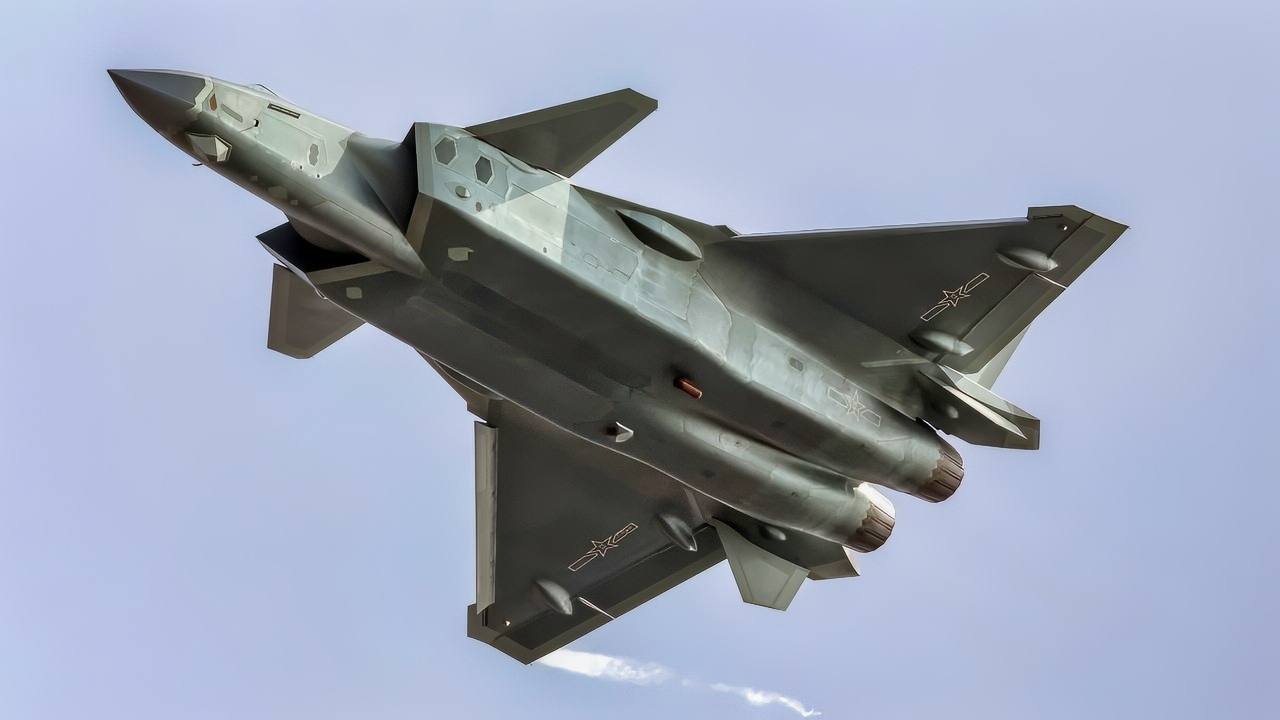
The Rise of China's J-20 "Mighty Dragon" as a Strategic Force
China’s J-20, known as the “Mighty Dragon,” is a fifth-generation stealth fighter that has become a symbol of the nation’s growing military power. Capable of reaching speeds up to Mach 2, the J-20 is designed to project influence and assert dominance in the Indo-Pacific region. Its increasing presence near Taiwan and through strategic waterways like the Tsushima Strait has raised concerns among U.S. allies and regional powers.
The J-20 outperforms several Western counterparts in terms of speed. It surpasses the F-35's top speed of Mach 1.6 and is comparable to the F-22 Raptor, which can occasionally exceed Mach 2. While the Shenyang J-15 Flying Shark, a carrier-based aircraft, also reaches just over Mach 2, the J-20 stands out for its advanced design and capabilities.
Advanced Stealth Features and Supercruise Capability
One of the J-20's most notable features is its ability to fly at supercruise—sustained supersonic speeds without using afterburners—at Mach 1.5. This capability is rare among fifth-generation fighters and gives the J-20 an edge in long-range operations. The aircraft is equipped with powerful engines, including the indigenous Shenyang WS-10C and WS-20B turbofans, which are crucial for its performance and reduce reliance on foreign technology.
China has invested heavily in developing these engines to ensure self-sufficiency in its military aviation sector. According to some assessments, the WS series engines provide more thrust than those found in the F-22 and F-35, enhancing the J-20’s maneuverability and combat effectiveness.
Aggressive Patrols and Regional Tensions
The J-20 has been increasingly involved in provocative flights near Japan and the Philippines, raising concerns about regional stability. In July, Chinese state media reported that the J-20 crossed the Bashi Channel between Taiwan and the Philippines, highlighting its role in asserting China’s territorial claims. These flights have also included incursions into Japan’s Air Defense Identification Zone (ADIZ) near the Tsushima Strait, a critical shipping lane.
Such actions have not gone unnoticed by the United States and its allies. Japan, South Korea, and the U.S. all maintain air defenses in the area, including the THAAD system, which is designed to intercept ballistic missiles. The J-20’s flights have prompted discussions about how these systems might respond to potential threats from China’s advanced fighter jets.
Comparisons to U.S. Fighters and Technological Advancements
The J-20 is often compared to the U.S. F-22 Raptor due to its similar appearance and multi-role capabilities. It is designed for both air superiority and ground attack missions, making it a versatile asset for the People’s Liberation Army Air Force (PLAAF). The aircraft is equipped with advanced avionics, including an active electronically scanned array radar, a chin-mounted infrared/electro-optic sensor, and passive electro-optical detection systems.
These systems are expected to offer performance comparable to that of the F-35, providing the J-20 with enhanced situational awareness and targeting capabilities. The cockpit features digital controls, helmet-mounted displays, and wide-angle head-up displays, improving pilot survivability and mission flexibility.
Strategic Implications and Gray Zone Tactics
China’s use of the J-20 reflects its broader strategy of employing gray zone tactics—actions that challenge existing norms without crossing into open conflict. By conducting routine patrols near ADIZs and asserting control over disputed territories, China aims to test the resolve of its neighbors while avoiding direct confrontation.
This approach allows China to maintain pressure on regional adversaries while minimizing the risk of escalation. State-run media often highlights these operations, reinforcing national pride and support for the government’s military ambitions.
Future Outlook and Military Significance
With its high speed, stealth capabilities, and advanced technology, the J-20 represents a significant advancement in China’s military aviation. The PLAAF’s confidence in the aircraft suggests that it will continue to play a central role in future operations, both in defense and offense.
While the effectiveness of the J-20’s stealth features remains a topic of debate, its presence in contested regions underscores its strategic value. As China continues to develop and deploy advanced weapons systems, the J-20 will likely remain a key component of its military strategy in the Indo-Pacific and beyond.

Post a Comment for "How Fast Is China's J-20 Stealth Fighter?"
Post a Comment