How Fast Is the B-21 Raider Stealth Bomber?
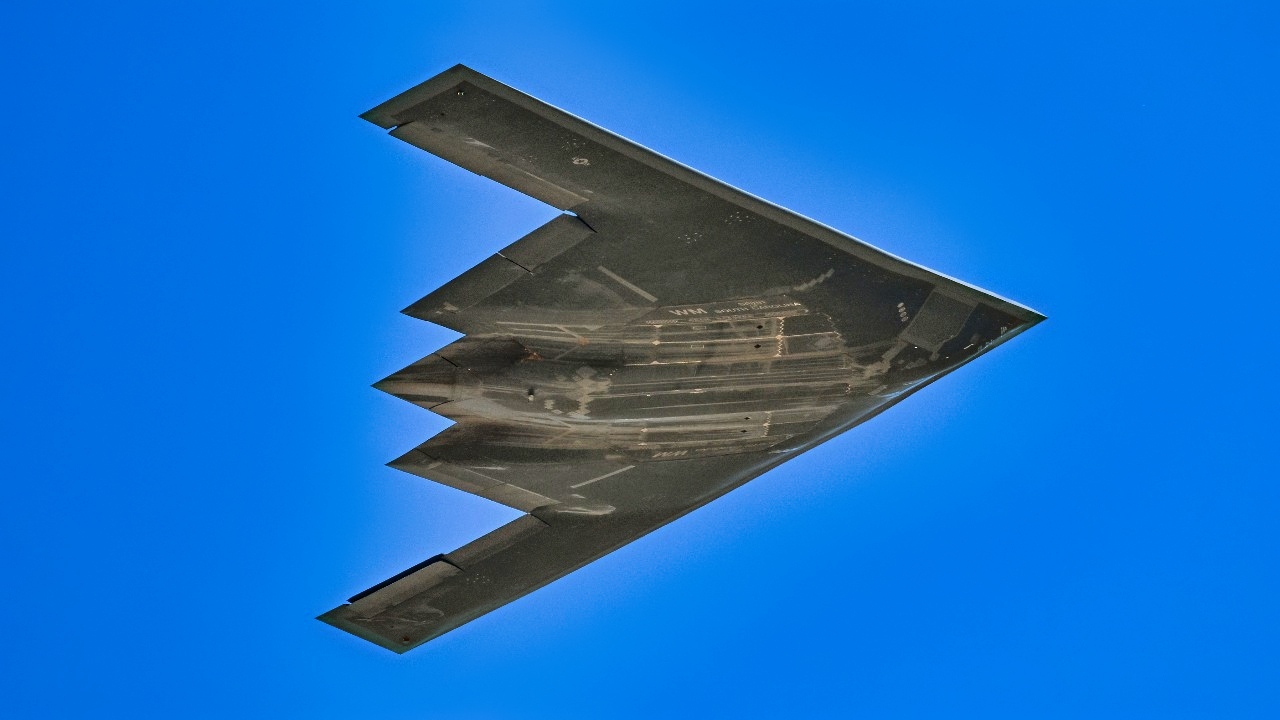
The B-21 Raider: A New Era in Stealth Technology
The Northrop Grumman B-21 Raider is a groundbreaking aircraft that marks the beginning of the sixth generation of military aviation. Designed to be the backbone of the U.S. Air Force’s future fleet, this stealth bomber represents a significant leap forward in technology and capability. While its top speed may not match that of supersonic aircraft, the B-21's true strength lies in its advanced stealth features, endurance, and versatility.
Engine Performance and Speed
Speed is not the primary focus for strategic bombers, but it still plays a crucial role in certain scenarios. The U.S. Air Force has not disclosed the exact top speed of the B-21, and it is likely to remain classified. However, based on its design and mission profile, it is expected to operate at high subsonic speeds, potentially between Mach 0.85 and Mach 0.95. This range places it in the same category as the B-2 Spirit, which has a top speed of around Mach 0.95.
Unlike supersonic bombers such as the B-1B Lancer, the B-21 prioritizes stealth over speed. In modern warfare, the ability to evade detection and strike from a distance is often more valuable than raw speed. The B-21 is designed to slip past enemy defenses undetected, deliver its payload, and return safely without ever being seen.
Multi-Role Capabilities
The B-21 is not just a bomber; it is a multi-role platform capable of performing a wide range of missions. It will serve as a strategic bomber, delivering both nuclear and conventional weapons across intercontinental distances. Additionally, it will be equipped for electronic warfare, intelligence gathering, and battle management. The aircraft can carry a mix of stand-off and direct-attack munitions, including precision-guided bombs and cruise missiles.
Its modular payload bays allow for adaptability to different mission requirements, and its compatibility with aerial refueling enables global operations without the need for forward bases. The B-21 also incorporates several technological innovations, including digital engineering techniques that reduced development time and cost while improving reliability. Its systems are designed to be cyber-resilient, capable of operating in environments where electronic warfare and cyberattacks are common threats.
Development and Historical Context
The B-21 Raider was developed under the Long Range Strike Bomber (LRS-B) program, which began in 2011. Northrop Grumman was awarded the contract in 2015, and the aircraft was officially unveiled in December 2022. Its first flight took place on November 10, 2023, marking a significant milestone in U.S. military aviation. As of mid-2025, three B-21 aircraft are undergoing flight testing, with more in production.
The aircraft is named in honor of the Doolittle Raiders, a group of World War II airmen who carried out the daring bombing raid on Tokyo in 1942. This name reflects the B-21’s intended role as a long-range, precision strike platform capable of reaching deep into enemy territory. It is designed to be dual-capable, meaning it can carry both conventional and nuclear weapons, and it is expected to operate in both manned and unmanned configurations in the future.
Technological Advancements
In terms of aesthetics, the B-21 resembles its predecessor, the B-2 Spirit, with a sleek flying wing design that minimizes radar cross-section. However, the similarities are largely superficial. The B-21 incorporates next-generation technologies that make it far more capable and adaptable. It is built using advanced stealth materials and shaping techniques that reduce its visibility to radar and infrared sensors. The aircraft also features an open systems architecture, allowing for easier upgrades and integration of new technologies over time.
Strategic Importance
The B-21 is considered the cornerstone of the U.S. Air Force’s future bomber fleet. The current plan is to replace the aging B-1 and B-2 bombers with at least 100 B-21s, and possibly more depending on future needs and budget considerations. The B-52, which has been in service since the 1950s, will continue to operate alongside the B-21 after receiving significant upgrades. Together, these aircraft will provide the United States with a flexible and survivable long-range strike capability well into the 21st century.
Role in the Nuclear Triad
The B-21’s role in the nuclear triad is also significant. As a dual-capable platform, it will provide a credible and flexible nuclear deterrent that can be deployed quickly in response to emerging threats. Its stealth and range make it particularly well-suited for this role, as it can reach targets anywhere in the world without being detected. This capability is especially important in an era where potential adversaries are developing increasingly sophisticated air defense systems.
Production and Future Plans
Production of the B-21 is currently underway, with the aircraft in low-rate initial production. The first operational base will be Ellsworth Air Force Base in South Dakota, with additional bases planned at Whiteman Air Force Base in Missouri and Dyess Air Force Base in Texas. Northrop Grumman is the prime contractor, with key partners including Pratt & Whitney, Collins Aerospace, BAE Systems, and Spirit AeroSystems.

Post a Comment for "How Fast Is the B-21 Raider Stealth Bomber?"
Post a Comment