HMS Stirling Castle Joins Royal Navy: A New Era in Mine Warfare
Introduction to the New Era of Mine Countermeasures
The Royal Navy has taken a significant step forward in its approach to mine countermeasures with the commissioning of the Stirling Castle. This vessel, which raised the white ensign on July 25, marks a shift from traditional methods of dealing with sea mines to a more advanced and technology-driven strategy. The ship is part of a global trend where naval forces are rethinking how they tackle underwater threats.
Acquisition and Transformation of Stirling Castle
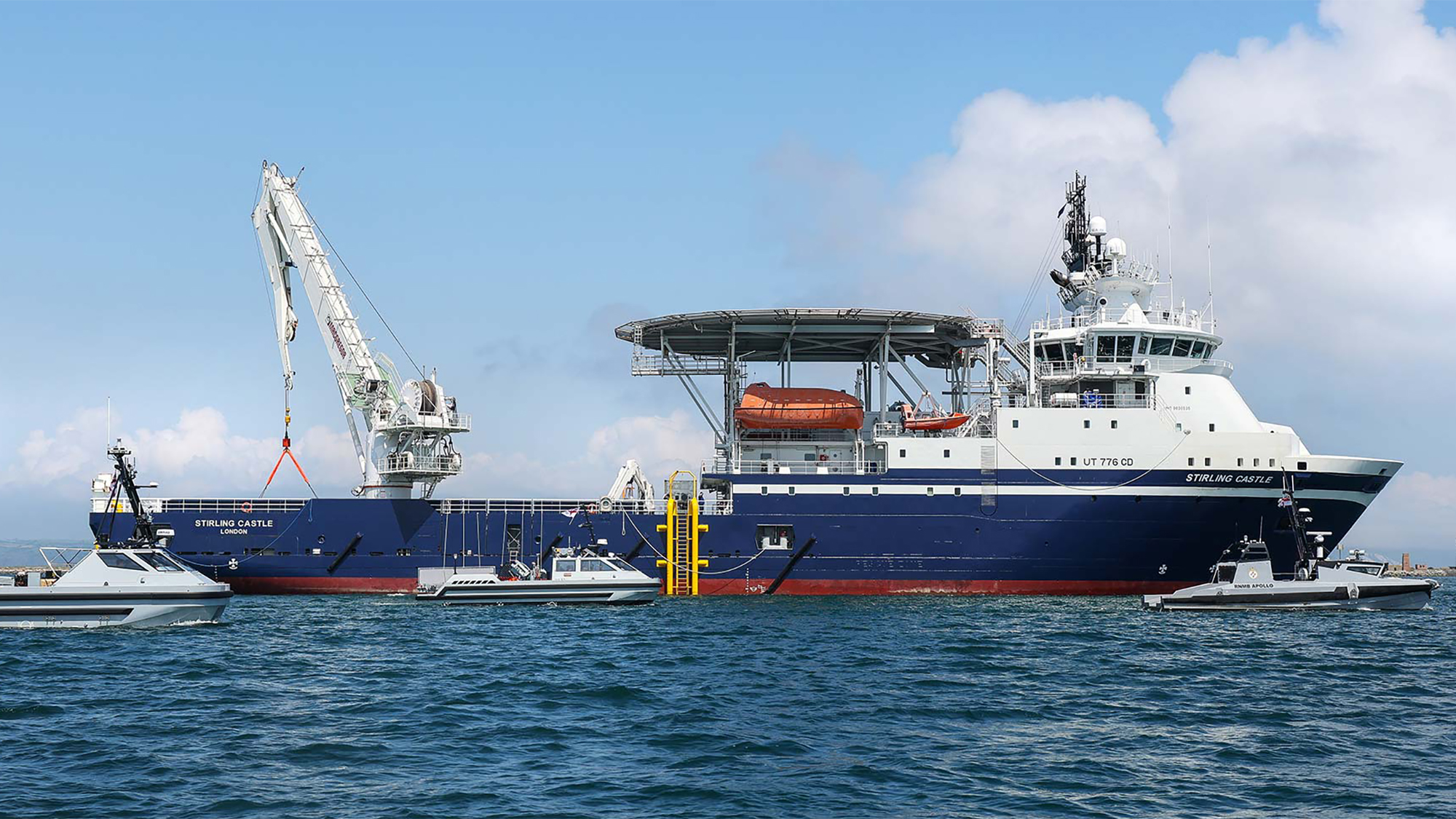
Stirling Castle was originally procured in 2023 alongside RFA Proteus (K60) and was previously known as MV Island Crown. As Island Crown, it served in a support and supply role for offshore energy operations. The ship was equipped with a large crane and working deck, making it suitable for such tasks. It also featured two bow thrusters and two azipod units for propulsion, along with a third azimuth thruster that can be retracted when not in use. These features make it ideal for supporting emerging mine countermeasures technologies.
Transition to the Royal Navy
In May 2025, it was announced that the ship would be transferred from the Royal Fleet Auxiliary to the Royal Navy and commissioned as HMS Stirling Castle. The primary reason given for this change was that the ship's role was considered a frontline task, requiring military crews rather than civilian ones. However, there is also a pressing need due to a personnel crisis within the RFA.
Design and Capabilities of the Ship
Compared to previous MCMVs like the Sandown and Hunt classes, which were under 1,000 tons, Stirling Castle is significantly larger. This size allows for better integration of new technologies and systems. Rather than directly engaging in mine detection and destruction, the ship will act as a hub for smaller, unmanned vessels that can be deployed and recovered from it. This approach offers greater flexibility and reduces risks to human crews.
Emerging Technologies in Mine Countermeasures
The Royal Navy has invested in several new MCM technologies, focusing on uncrewed or optionally crewed surface vessels and some undersea units. One such system is the ATLAS Remote Combined Influence Minesweeping System (ARCIMS), which uses boats derived from Sea class workboats. These boats can be operated manually, remotely, or autonomously and can deploy various MCM payloads.
Deployment and Trials
ARCIMS boats have been deployed to the Persian Gulf, where the Royal Navy has maintained an MCM presence. They have also been tested closer to home, with the SWEEP MCM system being accepted into service in July. While Stirling Castle will form the primary MCM capability for the Royal Navy, many of these systems can also be deployed from Type 26 and Type 31 frigates. This allows for rapid deployment of mine detection and clearance capabilities worldwide.
Helicopter Deck and Future Possibilities
Although Stirling Castle retains a helicopter deck, it is not suitable for most military helicopters. However, it could be used to deploy aerial systems with MCM capabilities. Small unmanned vehicles like the Peregrine could assist in operating autonomous vessels, while larger platforms could carry MCM equipment. This opens up new possibilities for integrating airborne MCM into future operations.
International Developments in Mine Countermeasures
The UK is not alone in adopting a 'mothership' approach for MCM missions. Belgium and the Netherlands are collaborating on a purpose-built ship class for this role. In the U.S., the Independence and Freedom class littoral combat ships are intended to carry MCM payloads, though the program has faced delays. Traditional MCMVs still have a place in certain scenarios, with surplus ships being used by smaller nations like Ukraine.
Conclusion
The commissioning of HMS Stirling Castle represents a major shift in how the Royal Navy approaches mine warfare. By leveraging new technologies and adopting a mothership model, the navy is positioning itself to effectively address the evolving threat of sea mines. This transformation reflects a broader trend in naval strategy, emphasizing innovation and adaptability in the face of modern challenges.

Post a Comment for "HMS Stirling Castle Joins Royal Navy: A New Era in Mine Warfare"
Post a Comment