High-Efficiency Solar Cells for Indoor and Low-Light Use
Rethinking Solar Power for Indoor Light
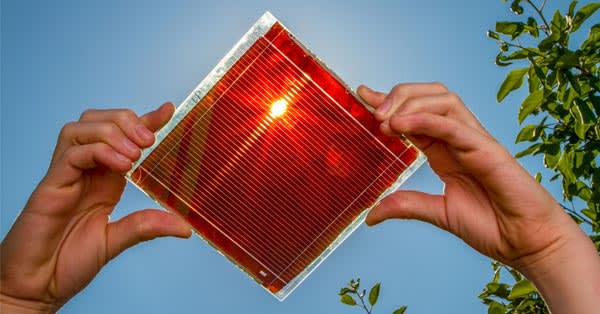
Solar panels have long been associated with rooftops and outdoor environments, but a new generation of solar cells is changing that perception. Perovskite solar cells, or PeSCs, are gaining attention for their ability to generate power in indoor settings. Unlike traditional silicon panels, which are rigid and heavy, these cells are thin, flexible, and can even be semi-transparent. This makes them ideal for powering small electronics under common indoor lighting conditions.
Researchers at National Yang Ming Chiao Tung University in Taiwan are leading the charge in this area. Their recent study, published in APL Energy, demonstrates how PeSCs can efficiently convert light from sources like overhead fluorescent bulbs into usable electricity. The potential applications are vast, ranging from windows and wearables to the back of remote controls.
Tuning the Light Absorption Sweet Spot
The key to making PeSCs effective indoors lies in their bandgap—the range of light wavelengths they can absorb. Silicon-based solar cells have a fixed bandgap, which limits their adaptability to different lighting conditions. PeSCs, on the other hand, offer more flexibility. By adjusting the chemical composition of the perovskite material, scientists can tailor the bandgap to better capture indoor light.
This tuning process involves altering the ratio of halide ions in the perovskite mix. The result is a wide-bandgap material that absorbs indoor lighting more efficiently. However, this adjustment comes with a trade-off: it introduces defects into the perovskite layers, which can hinder electricity flow and reduce performance.
Healing Defects for a Stronger Solar Cell
To address this issue, the research team introduced a passivation technique using special molecules that seal the defects and improve performance. These chelating agents, which contain phosphorus–oxygen (P=O) bonds, attach themselves to the surface of the perovskite and reduce harmful reactions.
The process was straightforward: the researchers mixed these agents into the anti-solvent used during cell fabrication. This step not only improved efficiency but also enhanced the durability of the devices.
Among the tested agents, one stood out—2,8-bis(diphenyl-phosphoryl)-dibenzo[b,d]furan, or PPF. PPF provided superior charge transport and deeper passivation compared to other materials. Using PPF, the researchers achieved a power conversion efficiency (PCE) of 12.76% under bright outdoor-like conditions (12,000 lux). While this is lower than the best silicon cells, which can reach about 26%, it's impressive for a flexible, indoor-focused technology.
More notably, the PPF-treated PeSCs reached a PCE of 38.70% under 2,000 lux—similar to a typical office environment. This means they were able to convert nearly 39% of the light energy into usable electricity under low-light conditions.
Stable, Flexible, and Ready for Real Life
The researchers initially aimed to boost energy output, but they discovered an additional benefit: increased stability. "In the beginning, we only expected our approach could improve the device efficiency," said researcher Fang-Chung Chen. "Because the poor reliability of PeSCs is a large challenge for their adoption, we hope our proposed method can pave the way toward the commercialization of perovskite solar panels."
This added stability addresses one of the biggest challenges for perovskite cells. Unlike silicon, perovskite can degrade quickly due to moisture, heat, or other environmental factors. By sealing defects, the team’s passivation strategy protects the cell from damage and corrosion, extending its usable life.
This development brings the cells closer to practical use in everyday devices, especially those that don't require much power. Remote controls, motion sensors, wearables, and small Internet of Things (IoT) devices could all benefit. Additionally, because the materials are cheap and the process is simpler than making silicon wafers, there's potential for large-scale, affordable manufacturing.
Bright Future Under Dim Light
As more technology moves indoors, the demand for low-light power solutions is growing. Devices that once relied on disposable batteries could soon recharge themselves under ordinary lights.
Thanks to flexible perovskite solar cells, energy doesn’t have to come only from the sun anymore. With the ability to harvest light in offices, homes, and factories, these cells offer a powerful new way to power the future—one photon at a time.

Post a Comment for "High-Efficiency Solar Cells for Indoor and Low-Light Use"
Post a Comment