Hearing Closes 'Alligator Alcatraz' Due to Environmental Fears
Environmental Concerns and Legal Challenges
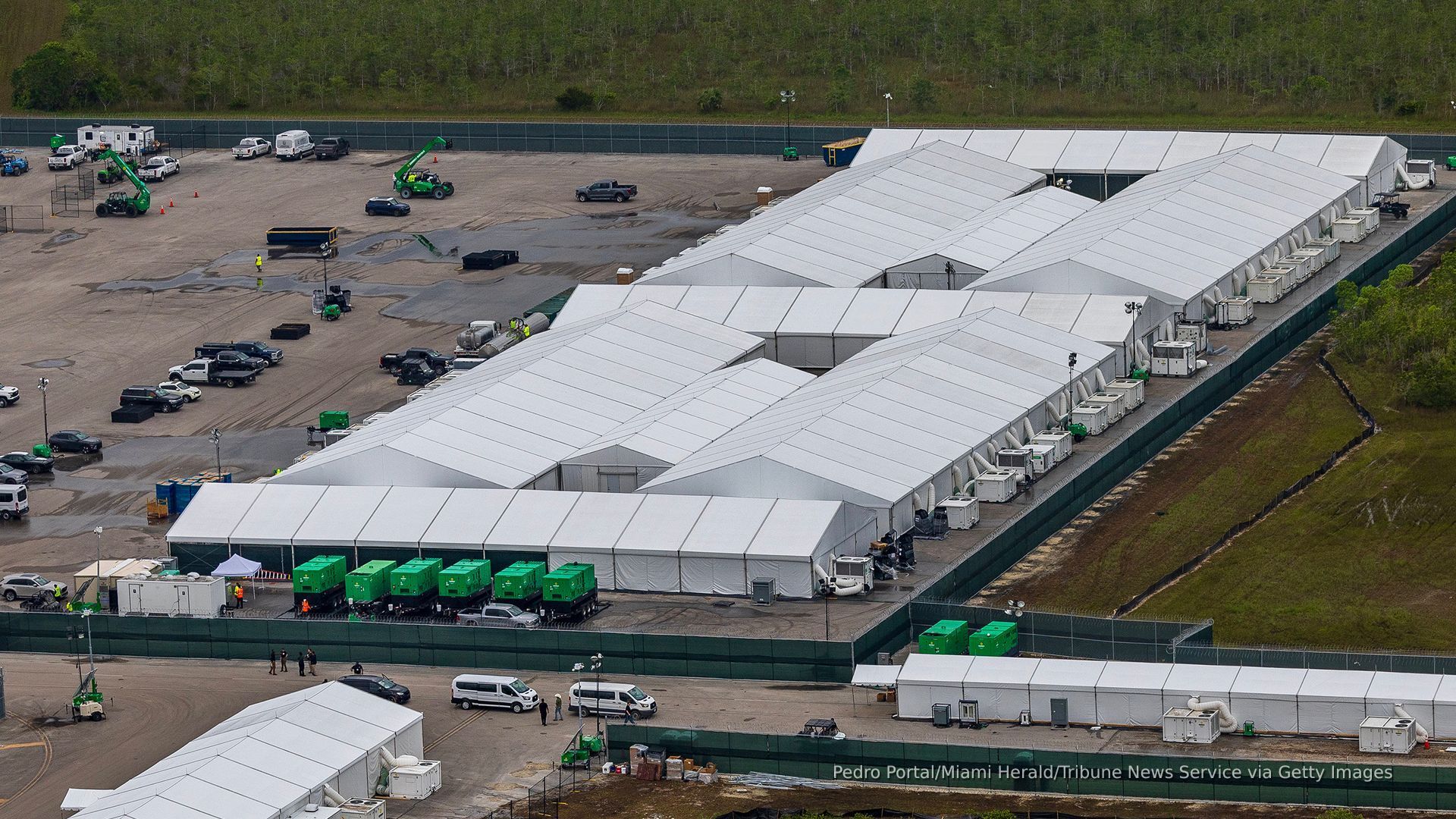
Environmental groups have raised significant concerns about the immigrant detention facility known as "Alligator Alcatraz." The nickname, derived from its location near wild animals, has taken on new meaning as the facility faces potential closure due to environmental issues. A recent hearing in a Miami federal courthouse marked the beginning of legal proceedings initiated by these groups, who argue that the facility's construction violated key environmental laws.
The lawsuit claims that state and federal agencies failed to conduct proper environmental assessments before building the detention center. According to the National Environmental Policy Act, such evaluations are required for any proposed action that may impact the environment. The groups argue that this requirement was not met, leading to the current legal challenge.
The facility is situated within or adjacent to the Big Cypress National Preserve and the Big Cypress Area, which are ecologically sensitive regions. These areas serve as critical habitats for several endangered species, including the Florida panther, Florida bonneted bat, Everglade Snail kite, and wood stork. The lawsuit highlights the importance of preserving these ecosystems and the potential harm the facility could cause to wildlife.
Expert Testimonies and Environmental Impact
During the hearing, Randy Kautz, an expert in Florida wildlife, testified about the facility’s impact on the Florida panther population. He emphasized that the area is a core habitat for these endangered animals and that the detention center could hinder their recovery efforts. Kautz noted that there are approximately 130-240 adult panthers in the region, with the goal of tripling that number.
He also cited studies showing that panthers avoid human presence and certain types of lighting, which means the facility effectively removes around 2,000 acres of suitable habitat. This loss could significantly affect the survival and growth of the panther population.
Amber Crooks, a member of the Center for Biological Diversity, also testified about her observations of wildlife in the area. She expressed concerns about the lack of a public comment period during the planning process, which she believes deprived the community of an opportunity to voice their opinions.
Legal Arguments and Political Involvement
Lawyers representing the defense argue that the facility is state-funded, constructed, and managed, making it exempt from the National Environmental Policy Act. They have also attempted to dismiss the case, claiming it was filed in the wrong county. However, the court has allowed the case to proceed.
State Representative Anna Eskamani testified that she believes the Department of Homeland Security is responsible for the facility. Her testimony adds a political dimension to the ongoing legal battle.
Criticism and Human Rights Concerns
Beyond environmental issues, the facility has faced criticism for its treatment of detainees. Another lawsuit argues that individuals held at the facility do not have access to attorneys and are being detained without charges. A virtual hearing began earlier this week, with an in-person hearing scheduled for August 18.
Anna Weiser, an immigration attorney with Smith & Eulo Law Firm, has several clients at the facility, including Gonzalo Almanza. She is involved in an ACLU case against the facility and expressed hope that the environmental lawsuit could lead to its closure. “On whatever grounds it gets shut down, that would be a good day,” Weiser said. She emphasized that even if the facility is not closed immediately, the possibility of releasing detainees would be a positive outcome.
Conditions and Public Perception
Reports have highlighted serious issues at the facility, including swarms of mosquitoes and backed-up toilets and sewage lines. Weiser described the conditions as akin to torture, noting that some people have called the facility a “concentration camp.” These descriptions reflect the growing concern over the treatment of detainees.
The Department of Homeland Security has stated its intention to model future immigration facilities after "Alligator Alcatraz." Deportation flights have also resumed, continuing the Trump administration’s focus on mass deportations. Tom Homan, acting director of Immigration and Customs Enforcement, has criticized media coverage of the facility, dismissing reports about restricted access for religious leaders as false.

Post a Comment for "Hearing Closes 'Alligator Alcatraz' Due to Environmental Fears"
Post a Comment