Harvard Scientists Warn of Major Research Setbacks Due to Funding Freeze
The Impact of Funding Cuts on Harvard’s Scientific Research
Harvard University, a leading institution in scientific research, is facing a crisis that has left many of its researchers in a state of uncertainty. At the heart of this issue is the loss of federal funding, which has had a significant impact on ongoing studies and the future of critical research projects.
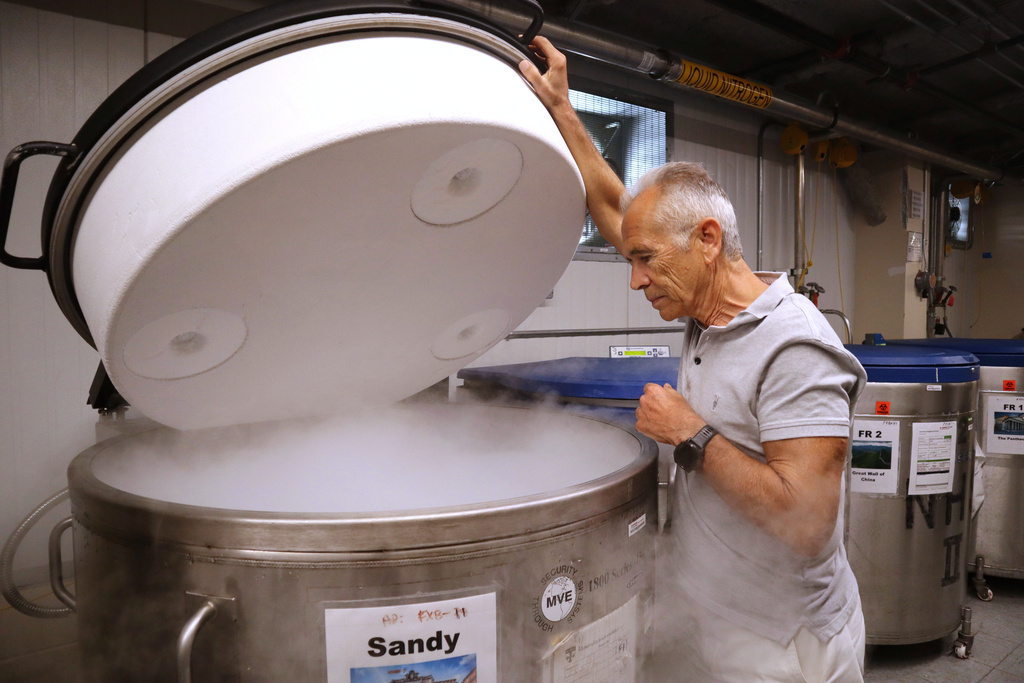
Professor Alberto Ascherio, an epidemiology and nutrition scientist at Harvard's T.H. Chan School of Public Health, has been particularly affected. His research, which involves blood samples collected from millions of U.S. soldiers over two decades, is stored in liquid nitrogen freezers. These samples are essential to his work on finding a cure for multiple sclerosis and other neurodegenerative diseases. However, the loss of $7 million in federal funding has forced him to halt his research, leaving valuable data frozen and inaccessible.
“It's like we have been creating a state-of-the-art telescope to explore the universe, and now we don’t have money to launch it,” Ascherio said. “We built everything and now we are ready to use it to make a new discovery that could impact millions of people in the world and then, 'Poof. You're being cut off.'"
Researchers Lay Off and Science Shelved
The funding cuts have not only affected individual researchers but have also led to widespread layoffs and the shelving of long-term projects. Harvard has lost an estimated $2.6 billion in federal funding, forcing some of the world's most prominent researchers to lay off young researchers and put years or even decades of work on hold. This includes research into areas such as opioid addiction and cancer.
Despite Harvard's lawsuits against the Trump administration and ongoing settlement talks, many researchers fear that some of their work may never resume. The funding cuts are part of a broader conflict between the Trump administration and several top universities, including Columbia, Brown, and Northwestern. Harvard has been particularly targeted, with the administration freezing funding after the university rejected a series of government demands related to antisemitism.
Legal Battles and Ongoing Concerns
Harvard responded by filing a federal lawsuit, accusing the Trump administration of retaliating against the university. In the lawsuit, Harvard outlined reforms it had taken to address antisemitism but emphasized its commitment to maintaining independence and constitutional rights. The university stated that the funding freeze was unrelated to antisemitism and that the government had wide discretion to cancel federal contracts for policy reasons.
However, the impact of these cuts has been felt deeply within the Harvard research community. Many researchers feel unfairly targeted in a dispute that has little to do with their work. Some have had to shut down labs or scramble to find alternative funding sources. In May, Harvard announced it would allocate at least $250 million of its own funds to continue research efforts, but university President Alan Garber warned of difficult decisions and sacrifices ahead.
Knowledge Lost in the Freeze
For researchers like Rita Hamad, director of the Social Policies for Health Equity Research Center at Harvard, the loss of funding has been devastating. Three multiyear grants totaling $10 million were canceled, affecting research into the impact of school segregation on heart health, pandemic-era policies on mental health, and neighborhood factors in dementia. At the School of Public Health, 190 grants have been terminated, impacting roughly 130 scientists.
“I’m in a position where I have to really think about, ‘Can I revive this research?’” said John Quackenbush, a professor of computational biology and bioinformatics. He has faced multiple funding cuts, including the loss of a multimillion-dollar grant and $1.2 million in federal funding. He also mentioned the cancellation of four departmental grants worth $24 million that funded training of doctoral students.
Mixed Reactions to the Pressure
While many researchers criticize the funding cuts as harmful to science, some believe the pressure from the Trump administration has led to necessary reforms. Bertha Madras, a Harvard psychobiologist, argued that the culling of politically motivated social science studies was overdue. She acknowledged that the White House's pressure may have catalyzed much-needed changes at the university.
However, Madras also expressed concern about the sacrifice of scientific research as a bargaining chip. “Sacrificing science is problematic, and it’s very worrisome because it is one of the major pillars of strength of the country,” she said.
The Broader Implications
Researchers like Quackenbush argue that the funding cuts are part of a larger attack on science by the Trump administration. They point to slashed support for students and post-doctoral fellows, threats to visas for foreign scholars, and new guidelines and funding cuts at the NIH. These actions could make it more difficult to secure federal funding in the future and replace it with private sector support.
“We’re all sort of moving toward this future in which this 80-year partnership between the government and the universities is going to be jeopardized,” Quackenbush said. “We’re going to face real challenges in continuing to lead the world in scientific excellence.”

Post a Comment for "Harvard Scientists Warn of Major Research Setbacks Due to Funding Freeze"
Post a Comment