H-20 vs. PAK DA: The Stealth Bombers We Can't Spot
The U.S. Dominance in Stealth Bomber Technology
The United States currently holds a unique position in the global military landscape as the only country with a fielded stealth bomber, the B-2 Spirit. More recently, the B-21 Raider has been undergoing flight testing, further solidifying America's leadership in this critical area of aerial warfare. However, both China and Russia are making strides to challenge this monopoly by developing their own stealth bomber programs: the Xi’an H-20 for China and the PAK DA for Russia.
These efforts reflect a broader strategic shift among these nations to close the technological gap and assert their influence on the world stage. While the U.S. continues to dominate in stealth technology, the development of the H-20 and PAK DA signals a growing competition that could reshape the future of long-range strike capabilities.
Design and Capabilities of the H-20 and PAK DA
The H-20, developed by the Xi’an Aircraft Industrial Corporation, is expected to be China’s first dedicated long-range stealth bomber. Its design is believed to closely resemble the American B-2, featuring a flying wing configuration that minimizes radar cross-section and enhances aerodynamic efficiency. The aircraft is subsonic, prioritizing stealth over speed, and is thought to incorporate advanced features such as internal weapons bays, serrated air intakes, and foldable tail surfaces that can switch between horizontal and V-tail configurations.
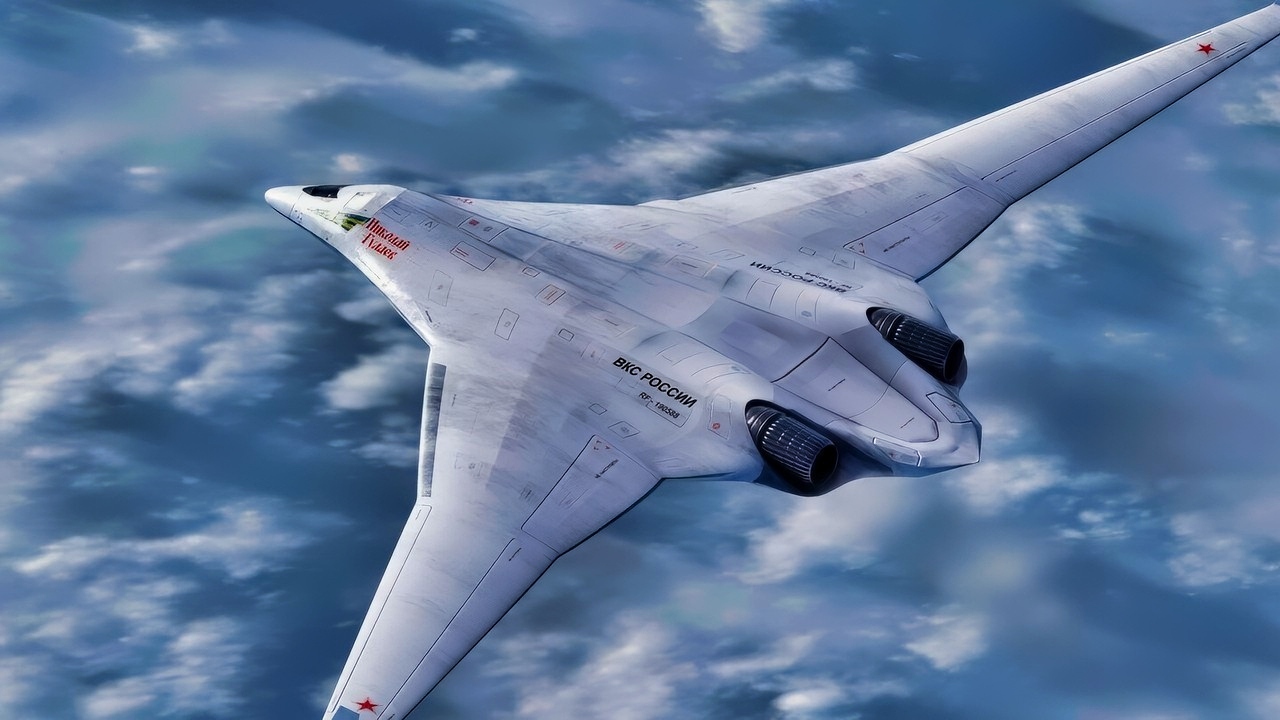
In contrast, the PAK DA, developed by Russia’s Tupolev Design Bureau, also adopts a flying wing design, marking a significant departure from Russia’s previous bomber models like the Tu-95 and Tu-160, which emphasized speed and payload over stealth. The PAK DA is similarly subsonic and is designed to be stealthy, with radar-absorbent materials, blended engine intakes, and internal weapons bays. This shift reflects a broader strategic pivot toward stealth-based survivability, aiming to ensure that Russian bombers can penetrate modern air defense systems without relying on speed or brute force.
Speculations and Challenges
Comparing the specifications of these two bombers is challenging due to the limited information available. According to state sources, the PAK DA is expected to have a range of approximately 12,000 kilometers, a payload capacity of up to 30 tons, and an endurance of up to 30 hours. These figures suggest a platform capable of intercontinental missions and extended loitering, making it suitable for global strategic operations.
The H-20, on the other hand, is believed to have a range of around 8,500 kilometers and a payload capacity of roughly 10 tons. While these specifications are more modest, they align with China’s strategic focus on regional deterrence and power projection within the Asia-Pacific theater.
Stealth and survivability are critical aspects of both bombers, but their effectiveness remains speculative due to the secretive nature of their development. The H-20 benefits from China’s rapid advancements in aerospace manufacturing and state-backed research and development. However, the design of the H-20 is unknown, with only unofficial artist renditions giving us a picture of what the bomber will look like. Experts suspect that the bomber will look similar to the American B-2 with a flying wing design, serrated intakes, and flexible tail surfaces. Unfortunately, no design has been confirmed.
The PAK DA’s stealth capabilities are also uncertain. While Russia has experience with radar-absorbent coatings and stealth design principles, its industrial limitations and the impact of international sanctions raise concerns about its ability to produce high-quality stealth materials at scale. Moreover, Russia’s track record with stealth aircraft, such as the Su-57, has been mixed, with delays and performance issues affecting credibility.
Arms and Mission Profiles
In terms of weapons and mission profiles, the H-20 is expected to carry both conventional and nuclear weapons, including precision-guided munitions and cruise missiles. Its primary role will likely involve regional strategic bombing, precision strikes, and deterrence missions targeting U.S. bases in Guam, Hawaii, and other locations within the Second Island Chain. The bomber’s design and capabilities suggest a focus on A2/AD strategies, reinforcing China’s ability to control its near seas and project power beyond its immediate periphery.
The PAK DA, on the other hand, is designed to carry a more diverse and ambitious weapon suite, including nuclear-tipped cruise missiles like the Kh-102 and potentially hypersonic weapons derived from the Kh-47M2 Kinzhal. Its mission profile includes strategic deterrence, stand-off bombing, and global strike capabilities. The bomber is intended to serve as the air-based leg of Russia’s nuclear triad, with both strategic and tactical roles.
Development Progress and Future Outlook
The H-20 was first revealed in 2016, with development confirmed in 2018. As of now, it is believed that test flights may have occurred, although no official confirmation has been provided. The bomber is expected to enter operational service in the 2030s, although no further information has been given on the status of the aircraft.
The PAK DA’s development began in the early 2000s and was officially approved in 2009. Prototype testing is expected to begin around 2026, but full deployment is likely delayed until 2030 or later. The program faces significant hurdles, including budget constraints, international sanctions, and technological limitations. These challenges raise doubts about Russia’s ability to produce the bomber in meaningful numbers and integrate it effectively into its strategic forces.
Conclusion
So which bomber is better? Unfortunately, due to the lack of concrete information, this question is nearly impossible to answer. It turns out, it is nearly impossible to compare two bombers that don’t even have finalized designs yet. The PAK DA reportedly has better engine performance and has a more versatile armament. On the other hand, China has more experience with advanced aeronautic engineering and has a better track record with stealth technology than the Russians do.
While the PAK DA is better on paper, neither bomber currently exists, and neither is likely to take flight anytime soon—China, Russia, and more than welcome to prove me wrong.

Post a Comment for "H-20 vs. PAK DA: The Stealth Bombers We Can't Spot"
Post a Comment