GM CFO: Agility Powers Resilience Amid $1.1 Billion Tariff Impact
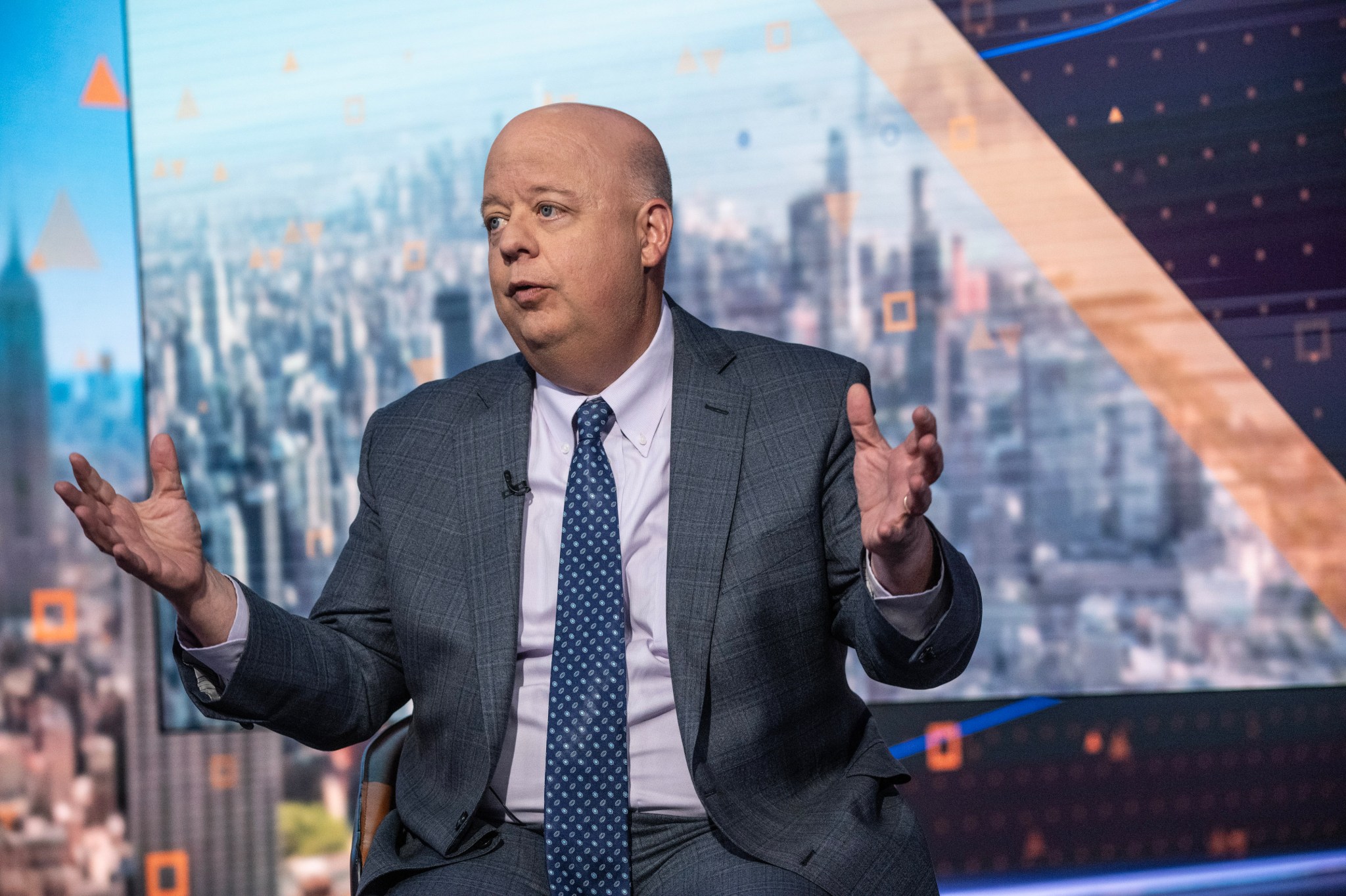
Overview of Q2 Earnings Season
As the second quarter earnings season begins, investors are closely watching for signs of how various factors, including trade policies and economic shifts, are affecting corporate profits. Major U.S. financial institutions have reported only minor impacts so far, particularly when compared to the more significant challenges faced by the automotive industry.
General Motors (GM), a key player in the automotive sector and ranked No. 18 on the DISCOVER TREND500, released its Q2 earnings results on Tuesday. The company experienced a 35% decline in net income compared to the same period last year, attributed to rising costs and uncertainty surrounding the Trump administration’s automotive tariffs, which resulted in a $1.1 billion impact on its bottom line.
During the earnings call, GM CFO Paul Jacobson highlighted the company's efforts to mitigate the tariff effects. He mentioned that GM is working to offset at least 30% of the projected $4 billion to $5 billion full-year 2025 tariff impact through strategic actions such as manufacturing adjustments, targeted cost initiatives, and consistent pricing.
Financial Performance and Market Expectations
Adjusted automotive free cash flow for the quarter was $2.8 billion, a decrease of $2.5 billion from the previous year. This drop was primarily due to tariff payments, along with headwinds from working capital and lower dealer inventory, according to Jacobson.
CEO Mary Barra noted that GM’s tariff burden could be reduced if tariffs with Mexico, Canada, and Korea were lowered. President Donald Trump had imposed a 25% tariff on all imported cars and auto parts, effective in early April. Vehicles assembled in the U.S. are eligible for partial tariff offsets, allowing automakers to receive reimbursement on a portion of tariffs paid for foreign-made parts used in U.S.-built vehicles.
Despite year-over-year declines in revenue and ongoing tariff pressures, GM outperformed market expectations across major metrics:
- Total Revenue reached $47.12 billion, down about 2% year over year, but exceeding Wall Street’s estimate of $46.25 billion.
- Adjusted EBIT was $3.04 billion (down $1.4 billion year-over-year), topping analyst expectations of $2.84 billion.
- Earnings per Share were $2.53, also ahead of the consensus estimate of $2.34.
- Notably, U.S. sales rose 7%, and the company continued to command strong pricing on pickup trucks and SUVs.
Strategic Adjustments and Future Outlook
A focus on agility has become a central theme for GM as it navigates the current economic landscape. Jacobson emphasized that the firm remains confident that total tariff expenses will decline as new bilateral trade deals emerge and as sourcing and production adjustments are made.
“Our agility and responsiveness to evolving consumer preferences and regulatory demands remain key strengths that set us apart,” he said.
Agility is now widely regarded as essential for CFOs amid economic volatility, regulatory pressures, shifting supply chains, and rapidly changing market conditions. According to Paul Melville, national managing principal of CFO advisory for Grant Thornton Advisors, “As we navigate an era of unreliability, fast actions may differentiate winners from losers.”
The latest CFO survey highlights that agile CFOs can adapt strategies quickly, enabling companies to pivot in response to disruptions. Common tactics to reduce tariff impacts include adjusting supply chains, conducting frequent scenario planning, implementing cost-saving technologies, and raising prices.
However, Jacobson told CNBC that he’s not expecting any specific price increases related to tariffs. Wedbush analysts see potential upside for GM, noting that the company continues to impressively navigate the complex backdrop. They also pointed out that GM is investing $4 billion to build new U.S. assembly plants, with production set to begin in 2027. Wedbush maintains its Outperform rating.
As investors look to the future, all eyes will be on GM’s ability to stay one step ahead in a rapidly changing market environment.

Post a Comment for "GM CFO: Agility Powers Resilience Amid $1.1 Billion Tariff Impact"
Post a Comment