Global Databases Expose Climate's Impact on Soil Fungi
The Role of Soil Microbes in Ecosystems
Soil microbes are essential components of ecosystems, playing a crucial role in supporting plant life. These microscopic organisms help plants access vital nutrients and water, enhance their ability to withstand environmental stressors such as drought, and protect them from harmful pathogens. Among these microbes, arbuscular mycorrhizal (AM) fungi stand out for their significant contributions to plant health. These fungi form symbiotic relationships with the roots of approximately 70% of land-based plant species, making them one of the most widespread and important groups of soil microorganisms.
AM fungi contribute to various ecological processes, including the carbon cycle, which is fundamental to maintaining the balance of life on Earth. Their presence in the soil enhances the resilience of ecosystems and supports biodiversity. Understanding how these fungi adapt to different environmental conditions can provide valuable insights into the functioning of natural systems and the impact of climate change on microbial communities.
Spore Traits and Environmental Adaptations
Fungi reproduce through spores, which are responsible for both reproduction and dispersal. The characteristics of these spores—such as their size, cell wall thickness, surface ornamentation, shape, and color—can influence how well they survive in different environments. These traits are not only important for the fungi's survival but also affect their ability to spread and interact with plant hosts.
A recent study led by Dartmouth University has shed light on how global climate conditions influence the traits of AM fungal spores. This research marks the first comprehensive examination of multiple spore traits on a global scale, offering new perspectives on the biogeographic patterns of these fungi. The findings were published in the Proceedings of the National Academy of Sciences.
Climate Change and Microbial Adaptations
The study highlights how changes in climate could lead to shifts in microbial traits, which may have far-reaching consequences for ecosystems. Lead author Smriti Pehim Limbu, a postdoctoral fellow at Dartmouth, explains that as climate change progresses, the way these fungi survive, spread, and interact with plants could change significantly. These changes might affect restoration efforts and food production, emphasizing the need for a deeper understanding of microbial adaptations.
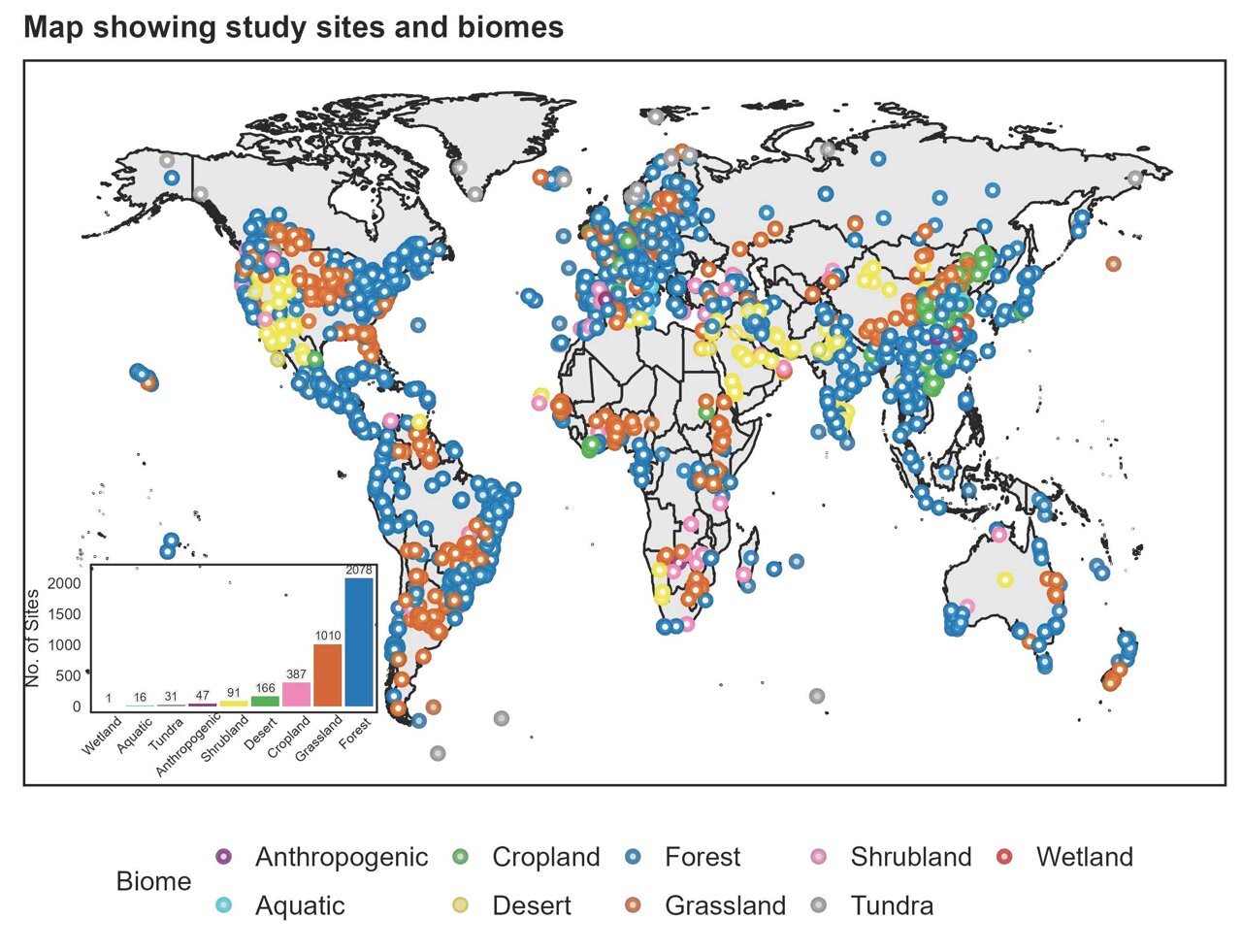
To conduct the study, researchers combined data from global databases of AM fungal species with climate information. One key resource used was TraitAM, a public database containing spore trait data for over 340 AM fungi species. This database was created by senior author Bala Chaudhary, an associate professor of environmental studies at Dartmouth.
Key Findings and Implications
The study revealed several interesting patterns. For instance, larger and darker spores were more common in warm, wet climates. However, there was a trade-off between persistence and dispersal. While larger spores were better suited for surviving in warm, wet conditions, they had a more limited geographic distribution. Similarly, spores with more surface ornamentation were also more prevalent in these climates, but again, they showed a narrower range of distribution.
Darker spores, which contain more pigment, were also more common in warm, wet areas. Researchers suggest that this pigmentation might offer protection against ultraviolet radiation and fire. In contrast, spores in cooler, drier climates had thicker cell walls, which provided greater durability. Spores with intermediate cell wall thickness were found to have broader geographic distributions, indicating a balance between resilience and dispersal.
Applications and Future Research
Understanding the traits of AM fungal spores that thrive in specific climates can guide the development of bioinoculants—microbial amendments used for soil restoration. By selecting AM fungi that are well-suited to local environmental conditions, scientists and agricultural practitioners can improve soil health and support sustainable farming practices.
Bala Chaudhary notes that ecologists have long studied the geographic distribution of species' traits, such as the prevalence of white-furred mammals in cold climates. This study extends that understanding to microbial traits, offering insights into the environmental adaptations of a vast portion of Earth's biodiversity.
Collaborative Efforts and Contributions
The research involved collaboration among scientists from various institutions, including Sidney Stürmer from the Universidade Regional de Blumenau in Brazil, Geoffrey Zahn from William & Mary, Carlos Aguilar-Trigueros from the University of Jyväskylä in Finland, and Noah Rogers from Utah Valley University. Together, they contributed to a groundbreaking study that advances our knowledge of microbial ecology and its implications for global ecosystems.

Post a Comment for "Global Databases Expose Climate's Impact on Soil Fungi"
Post a Comment