Glenwood Springs Combats Wildfire and Crime Amid Homeless Population
The Growing Crisis in Glenwood Springs
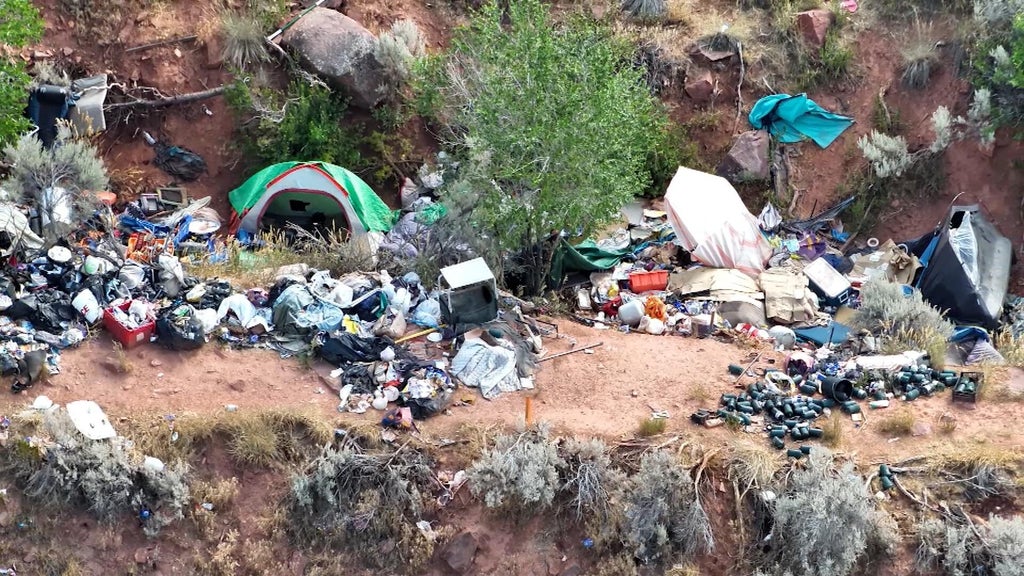
In a small mountain community in Colorado, a growing crisis is testing the limits of public resources and the patience of residents. Law enforcement in Glenwood Springs reports being overwhelmed by calls related to unhoused individuals, while city leaders are struggling to maintain the town's compassionate identity amid rising safety concerns. This challenge has been compounded by a recent wildfire scare linked to unhoused people living on a hillside near a local Walmart, prompting residents to seek clarity and solutions.
The scale of the issue is significant, according to Joseph Deras, the local Chief of Public Safety, who oversees both police and fire & EMS duties for the city. He notes that approximately 60% of daytime law enforcement calls involve unhoused individuals. "Crimes associated with that kind of thing," he says, highlighting the ongoing challenges faced by the department.
Deras points out that while other municipalities experience similar call volumes, the situation in Glenwood Springs is "absolutely disproportionate" given the size of the community. One of his officers could easily list 70 "repeat offenders" they encounter daily, underscoring the persistent nature of the problem.
A Cycle of Repeat Offenses
A major source of this strain, according to Deras, is the justice system in Colorado, which he believes fails to break the cycle of repeat offenses. When the public expects that a crime will lead to incarceration, that expectation is often unmet. "We just don't haul people off to jail anymore," Deras explains. "They're given a citation, and they're allowed to remain at that scene unless it's a violent felony."
This approach allows individuals responsible for such behavior to stay in their environment, leading to a pattern of repeated conduct over many years. "It's a revolving interaction that is extraordinarily frustrating," Deras adds.
Fire Risks from Encampments
The city of Glenwood Springs now sees this issue as more than a quality-of-life concern—it's a direct public safety threat. To address these concerns, the city hosted a webinar to engage with the public. The risk of fires from encampments, often used for cooking or warmth, has become a primary concern for officials, especially as these encampments encroach on homes and businesses.
"When we had that fire up there adjacent to the Walmart property, that's a significant risk," Deras said. Nearby homeowners have every right to be concerned, as these fires have come right up against their property lines.
City Manager Steve Boyd confirmed the severity of the situation, placing homelessness among the top four challenges facing the town, alongside transportation, parking, and the high cost of living. "This is a real problem," Boyd admitted, acknowledging the difficulty of finding a solution. "This feels like it is never going to go away."
Community Organizations Focused on Intervention
While officials work on enforcement, community organizations are focused on intervention. Cristina Gair, Executive Director of the West Mountain Regional Health Alliance, is part of a coalition working to connect people with support systems. Their guiding philosophy is "Housing First." "A better situation is someone receives food, other services to start connecting them to the possibility of employment and ultimately to get them a house," Gair explained.
However, the path to stability is complex. Gair notes that many chronically unhoused individuals face "co-occurring disorders," including physical and mental health issues, that require intensive services. This challenge is magnified when individuals refuse help, a reality that law enforcement and city leaders confront regularly.
"The challenge there becomes when those people who we encounter daily tell us this is the lifestyle I'm choosing... 'I want to live free and live on my own and do what I choose to do,'" Deras said. In such cases, he believes the court system needs to change its approach, as current methods aren't effective. Deras also argues that jailing criminal unhoused residents not only provides relief for a wrongdoer but is more costly than alternatives like requiring public service.
Balancing Compassion and Safety
Boyd believes Glenwood Springs is facing this issue because of the town's compassion, along with its beneficial weather and available services for unhoused citizens. Gair emphasizes the importance of building strong, trusting relationships with individuals who have chosen an unhoused lifestyle. However, she acknowledges the difficulty in the situation, noting that implementing programs that have worked in large cities is challenging in the mountain region. Additionally, a looming scarcity of federal funding presents another hurdle.
"I think the more we're going to have to collaborate and really think about other solutions and get creative, because also with some of the challenges of funding drying up, this is going to be an interesting time," Gair said.
For now, the city continues its difficult balancing act: striving to treat every person with dignity while ensuring the town remains safe for residents and tourists alike.

Post a Comment for "Glenwood Springs Combats Wildfire and Crime Amid Homeless Population"
Post a Comment