Ghislaine Maxwell to Testify Before Congress: A Look at Other Convicted Criminals Who Did the Same
The U.S. Congress and the Potential Subpoena of Ghislaine Maxwell
The U.S. Congress is considering a subpoena for Ghislaine Maxwell, who is currently serving a 20-year prison sentence for her role in helping financier Jeffrey Epstein sexually abuse underage girls. If the efforts to obtain her testimony are successful, Maxwell could join a long list of high-profile individuals who have used congressional testimony to shift political narratives and their public reputations after being convicted of serious crimes.
Maxwell’s case has once again come under scrutiny as pressure grows for President Donald Trump and the Department of Justice to release information about Epstein's crimes. These allegations have been surrounded by conspiracy theories, some of which were previously promoted by Trump himself. Epstein died by suicide while awaiting trial in 2019, but his case continues to attract attention due to his connections with prominent figures, including royalty, politicians, and billionaires.
Despite the ongoing controversy, Maxwell has consistently maintained her innocence. Recently, the Trump administration pledged to "release all credible evidence" related to the Epstein case. However, this effort faced a setback when a judge rejected a request to unseal grand jury transcripts from years ago in Florida. This decision has increased the stakes for Maxwell’s potential testimony.
A History of Explosive Congressional Testimony
There is a long history of powerful individuals appearing before Congress to address serious criminal charges. These testimonies often reveal critical information that influences public perception and political discourse.
Michael Cohen, 2019
In 2019, Michael Cohen, Trump's former personal attorney, testified before Congress shortly after being sentenced to three years in prison for campaign finance violations, tax fraud, and bank fraud. Cohen accused Trump of being a racist conman and revealed that the president had used his inner circle to cover up allegations of sexual misconduct with a porn actress. He also claimed that Trump lied about his business interests in Russia during the 2016 election campaign.
Michael Milken, 1993
Wall Street figure Michael Milken was able to rehabilitate his reputation in 1993 after serving time for securities law violations. In his testimony before the Congressional Black Caucus, he discussed ways to increase investment in urban areas. This was his second appearance before Congress; the first time, in 1990, he invoked the Fifth Amendment to avoid answering questions about his fraud schemes. Milken was later granted clemency by Trump in 2020.
Jack Ruby, 1964
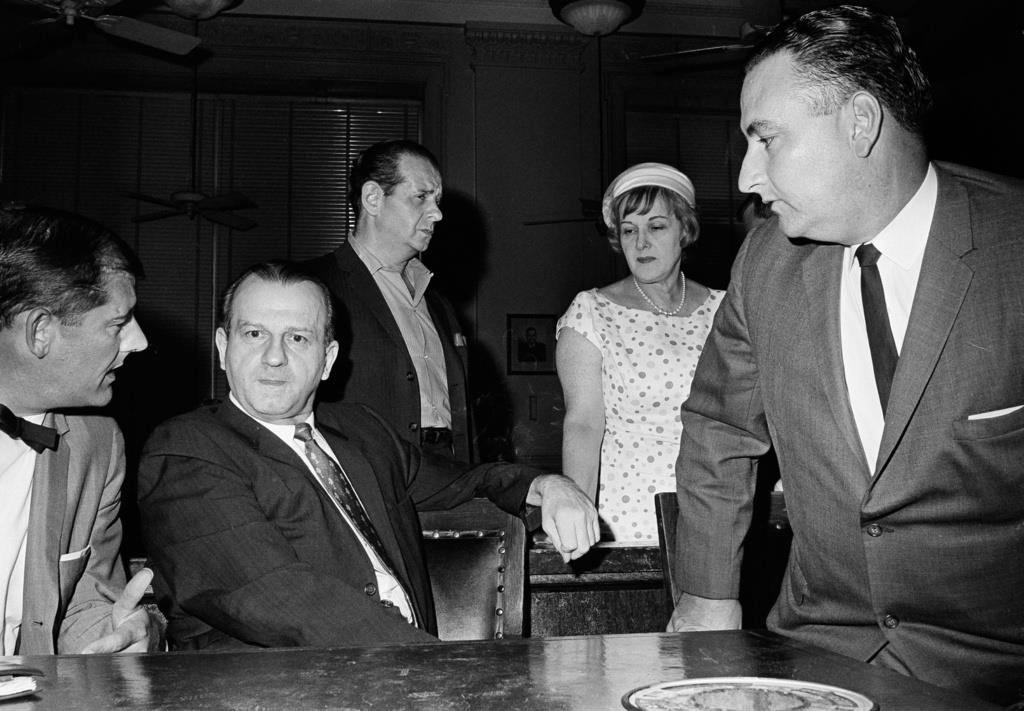
In 1964, a commission investigating the assassination of John F. Kennedy interviewed Jack Ruby, who was sentenced to death for killing Lee Harvey Oswald. The commission questioned Ruby about his political affiliations and motivations for killing Oswald. Despite widespread rumors of a cover-up, the interview concluded that Ruby acted alone.
Joseph Valachi, 1962
In the 1960s, Congress formed committees to investigate the influence of the mafia on government. Joseph Valachi, a member of the Genovese crime family, became the first mobster to publicly acknowledge the existence of the American mafia. His testimony before Congress, which was broadcast nationwide, provided graphic details about his crimes. At the time of his testimony, Valachi was facing a life sentence for murder and was heavily guarded due to threats from the mob.
Congress's focus on organized crime at the time inspired a major plot point in the 1972 film “The Godfather Part Two,” where Michael Corleone insists on his innocence during a Senate trial.

Post a Comment for "Ghislaine Maxwell to Testify Before Congress: A Look at Other Convicted Criminals Who Did the Same"
Post a Comment